Indian Researchers Confirm Dwarf Galaxies May Host Black Holes
Synopsis
A study by Indian scientists unveils compelling evidence suggesting that dwarf spheroidal galaxies could contain black holes, aligning with the concept of intermediate-mass black holes. This groundbreaking research paves the way for future astronomical observations.
Key Takeaways
Indian scientists explored the potential of dwarf spheroidal galaxies hosting black holes.
The data supports the existence of intermediate-mass black holes .
Self-consistent models were used to analyze gravitational components.
Upcoming telescopes like NLOT will enhance observational capabilities.
The research provides a framework for interpreting subtle black hole signatures.
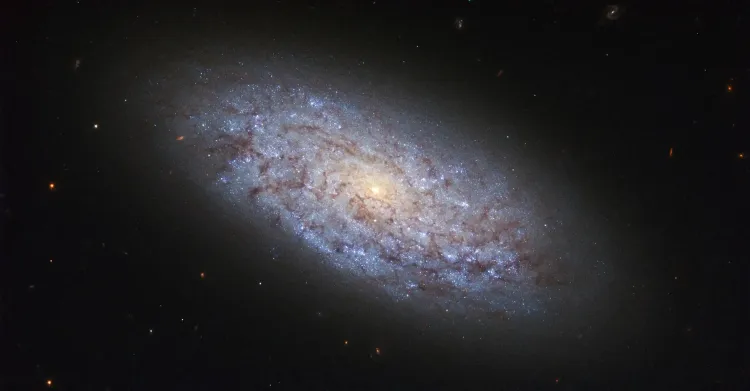
New Delhi, April 17 (NationPress) A groundbreaking investigation conducted by Indian researchers has explored whether the dwarf spheroidal galaxies that orbit the Milky Way could harbor black holes. The findings are described as "entirely consistent with the existence of intermediate-mass black holes," according to an official announcement made on Friday.
The research, led by K. Aditya and Arun Mangalam from the Indian Institute of Astrophysics, developed self-consistent dynamical models incorporating three gravitational elements: stars, a dark matter halo, and a potential central black hole.
Utilizing high-quality stellar kinematic data, they analyzed the stellar movements within these galaxies, which helped in estimating the mass of any central black hole, should it exist.
“Our models, when coupled with the data, impose robust upper limits on the masses of central black holes in these dwarf spheroidal galaxies, generally below one million solar masses, with several galaxies permitting even smaller values,” stated Arun Mangalam.
He further emphasized, "The data do not necessitate the existence of massive black holes, but rather align perfectly with the presence of intermediate-mass black holes."
The Ministry of Science & Technology highlighted that this research holds significant implications for theoretical frameworks and future observational studies.
“By establishing a unified relationship that extends down to the smallest galaxies, it lays a crucial benchmark for simulating the evolution of galaxies and black holes,” remarked Arun Mangalam.
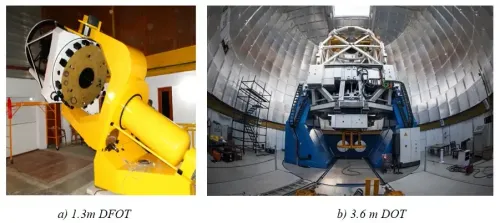
This study is particularly relevant in light of forthcoming next-generation observational facilities, such as the proposed National Large Optical Telescope (NLOT) by IIA and the Extremely Large Telescope (ELT).
These new facilities are set to provide unparalleled spatial and spectral resolution, allowing for accurate measurements of stellar kinematics in faint, low-mass galaxies.
The unified relation highlighted in this research offers a solid theoretical and observational foundation for interpreting such data, especially in the context of dwarf galaxies, where black hole signatures are often subtle.
While supermassive black holes are commonly detected at the centers of larger galaxies, the smaller dwarf spheroidal galaxies orbiting the Milky Way present unique challenges due to their extreme faintness, low gas content, and predominance of dark matter, complicating the direct detection of black holes.
Point of View
I find this study to be a pivotal moment in astrophysics. The implications of discovering that dwarf galaxies may host black holes could reshape our understanding of galaxy formation and evolution, highlighting the expertise of Indian scientists in this crucial field.
NationPress
16 Sept 2026
Frequently Asked Questions
What are dwarf spheroidal galaxies?
Dwarf spheroidal galaxies are small, faint galaxies that contain very little gas and dust, primarily composed of stars and dark matter.
Why are black holes difficult to detect in dwarf galaxies?
Black holes in dwarf galaxies are challenging to identify due to the galaxies' faintness, low gas content, and dominance of dark matter, making direct detection particularly complex.
What are intermediate-mass black holes?
Intermediate-mass black holes are a class of black holes with masses between stellar-mass black holes and supermassive black holes, typically ranging from hundreds to thousands of solar masses.
What implications does this research have for future studies?
This research sets a critical benchmark for simulations of galaxy evolution and black hole formation, aiding future observational studies in astrophysics.
What is the National Large Optical Telescope?
The National Large Optical Telescope (NLOT) is a proposed observational facility aimed at providing advanced spatial and spectral resolution for studying celestial bodies.