Why Are Foreign Investors Offloading $6.2 Billion on Seoul's Main Bourse?
Synopsis
Foreign investors have made headlines by offloading $6.2 billion from Seoul's main bourse this year. This article dives into the reasons behind this trend and its implications for the South Korean stock market, providing insights from industry experts on the motivations for this significant capital movement.
Key Takeaways
Foreign investors have net sold 9 trillion won ($6.2 billion) this year.
Major sales centered on Samsung Electronics , despite its rising stock value.
Analysts suggest the sell-off is a tactical move rather than a negative outlook.
The KOSPI index hit a record high on Friday, indicating market resilience.
Financial authorities are revising loan practices in response to real estate market concerns.
Seoul, Feb 22 (NationPress) Foreign investors have recorded a net sale of approximately 9 trillion won ($6.2 billion) on the primary stock exchange this year as of last week, according to data released on Sunday.
As of Friday, international investors have offloaded shares worth a net 9.1 trillion won on the main bourse in 2026, compared to a net sale of 4.6 trillion won for the entire year of 2025, as reported by the Korea Exchange (KRX).
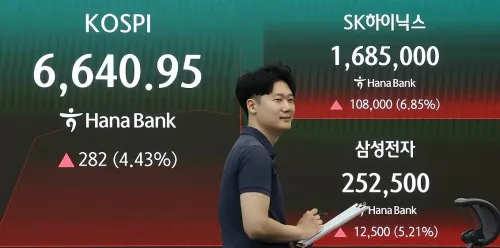
Specifically, overseas investors sold a net 9.5 trillion won in shares of Samsung Electronics Co., whose stock has surged by 59 percent this year alone, hitting the notable 190,000-won mark for the first time on Thursday, according to Yonhap news agency.
Experts suggest that the selling trend among foreign investors seems to be a strategy to realize recent gains rather than a reflection of a negative outlook on the South Korean stock market.
"While foreigners have been net sellers on the main bourse this year, we cannot conclude that they are anticipating a downturn," stated Lee Kyoung-min, a researcher at Daishin Securities Co.
"Given that their selling was predominantly focused on chipmakers, it appears more as a short-term rebalancing effort to reduce the stake in shares that have appreciated sharply," Lee added.
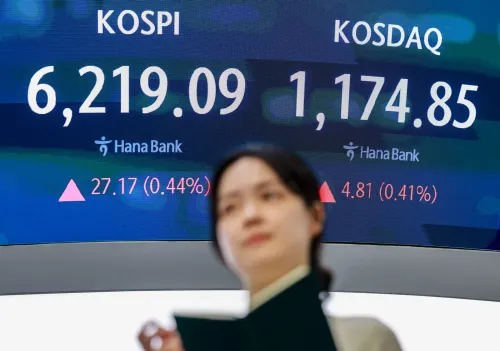
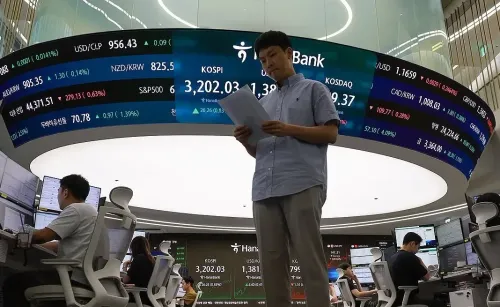
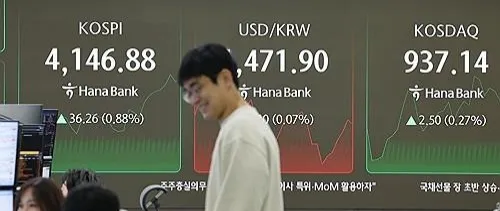
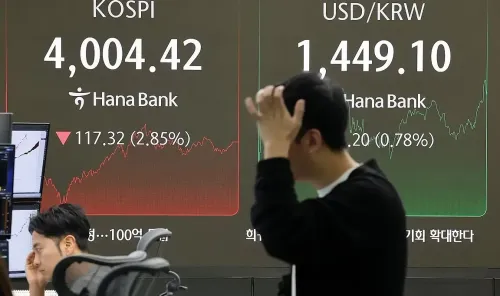
The benchmark Korea Composite Stock Price Index (KOSPI) rose by 131.28 points, or 2.31 percent, on Friday, closing at a record high of 5,803.53.
In a related context, financial authorities are currently evaluating strategies to limit loan extensions for owners of multiple properties in regulated areas of the greater Seoul region, in alignment with the government's initiative to temper the overheated real estate market, sources revealed on Sunday.
According to these sources, the Financial Services Commission intends to convene a meeting on Tuesday with the country's five major banks and financial cooperatives to explore ways to reform loan extension practices for multiple-property owners.
This initiative follows the government's announcement that a significant capital gains tax exemption for owners of multiple homes will be expiring in May.
While strict limitations on mortgage lending for home purchases in the greater Seoul area are in place, some owners have managed to extend existing loans through refinancing, raising concerns about the system's fairness.
Point of View
It is crucial for investors and stakeholders to remain informed about foreign capital movements. Although the data suggests a significant sell-off by foreign investors, it is essential to consider the broader context and expert analyses that indicate this may be a strategic rebalancing rather than a shift in overall market sentiment. Staying vigilant and informed will help the nation navigate these financial shifts effectively.
NationPress
19 Sept 2026
Frequently Asked Questions
What led to the $6.2 billion offload by foreign investors?
The offload appears to be a strategy for foreign investors to realize gains rather than a pessimistic view of the South Korean market.
How much did foreign investors sell in comparison to previous years?
As of 2026, foreign investors sold a net of 9.1 trillion won, compared to 4.6 trillion won for the entire year of 2025.
What impact does this have on Samsung Electronics?
Samsung Electronics saw a significant portion of these sales, despite its stock rising by 59% this year, indicating a tactical decision by investors.
Are these sales indicative of a market downturn?
Experts suggest that the sales are more about short-term rebalancing rather than an anticipation of a downward trend in the market.
What measures are being taken regarding property loans?
Financial authorities are reviewing loan extension practices for multiple property owners in the greater Seoul area to address market overheating.