Google Wallet now lets Indians store Aadhaar credentials for secure identity verification
Synopsis
Google just handed Indian users a digital wallet feature that could reshape how identity verification works — no more fumbling for physical Aadhaar cards. With PVR INOX, BharatMatrimony, and Atlys already on board, this partnership with UIDAI signals a shift toward device-based, privacy-first identity checks across entertainment, matrimony, and visa services.
Key Takeaways
Google Wallet now allows Indian users to save Aadhaar Verifiable Credentials for secure, on-device identity verification.
Initial partners include PVR INOX (age checks and rewards), BharatMatrimony (verified profiles), and Atlys (visa applications).
Mygate and Snabbit are integrating the feature for delivery staff and gig economy service provider verification.
The feature uses selective disclosure, sharing only necessary information per transaction.
Google is expanding digital ID features globally in Singapore , Taiwan , and Brazil via passport-based credentials.
Google Search Live rolled out globally with Gemini 3.1 Flash Live , enabling real-time, multilingual voice and camera conversations.
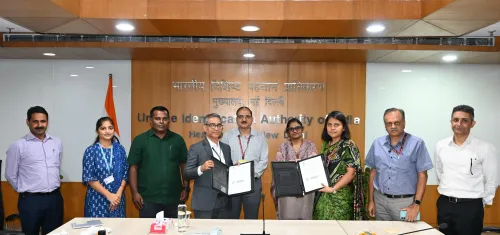
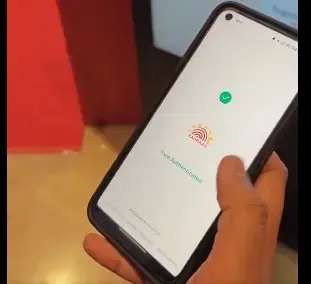
Google on Tuesday enabled Indian users to save Aadhaar Verifiable Credentials directly in Google Wallet, allowing them to verify identity for everyday transactions in a secure, device-based manner. The feature, built through Google's partnership with the Unique Identification Authority of India (UIDAI), leverages global standards including selective disclosure — ensuring only necessary information is shared when required.
Everyday use cases and initial partners
The rollout enables identity verification across multiple sectors. PVR INOX will use the credential for age checks and movie-watching rewards, BharatMatrimony for verified 'Prime' profiles, and Atlys for auto-filling international visa applications with a single tap. Mygate has partnered for community delivery and service staff verification, while Snabbit will integrate the feature for gig economy trust-building among service providers in the near term.
Security and privacy framework
Google emphasised that security, privacy, and interoperability form the foundation of this digital identity integration, embedded across every technical layer. The on-device verification model means users retain control over which data points are disclosed for each transaction, reducing the risk of unnecessary personal information exposure.
Global expansion of digital ID features
Beyond India, Google is expanding digital ID capabilities globally. Users in Singapore, Taiwan, and Brazil can now create ID passes based on passport information and store them in Google Wallet. This feature simplifies identity verification for both in-person and online services — from account sign-ins to age-gated transactions — without requiring users to carry physical documents.
Broader AI and search updates
Google recently rolled out Search Live globally, enabling interactive, real-time conversations within Search's AI Mode across more than 200 countries and territories. The expansion is powered by Gemini 3.1 Flash Live, a new audio and voice model that Google claims delivers more natural, intuitive, and multilingual conversations, allowing users to speak with Search in their preferred language using both voice and camera inputs.
Point of View
User-controlled disclosure. The UIDAI partnership legitimises the approach, but success hinges on adoption beyond early-mover partners like PVR and BharatMatrimony. If friction stays low and trust holds, this could accelerate India's transition to a passwordless, credential-based digital economy. The real test: whether citizens trust Google's handling of Aadhaar data as much as they trust the government's.
NationPress
16 Sept 2026
Frequently Asked Questions
What is Google Wallet's new Aadhaar feature and how does it work?
Google Wallet now allows Indian users to store Aadhaar Verifiable Credentials on their device for secure identity verification. The feature uses selective disclosure, meaning only necessary information is shared when required — for example, proving age without revealing full identity details.
Which companies are currently using this Aadhaar credential feature?
Initial partners include PVR INOX for movie age checks and rewards, BharatMatrimony for verified profiles, Atlys for visa application auto-fill, Mygate for delivery staff verification, and Snabbit for gig economy service provider checks.
Is this feature available globally or only in India?
The Aadhaar credential feature is specific to India and built on Google's partnership with UIDAI. However, Google is expanding digital ID features globally — users in Singapore, Taiwan, and Brazil can now save passport-based ID passes in Google Wallet.
How does selective disclosure protect user privacy?
Selective disclosure allows users to share only the specific information required for each transaction. For instance, proving age for a movie ticket does not require sharing full identity or address details — only the age verification is transmitted.
Is this Aadhaar credential stored on Google's servers or on the user's device?
The credential is stored on the user's device and verified on-device, giving users control over their data. Google emphasises that security, privacy, and interoperability are built into every layer of the integration.