Hip replacements up 40% in younger Indians post-COVID, steroid use blamed

Synopsis
India's post-COVID health reckoning has a new, underreported chapter: a near-40% surge in hip replacement surgeries among patients in their 30s and 40s, driven by steroid-induced avascular necrosis. Experts warn that the scale of corticosteroid use during the pandemic is now producing a delayed wave of irreversible hip joint damage — and the worst may not yet be over.
Key Takeaways
Orthopaedic experts at the 2nd Delhi HIP 360 Conference reported a nearly 40 per cent rise in hip replacement surgeries among younger Indian patients post-COVID.
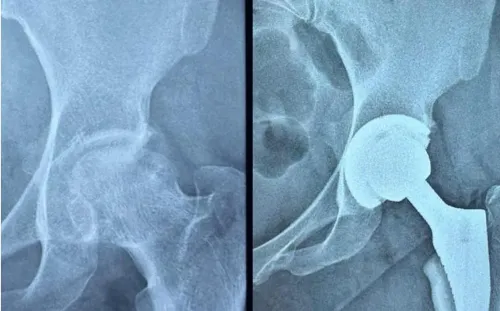
The surge is linked to steroid use during the pandemic, which can cause avascular necrosis (AVN) — a condition where blood supply to the hip joint is cut off, leading to bone collapse.
Patients in their 30s and 40s are increasingly presenting with severe hip damage, collapse of the femoral head, and advanced arthritis.
Tomar of Max Hospital said 'indiscriminate or prolonged' steroid use has been directly associated with the rise in osteonecrosis cases.
Specialists recommend timely MRI evaluation for anyone who received high-dose steroids during COVID and is experiencing groin pain, stiffness, or limping.
Advances in implants and rehabilitation now allow patients to return to normal life significantly faster after total hip replacement.
Orthopaedic experts at a major national conference in New Delhi on Sunday, 25 May 2025, flagged a sharp and worrying rise in hip arthritis and avascular necrosis (AVN) cases among younger and middle-aged Indians, attributing the surge to steroid use during the COVID-19 pandemic. Specialists warned that hospitals across the country are now performing significantly more total hip replacement surgeries on patients in their 30s and 40s — a demographic rarely associated with such procedures before the pandemic.
Scale of the Problem
Speaking at the 2nd Delhi HIP 360 Conference, organised by the Delhi Orthopaedic Association in association with the Indian Arthroplasty Association, leading surgeons said hospitals are recording nearly a 40 per cent rise in hip replacement surgeries among younger patients. The conference brought together orthopaedic surgeons, arthroplasty specialists, fellows, and residents from across India to discuss advancements in total hip arthroplasty, robotic-assisted surgeries, rehabilitation, and the management of post-COVID hip complications.
What the Experts Said
Dr. L. Tomar, Organising Chairman of Delhi HIP 360 and Director of the Department of Orthopaedics and Joint Replacement at Max Hospital, said the link between pandemic-era steroid use and hip damage is now clinically evident. 'Steroids played a life-saving role during the COVID pandemic, but indiscriminate or prolonged use in some patients has been associated with a rise in osteonecrosis and early degenerative changes in the hip joint. We are now seeing relatively younger patients coming with severe hip damage, collapse of the femoral head, and advanced arthritis requiring early hip replacement surgeries,' he said.
Dr. Karun Jain, Organising Secretary of the conference, highlighted the danger of delayed diagnosis. 'One of the biggest challenges with AVN is delayed diagnosis. By the time patients seek medical advice, the hip joint may already have undergone irreversible collapse. Awareness, timely MRI evaluation, and early intervention can help reduce disability,' he said, adding that many patients initially dismiss groin pain and stiffness as muscular discomfort.
Advances in Treatment
Dr. Gaurav Govil noted that total hip replacement has evolved considerably and now delivers strong outcomes for patients. 'With better implants, advanced surgical planning, and faster rehabilitation techniques, patients are able to return to normal life much earlier than before. However, the focus must remain on early diagnosis and evidence-based treatment to prevent avoidable disability,' he said.
The Steroid-AVN Link
Avascular necrosis occurs when blood supply to the femoral head — the ball of the hip joint — is disrupted, causing bone tissue to die and the joint to collapse. Corticosteroids, widely administered during the COVID-19 pandemic to manage severe inflammation, are a well-documented risk factor for AVN. Experts at the conference noted that the scale of steroid use during the pandemic, particularly in 2020 and 2021, is now manifesting as a delayed wave of hip joint damage requiring surgical intervention.
What Patients Should Watch For
Specialists urged patients who received high-dose or prolonged steroid treatment during the pandemic to seek evaluation if they experience persistent groin pain, hip stiffness, limping, or difficulty walking. Early-stage AVN can sometimes be managed with core decompression or other joint-preserving procedures, but advanced cases require total hip replacement. Timely MRI evaluation was specifically recommended as the most reliable tool for early detection.
Point of View
But the more important story is the lag effect: steroid overuse during COVID was flagged as a risk in real time, yet the scale of AVN now surfacing suggests that clinical warnings did not translate into prescribing restraint across the board. India lacks a centralised registry for AVN or post-COVID musculoskeletal complications, which means the true national burden is almost certainly undercounted. The conference findings also raise a health-system question: as a younger cohort requires joint replacement decades earlier than expected, the long-term demand on revision surgeries — which are more complex and costly — will compound. This is a slow-moving public health consequence of pandemic-era clinical decisions that deserves far more policy attention than it is currently receiving.
NationPress
7 Oct 2026
Frequently Asked Questions
Why are hip replacement surgeries rising among younger Indians after COVID?
Experts attribute the rise to widespread steroid use during the COVID-19 pandemic. Corticosteroids, used to manage severe inflammation, are a known risk factor for avascular necrosis (AVN), a condition where blood supply to the hip joint is disrupted, causing bone death and joint collapse. Hospitals are now seeing a delayed wave of this damage among patients in their 30s and 40s.
What is avascular necrosis (AVN) and how is it linked to COVID treatment?
Avascular necrosis is a condition in which the blood supply to the femoral head — the ball of the hip joint — is cut off, causing the bone to die and the joint to collapse. High-dose or prolonged corticosteroid use, which was common during COVID-19 treatment in 2020 and 2021, is one of the most well-documented triggers of AVN.
What symptoms should COVID survivors watch out for?
Specialists recommend seeking medical evaluation if you experience persistent groin pain, hip stiffness, limping, or difficulty walking — especially if you received high-dose steroids during COVID. Early-stage AVN may be treatable with joint-preserving procedures, but advanced cases require total hip replacement.
How is hip replacement surgery being performed differently now?
According to Dr. Gaurav Govil, advances in implant technology, surgical planning, and rehabilitation techniques now allow patients to return to normal life significantly faster than before. Robotic-assisted surgeries were also among the topics discussed at the Delhi HIP 360 Conference as part of the evolving standard of care.
How early can AVN be detected?
Dr. Karun Jain emphasised that timely MRI evaluation is the most reliable tool for early detection of AVN. Delayed diagnosis is a major challenge because patients often mistake early symptoms — groin pain and stiffness — for ordinary muscular discomfort, by which point irreversible joint collapse may have already occurred.