How Routine Vaccination Can Facilitate Early Identification of Autism?
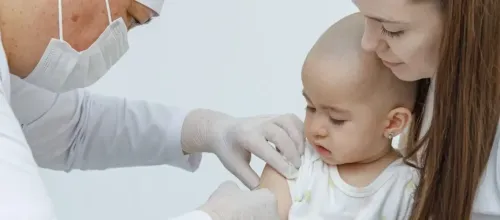
New Delhi, Dec 23 (NationPress) Healthcare professionals can assist in the prompt identification of autism by recognizing specific warning signs during routine vaccinations, stated a pediatric neurologist at the All India Institute of Medical Sciences, New Delhi.
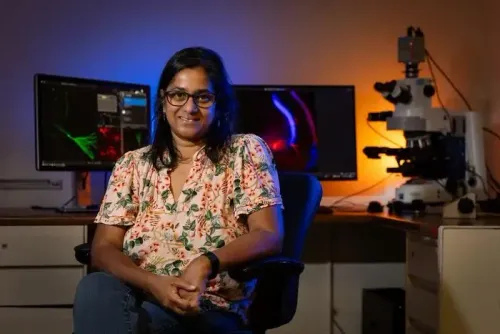
On the social media platform X, Dr. Sheffali Gulati, Professor and faculty-in-charge at the Child Neurology Division, Department of Pediatrics at AIIMS Delhi, elaborated on what autism is and how it can be detected early.
“Autism is a neurodevelopmental disorder marked by social deficits and qualitative impairments in communication, along with certain fixed interests and behaviors,” said Gulati.
She pointed out that the condition often comes with “certain fixed patterns of interest, and there might be sensory issues involved.”
Gulati explained how autism can be identified in a child before the age of 2.
“If a 6-month-old infant does not respond to his/her name or has not begun babbling by one year; if he/she is not uttering words at 16 months; is not combining two words by 24 months; or has lost some vocabulary, then autism may be suspected,” Gulati explained.
“It is crucial for us to examine all developmental milestones, alongside the warning signs specific to autism, whenever children come in for immunization,” Gulati emphasized, highlighting the significance of early intervention in the disorder.
She further noted that behavioral therapy constitutes a major aspect of early intervention, complemented by certain medications “that can enhance their development for a better future.”
She also urged society to embrace the diversity presented by children with autism and to foster acceptance starting from home.
“We must remember that these children with autism are dissimilar from others. Everyone possesses different diversities that should be acknowledged. When discussing inclusion in society, it should start at home, then extend to schools and society,” Gulati said.
Children with autism “have the same right to a dignified life as anyone else,” Gulati remarked, urging people “to adopt a humanistic approach.”
A recent study published in The Lancet Psychiatry journal revealed that autism poses a significant health challenge in India.
The research, based on the Global Burden of Diseases, Injuries, and Risk Factors Study (GBD) 2021, indicated that there were 708.1 cases of ASD per 100,000 individuals in India in 2021. Of these, 483.7 were females, while 921.4 were males. Approximately 140 per 100,000 individuals experienced poor health and disability due to ASD in India in 2021.
Globally, an estimated 61.8 million individuals, or one in every 127 people, were diagnosed with autism in 2021.