India-Bhutan ties deepen across energy, trade and connectivity in 2025
Synopsis
India and Bhutan have quietly rewritten the terms of their partnership — moving from aid-driven ties to a co-invested strategic framework. With ₹10,000 crore locked into Bhutan's national plan, a 920 MW hydropower joint venture underway, and UPI now linked to Bhutan Post, this is the most operationally dense phase the bilateral relationship has seen.
Key Takeaways
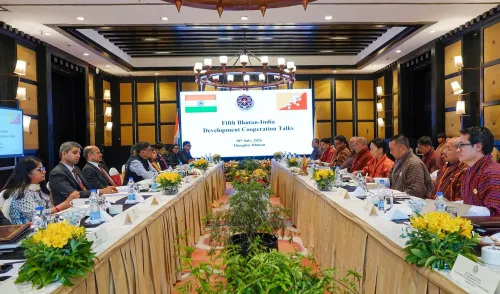
India has committed ₹10,000 crore (Nu 100 billion) to support Bhutan's 13th Five-Year Plan (2024–29) , reviewed at the fifth India-Bhutan Development Cooperation Talks .
Nu 6,860 crore is earmarked for 82 high-priority Project Tied Assistance schemes in healthcare, urban infrastructure, and disaster resilience.
JSW Energy and Druk Green Power Corporation (DGPC) have formed a 51:49 joint venture to develop the 920 MW Punatsangchhu-III Hydroelectric Project in Wangdue Phodrang.
An Umbrella Line of Credit worth ₹4,000 crore from the Export-Import Bank of India has been operationalised for Bhutan's renewable energy projects.
A new Samrang–Udalguri land-customs route and a UPI-PosTransfer postal integration in Guwahati are expanding trade and digital connectivity.
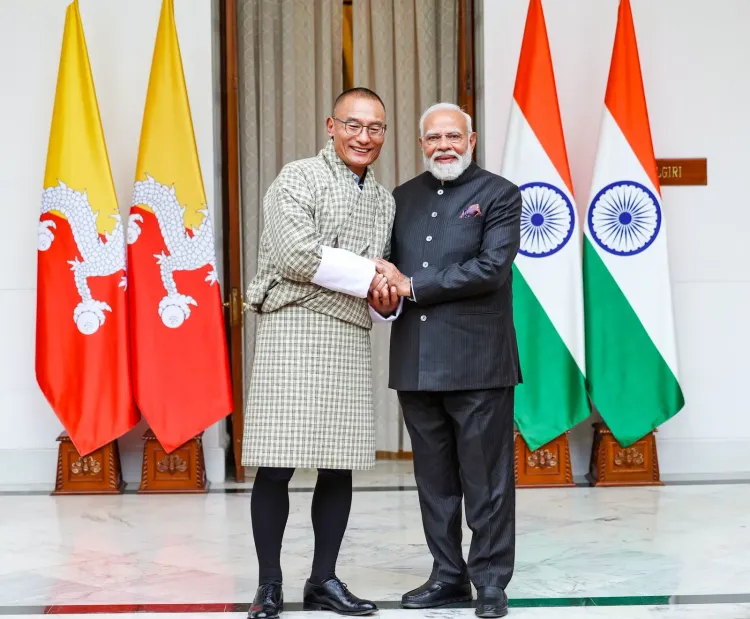
Bhutan PM Tshering Tobgay called India 'a steadfast partner and elder brother' in a message to PM Narendra Modi on India's 80th Independence Day .
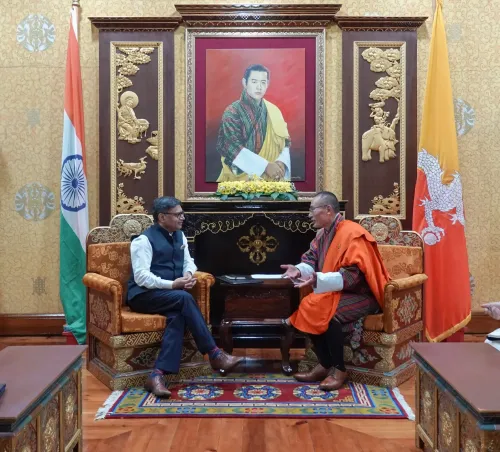
The India-Bhutan bilateral relationship has moved decisively beyond its traditional donor-recipient model into a structured strategic partnership, with cooperation accelerating across economic planning, energy, regional connectivity, and knowledge exchange over the past year. Rooted in the 1949 and 2007 Friendship Treaties, the partnership is now defined by tightly aligned development frameworks rather than ad-hoc project assistance.
Development Cooperation: A Plan-Based Framework
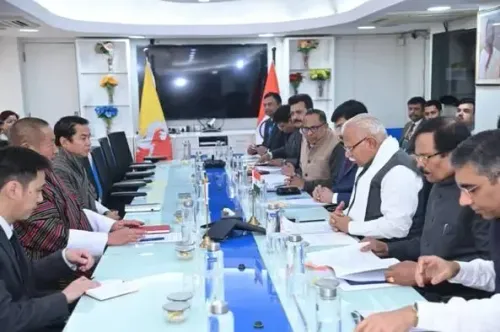
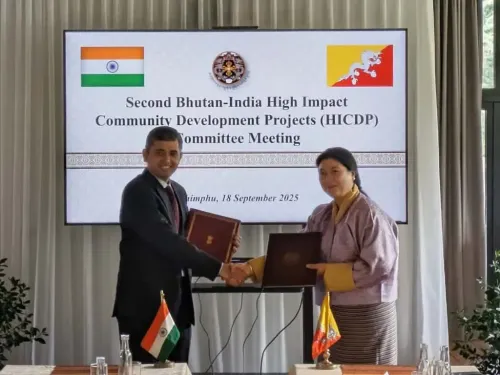
The fifth India-Bhutan Development Cooperation Talks concluded with a comprehensive review of India's ₹10,000 crore (Nu 100 billion) commitment to Bhutan's 13th Five-Year Plan (2024–29). Of this, Nu 6,860 crore has been earmarked for 82 high-priority Project Tied Assistance schemes covering healthcare, urban infrastructure, and disaster resilience. The remainder constitutes direct budgetary support for Bhutan's Economic Stimulus Programme.
Notably, Indian assistance is structured to align with Bhutan's own national planning cycle rather than being driven by external priorities — a deliberate design choice aimed at strengthening local ownership and maximising on-ground impact, according to reports.
Energy: JSW-DGPC Joint Venture and Hydropower Push
JSW Energy has formed a joint venture with Bhutan's Druk Green Power Corporation (DGPC) to develop the 920 MW Punatsangchhu-III Hydroelectric Project in Wangdue Phodrang. Under the 51:49 arrangement — with DGPC holding the majority stake — the two companies will jointly build and operate one of Bhutan's largest hydropower schemes.
Separately, an Umbrella Line of Credit Agreement worth ₹4,000 crore between the Royal Government of Bhutan and the Export-Import Bank of India has been operationalised to fund upcoming renewable energy projects. This signals a shift from grant-based energy support to commercially structured, co-invested partnerships.
Connectivity: Land, Digital and Rail Corridors
A new dedicated land-customs route linking Samrang in south-eastern Bhutan with Udalguri district in Assam is being opened to facilitate the movement of agricultural produce, heavy industrial materials, and everyday commodities. The route is expected to reduce logistical bottlenecks and deepen economic integration between Bhutan's southern districts and India's Northeast.
On the digital front, the first International Postal Cooperation initiative in Guwahati has formalised closer ties between India Post and Bhutan Post, integrating the Universal Postal Union's 'PosTransfer' system with India's Unified Payments Interface (UPI). Rail connectivity is also emerging as the next frontier — India is extending rail links to key border logistics hubs to ease last-mile cargo movement for Bhutan, even as Bhutan itself does not yet have a domestic railway network.
Diplomatic Signals at the Highest Level
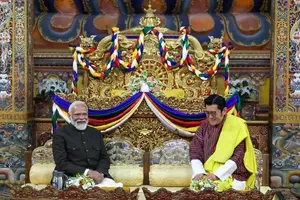
Bhutan Prime Minister Tshering Tobgay, in a congratulatory message to Prime Minister Narendra Modi on India's 80th Independence Day, described India as 'a steadfast partner and elder brother'. In response, Modi reaffirmed New Delhi's commitment to Bhutan's sovereignty, prosperity, and gross national happiness — language that signals continuity in the bilateral warmth that has defined the relationship across successive governments on both sides.
As both nations deepen institutional linkages across energy, trade, and digital infrastructure, the trajectory suggests the India-Bhutan partnership is entering one of its most operationally active phases yet.
Point of View
With DGPC holding the majority stake, is also a departure from the older model where Indian capital came with heavier strings attached. What this partnership now needs is a transparent tracking mechanism for the 82 Project Tied Assistance schemes, so that the ₹10,000 crore commitment translates into measurable outcomes rather than headline diplomacy. The UPI-postal integration is a quiet but telling signal: the real depth of any bilateral relationship today is measured in digital interoperability, not just treaties.
NationPress
8 Oct 2026
Frequently Asked Questions
What is India's financial commitment to Bhutan's 13th Five-Year Plan?
India has committed ₹10,000 crore (Nu 100 billion) to support Bhutan's 13th Five-Year Plan covering 2024 to 2029. Of this, Nu 6,860 crore is earmarked for 82 high-priority Project Tied Assistance schemes in healthcare, urban infrastructure, and disaster resilience, while the remainder provides direct budgetary support for Bhutan's Economic Stimulus Programme.
What is the Punatsangchhu-III Hydroelectric Project?
The Punatsangchhu-III Hydroelectric Project is a 920 MW hydropower scheme being developed in Wangdue Phodrang, Bhutan, through a 51:49 joint venture between JSW Energy and Bhutan's Druk Green Power Corporation (DGPC), with DGPC holding the majority stake. It is expected to be one of Bhutan's largest hydropower installations.
How is India improving connectivity with Bhutan?
India is expanding connectivity on multiple fronts: a new land-customs route linking Samrang in south-eastern Bhutan with Udalguri in Assam is being opened for trade, India Post and Bhutan Post have integrated UPI with the Universal Postal Union's PosTransfer system via a Guwahati-based initiative, and India is extending rail links to border logistics hubs to ease Bhutanese cargo movement.
What role does the Export-Import Bank of India play in India-Bhutan energy ties?
The Export-Import Bank of India has operationalised an Umbrella Line of Credit worth ₹4,000 crore with the Royal Government of Bhutan to fund upcoming renewable energy projects. This marks a shift toward commercially structured energy financing, complementing the existing grant-based assistance model.
What did Bhutan PM Tshering Tobgay say about India?
Bhutan Prime Minister Tshering Tobgay, in a congratulatory message to Prime Minister Narendra Modi on India's 80th Independence Day, described India as 'a steadfast partner and elder brother'. Modi responded by reaffirming New Delhi's commitment to Bhutan's sovereignty, prosperity, and gross national happiness.