Are Global Air Quality Rankings Official? India Sets Its Own Standards

Synopsis
In a recent parliamentary session, the Indian government clarified that global air quality rankings are unofficial and merely advisory. This revelation underscores India's commitment to developing its unique air quality standards tailored to its specific environmental challenges. With improvements in air quality, especially in Delhi, the government emphasizes the effectiveness of its policies.
Key Takeaways
Global air quality rankings are unofficial .
India has its own air quality standards established in 2009.
WHO guidelines serve only as recommendations .
Delhi has seen improvements in air quality due to targeted policies.
Farm fire incidents have significantly decreased in Punjab and Haryana.
New Delhi, Dec 11 (NationPress) The rankings of global air quality referenced by multiple organizations lack verification from any official body, as stated by the government in Parliament on Thursday.
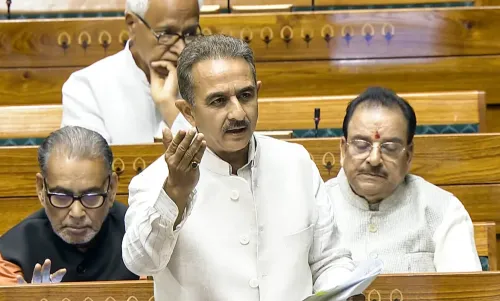
In a formal response within the Rajya Sabha, Minister of State for Environment Kirti Vardhan Singh mentioned that the often-quoted international rankings, including IQAir World Air Quality Report, WHO Global Air Quality Database, Environmental Performance Index (EPI), and Global Burden of Disease (GBD), are not overseen by any recognized authority.
These rankings are intended solely as advisory guidelines, not mandatory benchmarks.
Singh elaborated, "The World Health Organisation's air quality recommendations are merely suggestions aimed at aiding nations in achieving satisfactory air quality. Each country formulates its own air quality regulations based on factors such as geographical conditions, environmental variables, socio-economic status, and national specifics."
The Environment Ministry further noted that it established the National Ambient Air Quality Standards (NAAQS) for twelve pollutants in 2009 to safeguard public health and the environment, specifically tailored to India's unique conditions.
While the World Health Organisation revised its air quality recommendations in 2021 (24-hour PM2.5 threshold: 15 micrograms per cubic meter; annual: 5 micrograms per cubic meter), India continues to adhere to its 2009 standards (24-hour PM2.5: 60 micrograms per cubic meter; annual: 40 micrograms per cubic meter), which the government asserts are suitable for national circumstances.
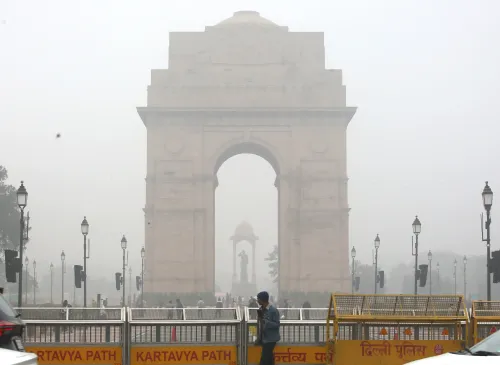
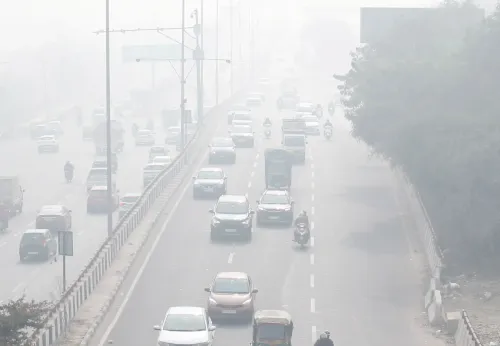
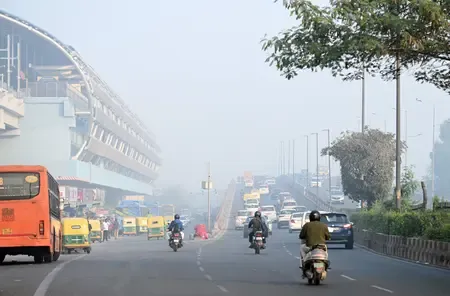
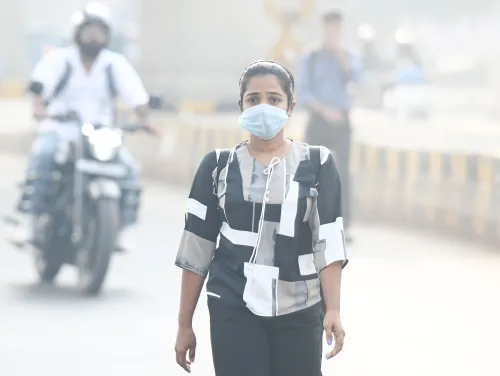
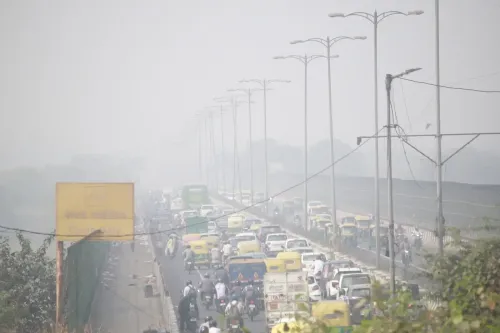
In a related update, Environment Minister Bhupender Yadav emphasized the notable enhancement in Delhi's air quality in recent years due to targeted policy measures.
He reported an increase in the number of days categorized as "Good to Moderate" (AQI ≤ 200) in Delhi, rising from 110 in 2016 to 200 in 2025 (to date).
Yadav added that the average AQI (January-November) improved from 213 in 2018 to 187 in 2025, with no recorded days of "Severe Plus" (AQI > 450) in the capital during 2025.
Notably, incidents of farm fires in Punjab and Haryana decreased by approximately 90% during the 2025 paddy harvesting season compared to 2022.
Point of View
It is crucial to recognize the importance of having locally relevant standards. Global indices may provide a perspective, but national circumstances demand tailored solutions. The government's focus on improving air quality through specific policy interventions demonstrates a commitment to public health and environmental sustainability.
NationPress
7 Oct 2026
Frequently Asked Questions
Why are global air quality rankings not considered official?
Global air quality rankings are not conducted by any official authority; they serve as advisory values rather than binding standards.
What are the National Ambient Air Quality Standards?
The National Ambient Air Quality Standards (NAAQS) are regulations established by the Indian government in 2009 to safeguard public health and the environment.
How has Delhi's air quality changed in recent years?
Delhi's air quality has improved significantly due to focused policy interventions, with the number of 'Good to Moderate' days increasing and severe pollution episodes decreasing.