UPI, DPI to Global South: India eyes $60-80 bn fintech export leap
Synopsis
India's Commerce Secretary has put a number on the fintech export ambition: a jump from $8 billion to $60–80 billion — achievable, he argues, by capturing just 10% of global fintech trade. With 23 DPI cooperation MoUs already signed and 9 FTAs covering $60 trillion in GDP concluded in five years, India is quietly building the diplomatic scaffolding to turn UPI from a domestic success story into a Global South export.
Key Takeaways
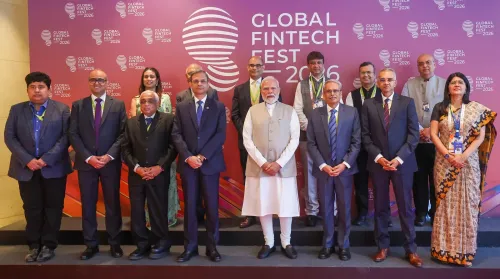
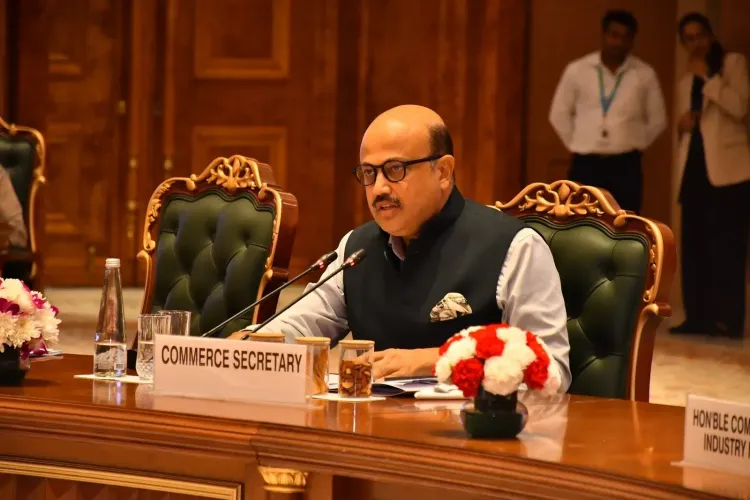
Commerce Secretary Rajesh Agrawal spoke at the Global Fintech Fest in Mumbai on 9 September .
India's fintech exports could rise from $8 billion to $60–80 billion if India captures 10% of global fintech services trade.
India has signed DPI cooperation MoUs with around 23 countries , with a focus on Global South nations and diaspora corridors.
In the last 4–5 years , India has concluded 9 FTAs covering economies with a combined GDP of $60 trillion .
FTA negotiations are being used to unlock market access across financial regulation, data flows, AI, and professional mobility .
Commerce Secretary Rajesh Agrawal on Wednesday, 9 September called on India to aggressively leverage its fintech stack — including the Unified Payments Interface (UPI) and digital public infrastructure (DPI) — to capture a larger slice of global financial services trade, with a sharp focus on Global South nations. Speaking at the Global Fintech Fest in Mumbai, Agrawal outlined a pathway that could multiply India's fintech exports from roughly $8 billion today to as much as $60–80 billion.
The Export Opportunity
Agrawal framed the ambition in blunt arithmetic: a 10 per cent share of rapidly expanding global fintech services trade would be enough to achieve the leap. 'Fintech services is where trade is growing and if we can contribute even 10 percent we are talking of a journey from $8 billion to maybe $60–80 billion,' he said.
India's fintech sector has already demonstrated scale domestically, with UPI processing billions of transactions monthly. The Commerce Secretary argued that this proven infrastructure gives India a credible export proposition — particularly for emerging economies seeking affordable, interoperable payment rails.
DPI Diplomacy: 23 MoUs and Counting
India has signed memoranda of understanding with around 23 countries for cooperation on digital public infrastructure, according to Agrawal. The outreach is not limited to technical agreements: the government is also prioritising payment system integration with nations that host a significant Indian diaspora, where remittance flows and cross-border commerce create immediate demand for interoperable systems.
'We have done MoUs with around 23 countries for DPI cooperation, every FTA we negotiate, we also discuss aligning payments systems especially in countries where India has a huge diaspora,' Agrawal said. This positions DPI exports as both a commercial and a foreign-policy instrument — a notable strategic framing.
FTAs as a Fintech Lever
Agrawal highlighted free trade agreements (FTAs) as a critical enabler, noting that India uses FTA negotiations to dismantle barriers across financial regulation, telecommunications, cross-border data flows, artificial intelligence, investment, and the movement of professionals.
In the last four to five years, India has concluded 9 FTAs covering nations with a combined GDP of $60 trillion. Within these agreements, financial services chapters are being structured to ensure reciprocal market access — allowing foreign banks into India while securing entry for Indian banks into partner geographies.
'One of the key areas we negotiate as part of FTA talks are services trade under which we negotiate financial services, wherein we are taking commitments where we are allowing their banks to India, but we are ensuring that our banks can move to their geography,' Agrawal said.
Reducing the Cost of Finance
Beyond exports, Agrawal underscored the developmental case for expanding India's fintech reach. Interoperable digital payment systems and India's fintech capabilities, he argued, could make remittances and lending significantly more affordable across the Global South — addressing a persistent pain point for migrant workers and small businesses in developing economies.
This comes amid growing international interest in India's DPI model, which the G20 has formally recognised as a framework worth replicating. With the Global Fintech Fest serving as a key industry platform, Wednesday's remarks signal that the Centre intends to translate diplomatic goodwill around DPI into concrete export revenues in the years ahead.
Point of View
But the path depends on variables India does not fully control — partner-country regulatory receptivity, data sovereignty disputes, and whether UPI's domestic success translates into a genuinely interoperable cross-border product. The 23 DPI MoUs are a diplomatic achievement, yet MoUs routinely outpace implementation. What is strategically significant is the explicit linking of FTA negotiations to fintech market access: India is, in effect, treating its payments stack as a trade-negotiation asset, not just a development aid offering. That pivot — from DPI-as-goodwill to DPI-as-export-revenue — is the real story buried in the Commerce Secretary's remarks.
NationPress
24 Oct 2026
Frequently Asked Questions
What is India's fintech export target and how does it plan to achieve it?
India aims to grow its fintech exports from around $8 billion to $60–80 billion by capturing at least 10% of global fintech services trade. The strategy centres on expanding UPI and digital public infrastructure to Global South countries, backed by DPI cooperation agreements and financial services chapters in free trade agreements.
How many countries has India signed DPI cooperation agreements with?
India has signed memoranda of understanding with around 23 countries for digital public infrastructure cooperation, according to Commerce Secretary Rajesh Agrawal. The government is also working to integrate payment systems with partner nations that have large Indian diaspora populations.
How are free trade agreements linked to India's fintech ambitions?
India uses FTA negotiations to remove barriers in financial regulation, telecommunications, cross-border data flows, AI, investment, and the movement of professionals. In the last four to five years, India has concluded 9 FTAs covering nations with a combined GDP of $60 trillion, with financial services market access built into each.
Why is the Global South a priority for India's fintech exports?
Global South nations are a priority because they share development challenges — including costly remittances and limited financial inclusion — that India's UPI and DPI stack is designed to address. Many of these countries also host large Indian diaspora communities, creating natural demand for interoperable cross-border payment systems.
What is digital public infrastructure (DPI) and why does it matter for India's exports?
Digital public infrastructure refers to foundational digital systems — such as payment networks, identity platforms, and data-sharing frameworks — that underpin a modern economy. India's DPI model, which includes UPI, has been recognised by the G20 as a replicable framework, giving India credibility and diplomatic leverage as it seeks to export these systems commercially.