How is India strengthening its industrial competencies by joining BRICS?
Synopsis
India's participation in the BRICS Centre for Industrial Competencies (BCIC) marks a significant step in enhancing its MSME sector. With a focus on Industry 4.0, this collaboration aims to bolster India's manufacturing capabilities and global economic standing.
Key Takeaways
India joins BRICS Centre for Industrial Competencies .
Focus on enhancing Industry 4.0 capabilities .
NPC designated as India Centre for BCIC .
Trust Fund Agreement signed with UNIDO .
BRICS expanded to include new member countries .
New Delhi, Feb 4 (NationPress) India has officially become a member of the BRICS Centre for Industrial Competencies (BCIC) during an event hosted by the Department for Promotion of Industry and Internal Trade (DPIIT) in the nation's capital, as stated in an official announcement made on Wednesday.
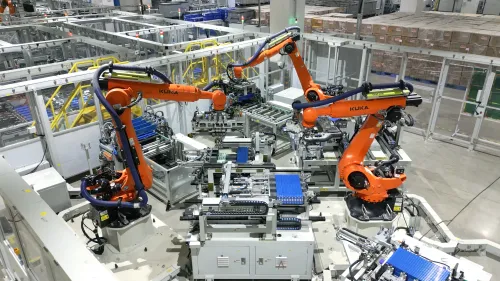
The BCIC, which was launched in collaboration with the United Nations Industrial Development Organization (UNIDO), functions as a comprehensive hub offering integrated support services to manufacturing firms and Micro, Small and Medium Enterprises (MSMEs) across BRICS nations, focusing specifically on enhancing Industry 4.0 capabilities.
During the event, a Trust Fund Agreement was formalized between DPIIT and UNIDO, signed by Agrim Kaushal, Economic Adviser at DPIIT, and Dr. Cristiano Pasini, Director of UNIDO, thereby solidifying India's involvement in the BCIC framework, the statement elaborated.
The National Productivity Council (NPC) has been appointed as the Indian Centre for BRICS Industrial Competencies. Under the policy direction of DPIIT and with technical assistance from UNIDO, NPC will lead India’s participation in BCIC, contributing to skill development, productivity improvement, and the adoption of advanced manufacturing practices, the statement noted.
The gathering was chaired by Amardeep Singh Bhatia, Secretary of DPIIT, and attended by Neerja Sekhar, Director General of NPC, along with senior officials from DPIIT, the Ministry of MSME, the Ministry of External Affairs, representatives from UNIDO, and industry partner Federation of Indian Chambers of Commerce and Industry (FICCI), the announcement further added.
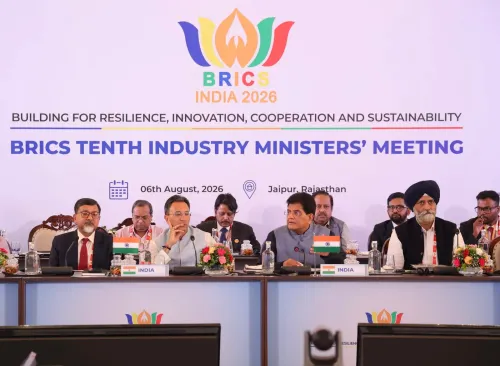
BRICS is a significant intergovernmental organization and geopolitical alliance representing vital emerging economies—initially comprising Brazil, Russia, India, China, and South Africa. It has since expanded to include additional nations like Egypt, Ethiopia, Iran, Saudi Arabia, the UAE, and Indonesia as of 2024-2025.
It serves as a counterbalance to Western-dominated global institutions, with its members prioritizing enhanced economic collaboration, trade, and political sway, collectively representing over 40% of the global population. India became a part of BRIC (Brazil, Russia, India, China) when the group was established as a formal entity in 2006, with its inaugural summit taking place in 2009. The organization was later renamed BRICS with South Africa's inclusion in 2010.
Point of View
India's accession to the BRICS Centre for Industrial Competencies is a strategic maneuver to enhance its industrial capabilities and strengthen its position in the global economy. This collaboration with UNIDO is expected to drive innovation and productivity among MSMEs, crucial for the nation’s economic development. Our approach remains committed to supporting initiatives that empower local industries while integrating them into a global framework.
NationPress
19 Sept 2026
Frequently Asked Questions
What is the BRICS Centre for Industrial Competencies?
The BRICS Centre for Industrial Competencies (BCIC) is a collaborative initiative that offers integrated support services to manufacturing companies and Micro, Small, and Medium Enterprises (MSMEs) in BRICS countries, focusing on enhancing Industry 4.0 capabilities.
What role does the National Productivity Council play?
The National Productivity Council (NPC) has been designated as the Indian Centre for BRICS Industrial Competencies, leading India's engagement with BCIC and promoting productivity enhancement and advanced manufacturing practices.
What was the purpose of the Trust Fund Agreement signed?
The Trust Fund Agreement signed between DPIIT and UNIDO formalizes India's participation in the BCIC framework, establishing a foundation for collaborative efforts to enhance industrial competencies.
Who attended the event marking India's participation?
The event was attended by key officials from DPIIT, the Ministry of MSME, the Ministry of External Affairs, representatives from UNIDO, and industry partners like FICCI, along with DPIIT Secretary Amardeep Singh Bhatia and NPC Director General Neerja Sekhar.
What does BRICS represent?
BRICS is an intergovernmental organization comprising emerging economies—originally Brazil, Russia, India, China, and South Africa, now expanded to include countries like Egypt, Ethiopia, and Saudi Arabia, focusing on enhancing economic cooperation and political influence.