New Zealand and India Set to Sign FTA on April 27 After Legal Review

Synopsis
The Free Trade Agreement between New Zealand and India is set for signing on April 27, marking a significant milestone in bilateral trade relations. This agreement promises extensive economic benefits for both nations.
Key Takeaways
FTA Signing Date: April 27 Key Benefits: Access to 1.4 billion people Tariff Reductions: 95% of NZ exports Public Scrutiny: Parliamentary review process Economic Impact: Tens of millions in extra exports
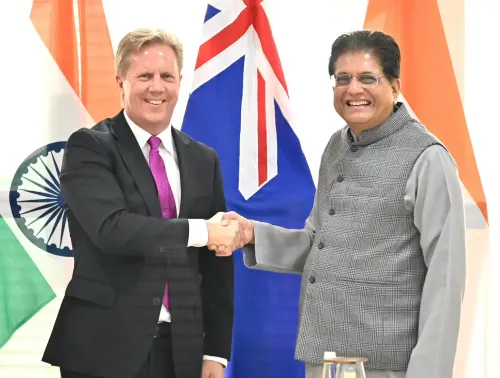
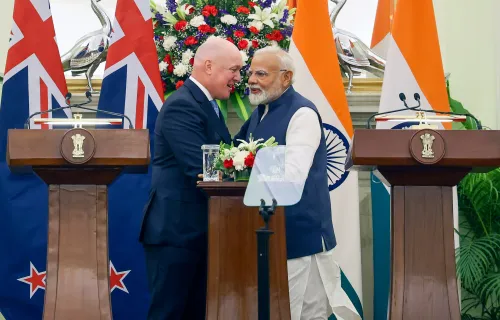
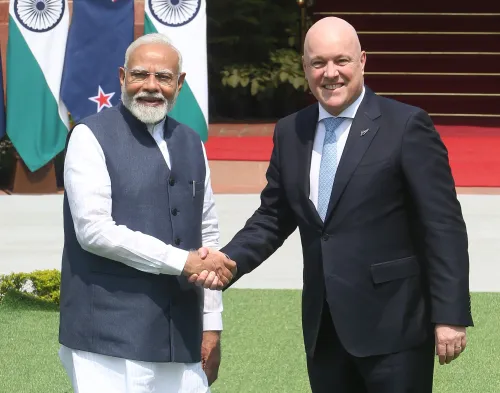
New Delhi, April 20 (NationPress) The legal assessment of the Free Trade Agreement (FTA) between New Zealand and India has been finalized, with both nations set to officially sign the deal on April 27 in New Delhi. This event will be attended by a significant number of business representatives from both countries, announced Trade and Investment Minister Todd McClay on Monday.
McClay expressed, “This landmark agreement provides our exporters with unparalleled access to 1.4 billion people while engaging with an economy poised to emerge as the world's third-largest.”
He emphasized the critical nature of this trade agreement amidst global instability, asserting that it has never been more vital for New Zealand's economic prosperity.
“The signing of the FTA will permit New Zealand to commence a formal parliamentary treaty review, allowing the public a chance to comprehensively evaluate the agreement,” the minister remarked.
“Moreover, this signature ensures we are positioned to benefit from a Most Favoured Nation clause for our wine and services exports. The European Union has already secured enhanced access for these sectors, which will automatically apply to our exporters if our agreement takes effect first. This could translate to additional exports valued in the tens of millions of dollars for the New Zealand economy,” McClay noted.
Finalized in December, this historic agreement aims to eliminate or lower tariffs on 95% of New Zealand's exports, placing it among the highest concessions of any Indian FTA. Almost 57% of our exports will enjoy duty-free status from the outset, including lamb, wool, coal, leather, and most forestry and industrial products.
This figure is expected to rise to 82% upon full implementation, incorporating infant formula, a kiwifruit quota nearly four times our current exports, and seafood. The remaining 13%, which includes kiwifruit, apples, mānuka honey, wine, and certain dairy products, will undergo significant tariff reductions.
McClay assured that the government will adhere to the established parliamentary treaty review process for the India FTA, allowing all stakeholders to assess their support while the public examines the agreement.
The signing will trigger the standard parliamentary protocol, enabling scrutiny by Parliament and the public through the Select Committee. The FTA text and National Interest Analysis will be presented in Parliament the day after the signing and forwarded to the Foreign Affairs, Defence and Trade Committee (FADTC), as per the official statement.
After the FADTC completes its review, enabling legislation will be introduced, following the typical legislative procedure. This method aligns with the processes followed for the TPP, CPTPP, and agreements with the United Kingdom, European Union, and United Arab Emirates, according to the statement.
Point of View
The impending signing of the India-New Zealand FTA represents a crucial opportunity for enhanced economic collaboration. This agreement not only paves the way for increased trade but also strengthens diplomatic ties, fostering mutual growth and prosperity.
NationPress
16 Sept 2026
Frequently Asked Questions
What is the significance of the India-New Zealand FTA?
The FTA will provide significant trade benefits, granting New Zealand exporters access to India's vast market and eliminating tariffs on numerous products.
When is the FTA set to be signed?
The FTA is scheduled for signing on April 27 in New Delhi.
What products will benefit from the FTA?
The agreement will eliminate or reduce tariffs on 95% of New Zealand's exports, including lamb, wool, and seafood.
How will the public engage with the FTA process?
The signing will initiate a parliamentary review process, allowing public scrutiny of the agreement.
What is the expected economic impact of the FTA?
The FTA could lead to tens of millions of dollars in additional exports for New Zealand, enhancing its economic growth.