India-Russia energy imports hit record highs, says Kremlin ahead of BRICS Summit
Synopsis
Every month, India sets a new record for Russian energy imports — and the Kremlin is openly saying so. Ahead of the BRICS Summit in New Delhi, Peskov's briefing laid out a wide-ranging agenda: unresolved rupee payments, rare earth cooperation, the Su-57 stealth jet, and a pointed rebuttal of the de-dollarisation label. The Putin-Modi bilateral on Friday will be the real test of how far this partnership is prepared to go.
Key Takeaways
Dmitry Peskov confirmed India's Russian energy imports are setting new records every month , with no slowdown in sight.
The accumulated rupee payment backlog in India-Russia bilateral trade is 'gradually being resolved,' according to Peskov.
Russia and India are in talks on rare earth exploration cooperation and the potential sale of the Sukhoi Su-57 stealth fighter jet.
Peskov said Russia's shift to national currencies is driven by Western sanctions, not a deliberate de-dollarisation policy.
Russian President Vladimir Putin will attend the BRICS Summit in New Delhi on 12-13 September and hold bilateral talks with PM Narendra Modi on Friday.
India holds the BRICS Presidency in 2026 , with the grouping now comprising 11 full members and 10 partner countries .
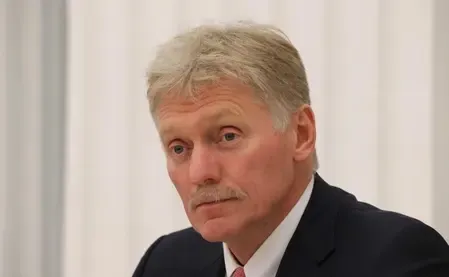
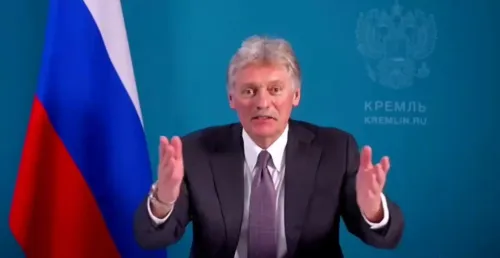
Kremlin spokesperson Dmitry Peskov said on Tuesday that India's energy imports from Russia continue to set new records every month, with no signs of a slowdown — a statement that underscores the deepening energy ties between the two nations even as Western sanctions pressure Moscow. Peskov's remarks came during a virtual briefing with Indian journalists held ahead of the BRICS Summit scheduled in New Delhi this week.
Record Energy Flows, No Figures Disclosed
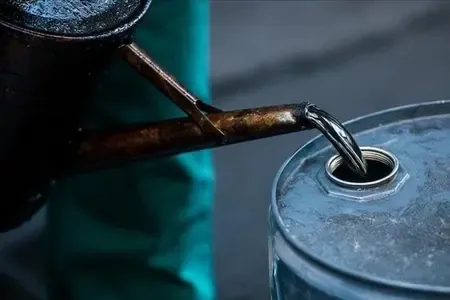
Peskov declined to share specific volume data, saying, 'I don't want to give you any figures for understandable reasons, but every month we have a new record.' The statement, while deliberately vague, signals that India's discounted Russian crude purchases — which surged sharply after Western nations imposed energy sanctions on Moscow following the Ukraine conflict — have not tapered off. India has emerged as one of Russia's largest oil customers since 2022, a shift that has drawn scrutiny from the United States and European Union.
Rupee Payment Backlog Being Resolved
Peskov also addressed the long-standing issue of accumulated rupee payments in India-Russia bilateral trade, stating that the matter is 'gradually being resolved.' The rupee-rouble settlement mechanism, while operationally active, has faced friction due to Russia's limited appetite for rupee-denominated assets and restrictions on converting rupees into other currencies. The resolution of this bottleneck is seen as critical to sustaining and expanding bilateral trade volumes.
Rare Earths, Su-57 Fighter Jet on Bilateral Agenda
Beyond energy, Peskov said the two countries are in active discussions on closer cooperation in the exploration of rare earths — a strategic domain where both nations hold significant interest amid a global scramble for critical minerals. He also confirmed that the potential sale of Russia's Sukhoi Su-57 stealth fighter jet to India remains on the bilateral agenda, though he did not indicate how advanced those talks are. India's defence procurement decisions have historically been subject to extended evaluation cycles, and the Su-57 has been under consideration alongside competing Western platforms.
On BRICS Currency Shift and De-Dollarisation
Peskov pushed back against characterisations of BRICS's shift toward national currencies as a deliberate de-dollarisation drive. 'We do not want to claim any de-dollarisation policy. We're simply doing what better corresponds with our national interests,' he said. He attributed the move to Western pressure, noting that Russia was denied access to the dollar and euro following sanctions. 'If they don't let us use their money, we use our own money,' Peskov said, adding that Russia remains open to every acceptable method of payment.
Putin-Modi Bilateral and BRICS Summit Outlook
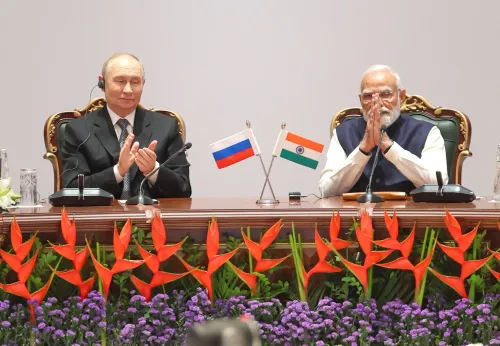
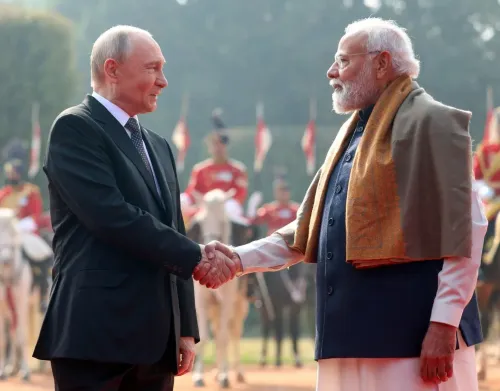
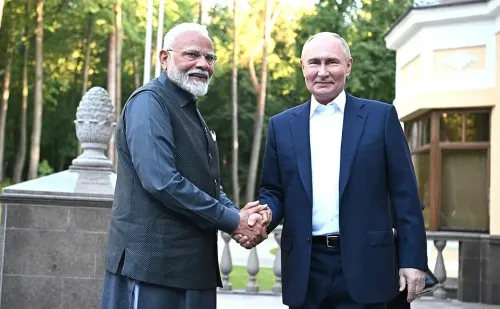
Russian President Vladimir Putin is set to participate in the BRICS Summit in New Delhi on 12-13 September, with security, economy, finance, and culture among the key themes. Putin is also scheduled to hold bilateral talks with Prime Minister Narendra Modi on Friday, with trade and economy forming a substantial part of the agenda. India holds the BRICS Presidency in 2026 under the theme 'Building for Resilience, Innovation, Cooperation and Sustainability.' The grouping now counts 11 full members — including Brazil, China, Egypt, Ethiopia, India, Indonesia, Iran, Russia, Saudi Arabia, South Africa, and the UAE — alongside 10 partner countries such as Belarus, Bolivia, Kazakhstan, Cuba, Malaysia, Nigeria, Thailand, Uganda, Uzbekistan, and Vietnam. For India, the expanded BRICS footprint presents an opportunity to strengthen exports, attract investment, diversify supply chains, and advance technology partnerships within a multipolar economic framework.
Point of View
Offered without figures, is as much a political signal as an economic one — reassuring Moscow's most important non-Western energy customer that the supply relationship is stable. The unresolved rupee payment pile-up, however, remains the structural fault line: India is buying Russian oil in volume, but the financial architecture to settle that trade cleanly is still being improvised. The Su-57 discussion is worth watching closely — India's defence procurement is a long game, but any movement there would significantly complicate New Delhi's balancing act with Washington. And on de-dollarisation, Peskov's careful framing — 'we're simply doing what corresponds with our national interests' — is a message India has itself used. The convergence of rhetoric does not mean convergence of interests, but it does signal how much diplomatic room both sides are working to preserve.
NationPress
24 Oct 2026
Frequently Asked Questions
Are India's energy imports from Russia really at record levels?
According to Kremlin spokesperson Dmitry Peskov, India's energy imports from Russia are setting new records every month, with no slowdown observed. Peskov declined to provide specific figures but made the claim during a virtual briefing with Indian journalists ahead of the BRICS Summit in New Delhi.
What is the rupee payment issue in India-Russia trade?
India and Russia have been settling bilateral trade in rupees and roubles to bypass Western sanctions on the dollar and euro. However, a backlog of accumulated rupee payments has built up because Russia has limited options to deploy or convert those rupees. Peskov said the issue is 'gradually being resolved.'
Is Russia selling the Su-57 stealth fighter jet to India?
The potential sale of the Sukhoi Su-57 stealth fighter jet to India is on the bilateral agenda, Peskov confirmed, though he did not indicate how far advanced the negotiations are. India's defence procurement decisions typically involve extended evaluation periods.
What is Russia's position on BRICS de-dollarisation?
Peskov stated that Russia does not pursue a formal de-dollarisation policy and that the shift to national currencies was a response to being denied access to the dollar and euro under Western sanctions. 'If they don't let us use their money, we use our own money,' he said, adding that Russia remains open to all acceptable payment methods.
What will Putin and Modi discuss at the BRICS Summit?
Russian President Vladimir Putin is scheduled to attend the BRICS Summit in New Delhi on 12-13 September and hold bilateral talks with Prime Minister Narendra Modi on Friday. Trade, economy, and energy are expected to form the core of the agenda, alongside broader BRICS themes of security, finance, and culture.