India-Rwanda Joint Trade Committee: Pharma, minerals, investment in focus
Synopsis
India is already Rwanda's largest pharma supplier and its second biggest foreign investor — yet the bilateral relationship has operated well below its potential. The first-ever India–Rwanda Joint Trade Committee session in New Delhi has now put critical minerals, digital infrastructure, and agro-processing on a structured footing, with a follow-up session due in Kigali within a year.
Key Takeaways
The first India–Rwanda Joint Trade Committee (JTC) session was held in New Delhi on 1 August 2025 .
India accounts for approximately 24.5 per cent of Rwanda's total pharmaceutical imports — its largest pharma supplier.
Rwanda is India's second largest foreign investor as of 2025 .
India expressed interest in Rwanda's tin, tungsten, and tantalum resources, with proposed institutional cooperation between the Geological Survey of India and the Rwanda Mines, Petroleum and Gas Board .
Invest India and the Rwanda Development Board designated as investment focal points under the JTC framework.
The second JTC session is scheduled to be held in Rwanda within one year.
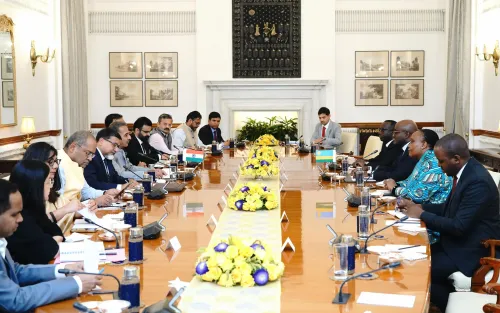
India and Rwanda have pledged to deepen bilateral trade ties and expand business-to-business engagement following the first session of the India–Rwanda Joint Trade Committee (JTC), held in New Delhi on 1 August 2025. The meeting reviewed the current state of trade in goods and services and mapped out priority sectors for structured cooperation, according to an official statement from the Ministry of Commerce and Industry.
Key Developments from the JTC Session
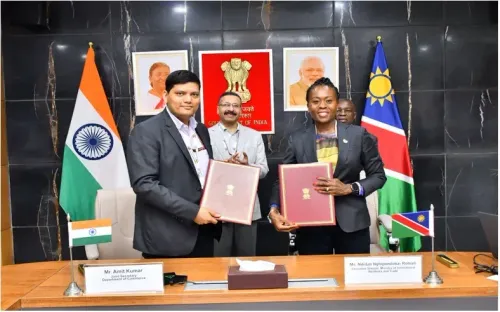
The Indian delegation was led by Amit Kumar, Joint Secretary, Department of Commerce, while Rwanda was represented by Virgile Rwanyagatare, Director General for Asia, Pacific and Middle East Affairs at Rwanda's Ministry of Foreign Affairs and International Cooperation. Both sides agreed to hold the second JTC session in Rwanda within a year.
A standout data point from the discussions: India is already Rwanda's largest source of pharmaceutical imports, accounting for approximately 24.5 per cent of the country's total pharma import bill. Rwanda is also India's second largest foreign investor as of 2025, a status that underscores the strategic depth beneath what is often treated as a peripheral bilateral relationship.
Trade Basket and Sectoral Priorities
India's principal exports to Rwanda span drug formulations and biologicals, two- and three-wheelers, industrial and electrical machinery, oil meals, and iron and steel products. Rwanda's exports to India include lead, spices, essential oils, copper, precious and semi-precious stones, processed agricultural products, and minerals.
Both sides committed to diversifying this basket. India flagged expansion potential in heavy engineering goods, medical devices, refined petroleum products, textiles, marine products, plastics, sports goods and toys, gems and jewellery, and scientific instruments. Rwanda, in turn, identified chillies, macadamia, French beans, avocados, essential oils, tea, coffee, other horticultural products, minerals, and precious stones as priority exports to India.
Critical Minerals and Investment Opportunities
One of the more strategically significant discussions centred on critical minerals. India expressed interest in collaborating on Rwanda's tin, tungsten, and tantalum resources — materials central to electronics and defence supply chains — including institutional cooperation between the Geological Survey of India and the Rwanda Mines, Petroleum and Gas Board.
On investment, Rwanda highlighted opportunities in mining, agro-processing, affordable housing, information and communication technology, manufacturing, healthcare, tourism, and financial services. Both sides designated Invest India and the Rwanda Development Board as investment focal points under the JTC framework.
Digital, Green, and Standards Cooperation
The agenda extended beyond goods trade. Discussions covered digital public infrastructure, fintech, cybersecurity, green mobility, and renewable energy. On standards harmonisation, both sides discussed capacity building between the Bureau of Indian Standards and the Rwanda Standards Board. The two countries also agreed to exchange calendars of trade fairs, business forums, and Buyer-Seller Meets to facilitate on-the-ground commercial linkages.
With the next JTC session scheduled on Rwandan soil, the institutional framework is now in place — the question is how quickly sectoral working groups can translate agreed priorities into measurable trade flows.
Point of View
Tungsten, and tantalum is less about bilateral sentiment and more about supply-chain diversification away from China-dominated sources. Whether the institutional linkages — Geological Survey of India to Rwanda Mines Board, Invest India to Rwanda Development Board — translate into actual offtake agreements will be the real measure. Structured committees without follow-through disbursements are a familiar pattern in India's Africa engagement; the one-year timeline for the next session is a modest but testable benchmark.
NationPress
16 Sept 2026
Frequently Asked Questions
What was decided at the India–Rwanda Joint Trade Committee meeting?
The first session of the India–Rwanda Joint Trade Committee, held in New Delhi on 1 August 2025, resulted in both sides committing to diversify the bilateral trade basket, facilitate business-to-business engagement, and cooperate on critical minerals, digital infrastructure, and standards harmonisation. A second session is scheduled in Rwanda within one year.
Why is India significant for Rwanda's pharmaceutical sector?
India is Rwanda's largest source of pharmaceutical imports, supplying approximately 24.5 per cent of the country's total pharma import bill. Drug formulations and biologicals are among India's top exports to Rwanda.
What critical minerals is India seeking from Rwanda?
India expressed interest in Rwanda's tin, tungsten, and tantalum resources — materials critical to electronics and defence manufacturing. The two sides discussed institutional cooperation between the Geological Survey of India and the Rwanda Mines, Petroleum and Gas Board.
What are Rwanda's priority exports to India?
Rwanda identified chillies, macadamia, French beans, avocados, essential oils, tea, coffee, other horticultural products, minerals, and precious stones as its priority exports to India under the expanded bilateral trade framework.
What is Rwanda's investment relationship with India?
Rwanda is India's second largest foreign investor as of 2025. Investment opportunities highlighted by Rwanda include mining, agro-processing, affordable housing, ICT, manufacturing, healthcare, tourism, and financial services. Invest India and the Rwanda Development Board have been designated as investment focal points under the JTC framework.