Is India Ready for a Rs 65,400 Crore Leap in Fighter Jet Engine Development by 2035?
Synopsis
India is poised to revolutionize its aerospace sector with a significant investment of Rs 65,400 crore to develop fighter jet engines by 2035. This ambitious plan seeks to enhance self-reliance in defense technology while creating job opportunities and strengthening India's global position in the aerospace industry.
Key Takeaways
Investment of Rs 65,400 crore to develop fighter jet engines by 2035.
Goal of self-reliance in aircraft propulsion.
Production of 1,100 engines for future fighter jets.
Collaboration with global manufacturers for technology transfer.
Boost to India's economy through job creation and exports.
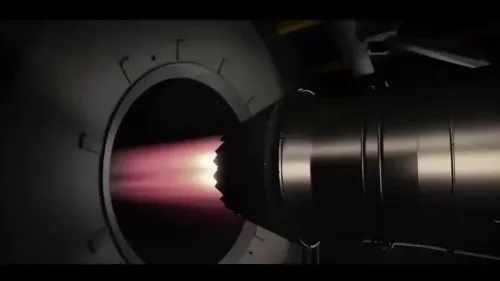
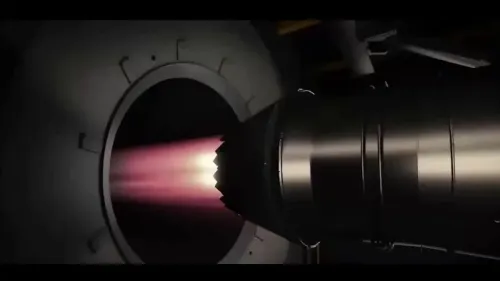
New Delhi, Nov 3 (NationPress) India is set to significantly advance its aerospace objectives with an impressive investment of approximately Rs 65,400 crore ($7.44 billion) aimed at developing and manufacturing fighter jet engines by 2035.
This initiative is designed to enhance India's self-sufficiency in a pivotal sector of defense — aircraft propulsion, as reported by the Times of Oman.
The initiative represents a substantial stride towards decreasing reliance on foreign imports and fostering the production of engines capable of powering the upcoming generation of Indian fighter jets.
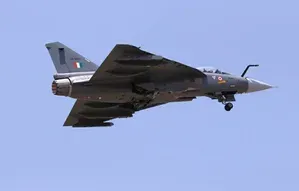
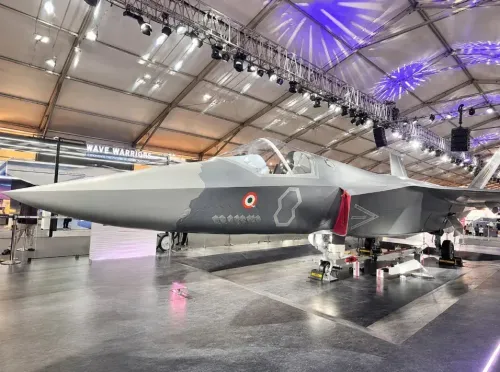
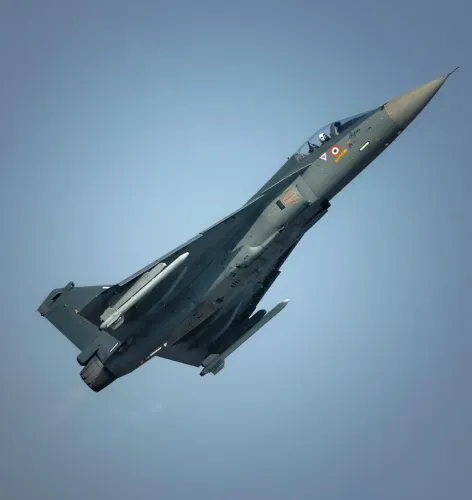
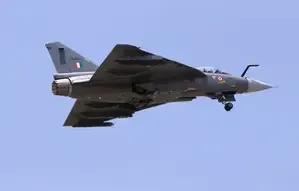
India envisions the construction of around 1,100 engines over the next decade, which will support various aircraft from the advanced Tejas Mk2 to the stealthy AMCA, as well as upgraded fighter jets and unmanned aerial vehicles.
Leading this ambitious project is S. V. Ramana Murthy, Director of the Gas Turbine Research Establishment (GTRE), who is spearheading the effort to create indigenous engines that can compete on a global scale.
He emphasized the importance of establishing a robust ecosystem that integrates government research, private industry, and international collaboration.
The Indian Air Force (IAF) is also preparing for this transformation, aiming to enhance its fleet to 42 squadrons by 2035 with approximately 450 new fighter jets, many of which may soon be powered by domestically produced engines.
This initiative is expected to not only enhance India's defense capabilities but also bolster confidence in its technological self-reliance.
A key project in this roadmap is the Tejas Mk2, which builds on the success of the current Tejas aircraft.
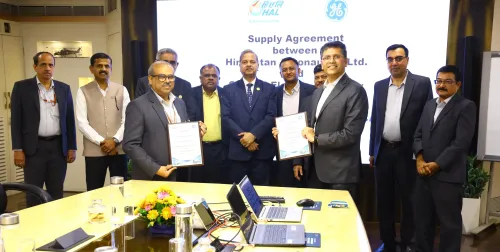
Discussions with the US-based General Electric regarding its F414 engine, along with a technology transfer agreement, are anticipated to facilitate the development of world-class engines in India.
India's indigenous Kaveri engine initiative, which has encountered delays previously, is now being revitalized with renewed energy, and its upgraded versions could soon power unmanned combat aerial vehicles, which are crucial for the country’s future defense strategy.
International partnerships will also play a significant role in this endeavor, with global engine manufacturers such as Safran from France, Rolls-Royce from Britain, and GE from the US engaged in discussions to co-develop a fifth-generation engine for India's Advanced Medium Combat Aircraft (AMCA), with the first prototype expected by 2028.
For the first time, India is inviting private enterprises to engage in fighter jet development, creating new opportunities for innovation and growth in the aerospace industry.
Hindustan Aeronautics Limited (HAL) will collaborate with private and global partners to distribute the workload and enhance production.
In line with Prime Minister Narendra Modi's initiative of “Atmanirbhar Bharat” (self-reliant India), the government is actively promoting global defense manufacturers to establish production facilities within the country.
This shift signifies a transition from India being solely a buyer of defense technology to becoming a builder and partner in advanced manufacturing.
Experts argue that this extensive engine development program will not only fortify India's defense readiness but also stimulate the economy by generating jobs, promoting exports, and establishing India as a global contender in the aerospace sector.
Point of View
It's essential to recognize the significance of India's initiative to develop indigenous fighter jet engines. This ambitious program not only aims to enhance national security but also promotes economic growth and technological advancement, positioning India as a formidable player in the global aerospace landscape.
NationPress
29 Sept 2026
Frequently Asked Questions
What is the total investment planned for the fighter jet engine project?
India plans to invest approximately Rs 65,400 crore ($7.44 billion) in the development of fighter jet engines by 2035.
What is the main goal of this initiative?
The primary objective is to achieve self-reliance in aircraft propulsion and reduce dependence on imported engines.
Which aircraft will be powered by these engines?
The engines will power various aircraft including the Tejas Mk2, AMCA, upgraded fighters, and unmanned combat aircraft.
Who is leading the engine development project?
The project is spearheaded by S. V. Ramana Murthy, Director of the Gas Turbine Research Establishment (GTRE).
How will this initiative impact India's economy?
It is expected to create jobs, encourage exports, and enhance India's position as a global aerospace player.