India's FTO Rankings: Avyanna Aviation Tops 'A' Category in April 2026
Synopsis
For the first time, an Indian Flying Training Organisation has achieved the top 'A' ranking under DGCA's grading system — Avyanna Aviation Pvt Ltd. With India targeting 30,000 new pilots in a decade and training hours jumping from 32% to 50%, the second phase FTO rankings signal a quiet but consequential revolution in India's aviation future.
Key Takeaways
Avyanna Aviation Pvt Ltd is the sole FTO to achieve Category 'A' in the DGCA FTO rankings for April 2026 — a first since the system launched.
The first phase of FTO rankings was released on October 1, 2025 ; the second phase shows measurable improvement with more institutes in Category 'B' and fewer in Category 'C'.
Training flying hours have risen from 32% to 50% since the ranking framework was introduced by the DGCA .
CPL issuances have grown by more than 2.5 times over eight years , with record numbers issued in 2024 and 2025 .
India plans to add 50 new airports , induct 500 aircraft , and will need 30,000 additional pilots over the next decade.
Six new FTOs have been approved in the last 18 months , with six more pending approval , expanding India's pilot training capacity.
New Delhi, April 25, 2026 — The Ministry of Civil Aviation has unveiled the second phase of DGCA Flying Training Organisation (FTO) rankings for April 2026, marking a significant leap in pilot training quality across India. Avyanna Aviation Pvt Ltd became the sole institute to secure the coveted Category 'A' designation — a milestone, given that no institution achieved this rank in the inaugural phase. The announcement underscores the government's intensifying push to build a world-class pilot training ecosystem under its 'Train in India, Fly in India' vision.
What the Latest FTO Rankings Show
The Directorate General of Civil Aviation (DGCA) released its data-driven ranking framework on Friday, April 25, 2026, revealing measurable progress across the board. Avyanna Aviation Pvt Ltd stands alone in Category 'A', a clear improvement from the first phase published on October 1, 2025, when the top slot remained vacant.
The number of FTOs classified under Category 'B' has risen, while those in Category 'C' have declined — signalling a systemic upgrade in operational and safety standards. Notably, Indira Gandhi Rashtriya Uran Akademi (IGRUA) recorded a significant jump in its ranking, reflecting improved training outcomes and compliance.
The ranking system enables objective, transparent comparison of institutes based on metrics including training flying hours, safety compliance, fleet strength, and Commercial Pilot Licence (CPL) completion rates.
Civil Aviation Minister Ram Mohan Naidu's Vision
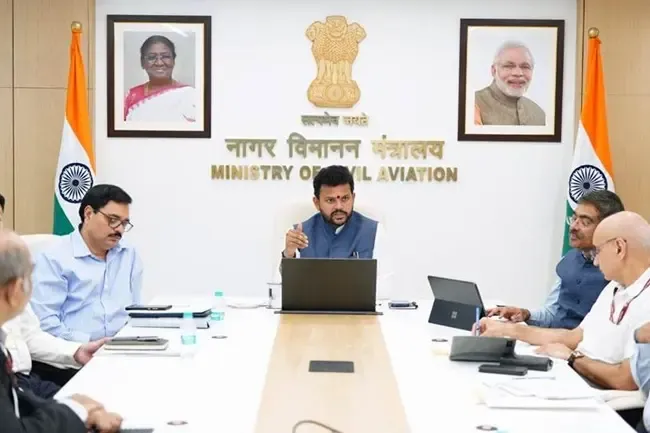
Civil Aviation Minister Ram Mohan Naidu, who guided the development of this ranking framework, stated that the initiative was born out of direct interactions with aspiring cadets and their families. He said his core objective in introducing the FTO ranking system is to make pilot training more transparent and flying a more attractive career option for youth.
The minister emphasised that empowering students with credible, data-backed information is central to the policy's design — enabling informed decisions in a sector where training costs can run into tens of lakhs of rupees.
Key Metrics: Training Hours, CPLs, and Fleet Expansion
Since the ranking system was introduced, training flying hours have surged from 32% to 50%, reflecting deeper engagement and utilisation of aircraft fleets. The number of Commercial Pilot Licences (CPLs) issued has grown by more than 2.5 times over the past eight years, with record CPL issuances recorded in both 2024 and 2025.
In the last 18 months alone, six new FTOs have been granted operational permits, with six more in the pipeline — indicating strong investor and institutional confidence in India's pilot training market. Aircraft fleet expansions and improved efficiency in meeting CPL requirements have further strengthened the ecosystem.
India's Aviation Expansion: 500 Aircraft, 50 Airports, 30,000 Pilots
Minister Ram Mohan Naidu outlined an ambitious five-year roadmap for India's aviation sector: 50 new airports, induction of approximately 500 aircraft by Indian carriers, and the transformation of key airports into transit hubs under the hub-and-spoke model.
With a projected demand for nearly 30,000 additional pilots over the next decade, the stakes for quality pilot training have never been higher. India currently ranks among the world's fastest-growing aviation markets, and a domestic pilot shortage could become a critical bottleneck if training infrastructure does not scale accordingly.
This comes amid a broader global pilot shortage, with aviation bodies forecasting a significant deficit of pilots worldwide by 2040 — making India's investment in FTO quality not just a domestic imperative but a global opportunity.
Why This Matters: Transparency, Safety, and Student Protection
The FTO ranking system addresses a long-standing concern in India's pilot training sector — lack of standardisation and accountability. Historically, students and families had limited tools to assess the quality of training institutes, leading to cases of substandard training, financial loss, and delayed CPL completion.
By introducing a publicly available, DGCA-backed ranking framework, the government is effectively creating market accountability — where underperforming FTOs face reputational and regulatory pressure to improve. Critics, however, note that the pace of improvement must accelerate further, given that only one institute out of the total FTO pool has reached the top category.
As India's aviation ambitions scale rapidly, the quality and volume of pilot training will be a decisive factor. The next phase of FTO rankings is expected to reflect whether the current momentum is sustained or whether structural gaps persist.
Point of View
A domestic pilot shortage is not a hypothetical — it is a ticking clock. The government deserves credit for building accountability into the system, but the real test is whether this transparency translates into rapid, broad-based quality improvement before India's aviation boom outpaces its talent pipeline.
NationPress
20 Sept 2026
Frequently Asked Questions
Which flying training institute topped the DGCA FTO rankings in April 2026?
Avyanna Aviation Pvt Ltd is the only Flying Training Organisation to achieve Category 'A' in the DGCA FTO rankings for April 2026. No institute had qualified for the top category in the first phase released on October 1, 2025.
What is the DGCA FTO ranking system and why was it introduced?
The DGCA Flying Training Organisation ranking system is a data-driven framework introduced under Civil Aviation Minister Ram Mohan Naidu to bring transparency and accountability to pilot training institutes in India. It ranks FTOs based on training flying hours, safety compliance, fleet strength, and CPL completion efficiency.
How many pilots does India need in the next decade?
India is projected to require nearly 30,000 additional pilots over the next decade, according to the Ministry of Civil Aviation. This demand is driven by rapid fleet expansion, 50 new airports, and the growth of Indian carriers.
How has pilot training improved since the FTO ranking system was introduced?
Since the ranking system launched, training flying hours have increased from 32% to 50%, and CPL issuances have grown by more than 2.5 times over the past eight years. Record CPL numbers were recorded in both 2024 and 2025.
How many new flying training organisations have been approved recently in India?
Six new FTOs have been granted operational permits in the last 18 months, with six more currently in the pipeline. This expansion reflects growing institutional and investor confidence in India's pilot training sector.