Is India Dedicated to Biodiversity Conservation and People-Nature Harmony?
Synopsis
Discover how India is dedicated to preserving biodiversity and creating harmony between people and nature, as reaffirmed by the government on the International Day for Biosphere Reserves. This commitment showcases India's diverse biosphere reserves, linking ecological conservation with community welfare.
Key Takeaways
India's commitment to biodiversity conservation is showcased through its biosphere reserves.
The reserves integrate ecological protection with community welfare.
Ongoing initiatives aim to enhance the potential of biosphere reserves for future generations.
National programs complement the conservation efforts of these areas.
India is a leader in sustainable living and biodiversity preservation.
New Delhi, Nov 3 (NationPress) The Indian government has reaffirmed its dedication to preserving biodiversity and nurturing a harmonious relationship between humans and nature on the occasion of the International Day for Biosphere Reserves.
Every year on November 3, this day is celebrated globally to honor regions where natural ecosystems and communities thrive together.
“India joins the world in celebrating this important day, showcasing its extensive network of biosphere reserves that encompass a variety of landscapes: mountains, forests, coasts, and islands. These regions exemplify India's commitment to both biodiversity conservation and the promotion of a sustainable coexistence between people and nature, supported by national initiatives and international programs like UNESCO's Man and Biosphere (MAB) Programme,” stated the government in an official release.
The government also emphasized ongoing initiatives aimed at maximizing the potential of biosphere reserves to safeguard ecological wealth and enhance the quality of life for both current and future generations. These reserves consistently demonstrate that sustainable living and conservation can indeed coexist.
Biosphere reserves are designated areas recognized by national authorities for their role in conserving biodiversity while promoting sustainable development.
These reserves are instrumental in linking biodiversity protection to community welfare and creating sustainable livelihoods.
National programs such as Project Tiger, Project Elephant, and the Green India Mission support the objectives of Biosphere Reserves.
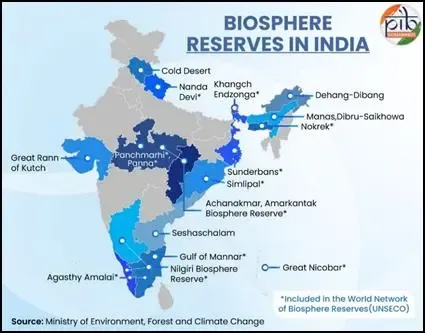
According to government reports, India has declared 18 biosphere reserves, covering an area of approximately 91,425 sq. km, with 13 of them recognized by UNESCO’s World Network of Biosphere Reserves (WNBR).
These reserves reflect a broad range of landscapes from mountains and forests to coasts and islands, illustrating India’s ecological diversity and its commitment to biodiversity conservation while also empowering local communities.
The Biosphere Reserve Division of the Ministry of Environment, Forest, and Climate Change (MoEFCC) oversees a Centrally Sponsored Scheme (CSS) focused on Biodiversity Conservation, which operates as a sub-scheme under the larger Conservation of Natural Resources and Ecosystems (CNRE) program.
This scheme allocates financial resources to states for specific conservation and development initiatives, primarily executed by State Forest Departments.
India’s observance of this day “underscores the nation’s unwavering commitment to biodiversity conservation and sustainable development,” the statement added.
The country's biosphere reserves, which blend ecological safeguarding with community empowerment, stand as living proof of the harmony achievable between nature and people.
“With an expanding network of reserves, increased forest coverage, and active collaboration towards innovative and inclusive solutions, India continues to establish benchmarks in global conservation,” the statement concluded.
“These efforts ensure the flourishing of both ecological treasures and local communities, reinforcing India’s position as a leader in sustainable living for both present and future generations,” it added.
Point of View
We stand firm in our support for initiatives promoting biodiversity and the harmonious coexistence of communities with nature. The government’s commitment is commendable and essential for sustainable development in India, ensuring that both ecological integrity and community welfare thrive together.
NationPress
19 Sept 2026
Frequently Asked Questions
What is the purpose of the International Day for Biosphere Reserves?
The International Day for Biosphere Reserves aims to celebrate and promote regions where nature and communities coexist in harmony, highlighting the importance of biodiversity conservation.
How many Biosphere Reserves does India have?
India has 18 notified Biosphere Reserves, with 13 recognized by UNESCO's World Network of Biosphere Reserves.
What initiatives support the conservation of Biosphere Reserves in India?
National initiatives such as Project Tiger, Project Elephant, and the Green India Mission complement efforts to conserve and manage Biosphere Reserves.