How is India Maintaining Strong Macroeconomic Stability Amid Global Challenges?
Synopsis
India is exhibiting exceptional macroeconomic stability amidst global challenges, according to SEBI Chairman Tuhin Kanta Pandey. The country leads in IPO numbers and ranks third in capital raised, showcasing a resilient economy supported by innovative reforms and an expanding investor base, crucial for future growth.
Key Takeaways
India leads globally in IPOs.
Macroeconomic stability is evident amid global uncertainties.
Strong reforms are set to enhance economic growth.
Domestic investor participation is significantly increasing.
SEBI plays a crucial role in market regulation and investor protection.
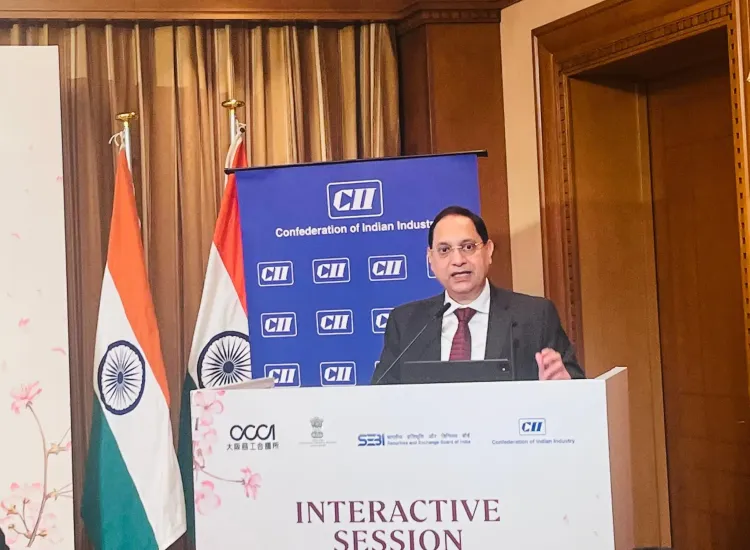
New Delhi, Jan 22 (NationPress) SEBI Chairman Tuhin Kanta Pandey stated on Thursday that India is showcasing remarkable macroeconomic stability despite persistent global trade and geopolitical uncertainties. The country has also emerged as a leader in capital-raising activities, securing the top position worldwide for the number of IPOs and third place for capital raised in 2025.
Pandey highlighted the resilience of the Indian economy, noting that moderate inflation, strong foreign exchange reserves, and stable external accounts position India among the world's most robust economies, maintaining one of the highest growth rates globally.
During an investors' forum organized by the Confederation of Indian Industry (CII) in Osaka, Japan, he remarked that India’s digital public infrastructure has set new benchmarks globally. Recent reforms in income taxation, labor laws, and the GST framework are anticipated to enhance consumption and rejuvenate the investment cycle.
Pandey characterized the surge in domestic investors as one of India’s most significant transformations.
Currently, India is the fifth-largest equity market globally by market capitalization, with the United States leading at 48.2%, followed by China, Japan, and Hong Kong.
Mutual funds have witnessed substantial engagement, with significant monthly equity inflows, while the AIF sector has become a pivotal contributor to private capital formation.
Moreover, he pointed out that debt markets are expanding, private equity and AIF investments are increasing, and both REITs and InvITs are effectively channeling long-term funds into infrastructure and real estate. The municipal bond market is also gaining traction.
Pandey stressed the importance of investor education as a core part of SEBI’s mission, with strengthened initiatives aimed at tackling digital fraud and encouraging responsible investing. For Foreign Portfolio Investors (FPIs), SEBI has aimed to simplify market entry through regulatory reforms, streamlined registration processes, and enhanced settlement systems, while also maintaining active engagement with global investors.
India and Japan enjoy a long-standing partnership, underscored by their Special Strategic and Global Partnership, with bilateral trade surpassing $25 billion, illustrating the depth of economic collaboration.
Japanese investors have consistently recognized substantial value and returns from India, which has produced an impressive array of wealth-compounding enterprises, Pandey noted.
Chandru Appar, Consul General of India in Osaka–Kobe, remarked that India is currently experiencing a high-growth trajectory, fueled by its demographic dividend, rapid infrastructure advancement, and an expanding consumer base, bolstered by landmark economic reforms over the last decade.
India’s capital markets are founded on trust, transparency, and robust regulations, with SEBI playing an essential role in safeguarding investors and upholding market integrity, Appar added.
Setsuo Iuchi, President of the Osaka Chamber of Commerce and Industry, highlighted that India is a crucial partner for Japanese enterprises, particularly as they explore opportunities in the Global South.
R Mukundan, President Designate of CII, emphasized that the India–Japan relationship is built on shared values and institutional confidence, with Japanese firms significantly contributing to India’s manufacturing, technology, and employment growth.
Point of View
It is evident that India's macroeconomic framework, characterized by stability and resilience, is not only a triumph for the nation but also a beacon for global investors. With ongoing reforms and a supportive investment climate, India is poised for unprecedented growth, benefiting both domestic and international stakeholders.
NationPress
27 Sept 2026
Frequently Asked Questions
What is SEBI's role in India's capital markets?
SEBI, or the Securities and Exchange Board of India, regulates and protects investors in the capital markets while promoting fair and transparent market practices.
How many IPOs did India lead globally?
India ranked first globally in the number of IPOs, showcasing the country’s strong capital-raising activities.
What reforms are driving India's economic growth?
Recent reforms in income taxation, labor laws, and the GST framework are expected to stimulate consumption and invigorate the investment cycle.