India’s Strategic Shift: Boosting Exports Through Self-Reliance

Synopsis
Discover how India is strategically aligning its import substitution efforts with export growth, transforming the nation into a global manufacturing powerhouse across diverse sectors.
Key Takeaways
Import substitution and export growth can coexist strategically.
India's exports reached $720.76 billion in 2025-26. $500 billion target for electronics ecosystem by 2030-31.
Electronics production surged nearly six-fold in a decade.
India is now the second-largest mobile phone manufacturer .
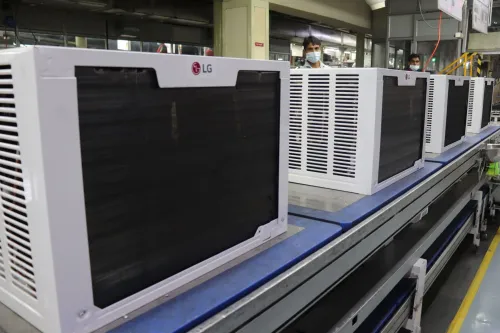
New Delhi, March 2 (NationPress) India’s journey illustrates that import substitution and export growth can progress hand in hand when implemented with a strategic mindset. Various sectors, including mobile phones, pharmaceuticals, automobiles, and defense, are focused on enhancing domestic production not just for local consumption but also for international markets, as detailed in an official factsheet released on Monday.
With the expansion of local capabilities and a reduction in reliance on imports, multiple industries are achieving the necessary scale to boost exports, thereby reinforcing the external sector.
In spite of the global economic turbulence, India’s cumulative exports reached $720.76 billion between April and January of 2025-26, marking a year-on-year growth of 6.15%. This impressive growth is attributed to the government's emphasis on sector-specific incentives, investments, and reforms aimed at enhancing domestic manufacturing capabilities. Over the last decade, transformative reforms and progressive policies like the 'Make in India' initiative and 'Production-Linked Initiatives' have positioned the country as a global manufacturing hub, according to the official statement.
A clear result of the efforts towards import substitution is evident in the remarkable performance of India’s electronics manufacturing sector. With a goal of establishing a $500 billion domestic electronics ecosystem by 2030-31, India is well on its way to becoming a global leader in electronic design, manufacturing, and exports.
Electronics production in India surged from Rs 1.9 lakh crore in 2014-15 to Rs 11.3 lakh crore in 2024-25, reflecting almost a six-fold increase. Since 2020-21, the country has attracted over $4 billion in foreign direct investment (FDI) in electronics manufacturing, showcasing growing global investor confidence. Additionally, the electronics manufacturing sector has generated roughly 25 lakh jobs in India over the past decade.
India has now emerged as the world’s second-largest manufacturer of mobile phones, boasting over 300 manufacturing units currently, compared to just two in 2014.
Production in the mobile manufacturing sector soared from Rs 18,000 crore in 2014-15 to Rs 5.45 lakh crore in 2024-25, a staggering 28-fold increase.
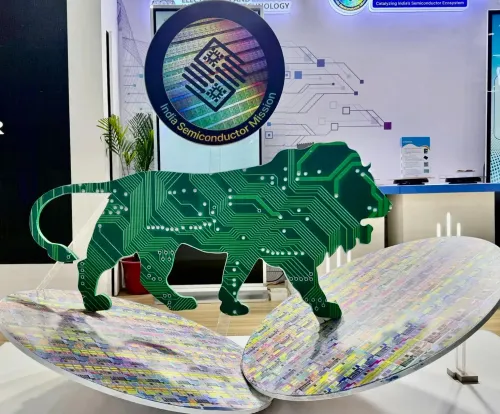
Similar advancements can be observed in other high-value sectors. The production of semiconductors and electronic components is a critical focus area for import substitution, as highlighted during global chip shortages. In response, the Budget for 2026-27 introduced the India Semiconductor Mission 2.0 aimed at producing equipment and materials, designing full-stack Indian intellectual property, and strengthening supply chains, along with an expansion of the Electronics Components Manufacturing Scheme with increased funding of Rs 40,000 crore.
Robust institutional reforms, such as the Export Promotion Mission (EPM), which enhances trade finance, logistics, compliance, and market access, have also significantly bolstered exports. Looking forward, the Union Budget 2026-27 aims to amplify strategic manufacturing, thereby enhancing export competitiveness, as noted in the statement.
The global trade scenario is undergoing significant adjustments, as indicated by the UNCTAD Trade Policy Uncertainty (TPU) Index and the Global Economic Policy Uncertainty (GEPU) Index in April 2025. Concurrently, these developments have propelled India’s efforts to strengthen resilient supply chains and broaden diversified trade and investment partnerships at a global level.
In this context, India has successfully engaged in targeted import substitution in key sectors while adopting an export-oriented strategy to maintain competitiveness over the long term.
Point of View
I observe that India's proactive approach in merging import substitution with export growth highlights a commendable strategy. This dual focus not only strengthens the domestic economy but also positions India favorably on the global stage.
NationPress
17 Sept 2026
Frequently Asked Questions
What is the goal of India's electronics ecosystem by 2030?
India aims to establish a $500 billion domestic electronics ecosystem by 2030-31.
How much did India's exports grow in 2025-26?
India's cumulative exports reached $720.76 billion, reflecting a year-on-year growth of 6.15%.
What significant reforms have impacted India's manufacturing sector?
Key reforms include the 'Make in India' initiative and 'Production-Linked Initiatives' aimed at boosting domestic manufacturing.
How many jobs has the electronics sector created in the last decade?
The electronics manufacturing sector has generated around 25 lakh jobs in India over the past ten years.
What is the focus of the India Semiconductor Mission 2.0?
It aims to produce equipment, design complete Indian IP, and strengthen supply chains in the semiconductor sector.