Did KOSPI Surpass 4,500 Points for the First Time?
Synopsis
Discover how South Korea's KOSPI index made history by briefly crossing the 4,500 mark for the first time amid rising technology stocks. This significant milestone showcases the resilience of the market, but also highlights challenges in the research sector due to recent budget cuts. Dive into this compelling economic narrative.
Key Takeaways
KOSPI briefly surpassed 4,500 points for the first time.
Technology stocks contributed to this milestone.
Government R&D spending decreased by 9.6 percent .
Number of lead researchers in government projects fell 11.2 percent .
Ministry aims to review the impact of budget cuts.
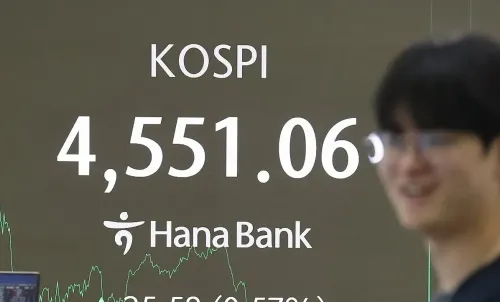
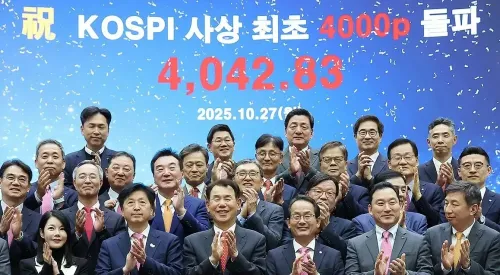
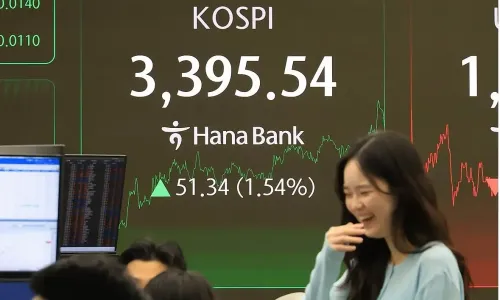
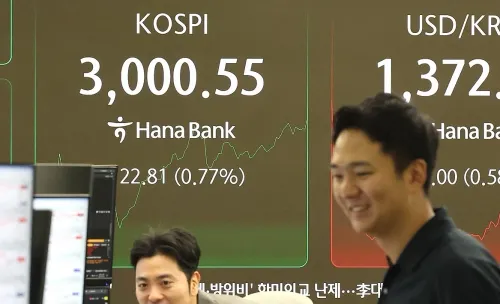
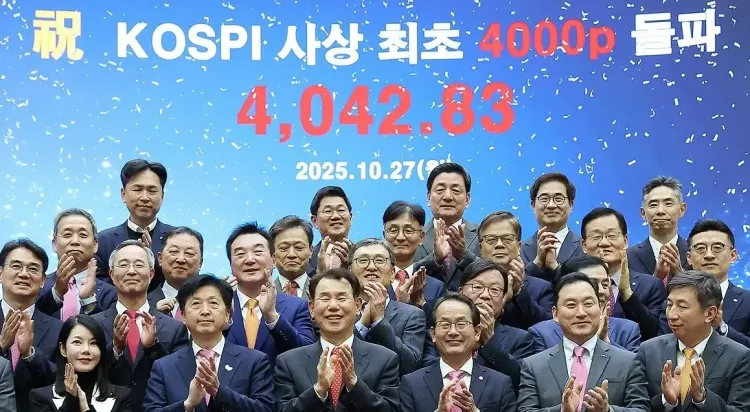
Seoul, Jan 6 (NationPress) South Korea's benchmark stock index briefly surpassed the 4,500-point threshold on Tuesday, marking a historic high. The KOSPI traded above this significant level just one day after crossing 4,400 points, driven by a surge in technology stocks, as reported by Yonhap news agency.
Initially, the main index opened lower due to profit-taking, but it later rebounded as institutional and retail investors began purchasing technology and other large-cap shares.
As of 2:08 p.m., the KOSPI stood at 4,491.98, reflecting an increase of 34.46 points, or 0.77 percent, from the previous trading session.
In another development, one in ten lead researchers involved in government-funded research and development (R&D) projects lost their positions in 2024 due to extensive budget cuts from the prior Yoon Suk Yeol administration, according to government data released on Tuesday.
The Ministry of Science and ICT revealed that the count of lead researchers in government-backed R&D initiatives dropped to 41,902 in 2024, a decrease of 11.2 percent compared to the previous year.
This year's government R&D expenditure amounted to 26.2 trillion won (approximately US$18.9 billion), down 9.6 percent year-on-year, while the number of projects declined by 13 percent to 60,696.
Additionally, the total count of participating researchers also fell, down 10.8 percent from the previous year to 276,215 in 2024.
This downturn signifies a substantial reduction in governmental R&D projects following budget cuts and a pivot towards larger-scale initiatives, limiting opportunities for smaller projects, according to the ministry.
The ministry is currently operating a task force aimed at reviewing the consequences of the R&D budget reductions and evaluating their impact, including the changes in the quantity and scale of the affected projects and researchers, as stated in the report.
Point of View
I believe the KOSPI's recent performance reflects not just market optimism but also underlying challenges in the research and development landscape. This juxtaposition highlights a pivotal moment for South Korea, where advancements in technology must be balanced with sustainable funding for innovation. It’s essential to remain vigilant about the impacts these trends may have on broader economic health.
NationPress
19 Sept 2026
Frequently Asked Questions
Why did KOSPI rise above 4,500?
The KOSPI rose above 4,500 due to a surge in technology stocks, reflecting strong investor interest and market optimism.
What are the implications of the R&D budget cuts?
The cuts in R&D budgets may hinder innovation and research capabilities, affecting the long-term growth and competitiveness of South Korea's economy.
How does KOSPI impact the South Korean economy?
KOSPI is a significant economic indicator; its performance directly affects investor sentiment, consumer confidence, and overall economic health.
What is the significance of the 4,500-point mark?
Crossing the 4,500-point mark is a psychological and technical milestone for investors, signaling strong market performance and investor confidence.