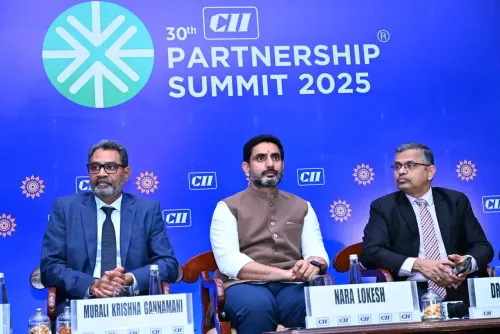
Andhra Pradesh to build unique space economy ecosystem: Minister Lokesh at CII Summit
Synopsis
At the CII Partnership Summit 2026 in Visakhapatnam, Andhra Pradesh Minister Nara Lokesh unveiled a dual-track space economy strategy — vertical integration of MSME suppliers and horizontal integration of academia and industry — positioning the state as a distinctive national hub, with Skyroot and IIT Tirupati as early anchors.
Key Takeaways
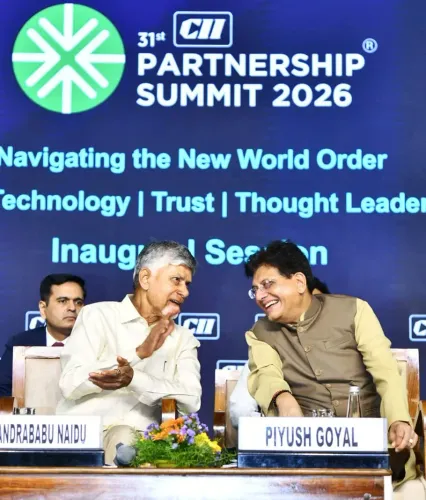
Nara Lokesh , Andhra Pradesh Education and IT Minister, spoke at the CII Partnership Summit 2026 in Visakhapatnam on 13 November 2026 .
Andhra Pradesh aims to build a unique space economy ecosystem differentiated from other Indian states.
Vertical integration focuses on attracting MSME suppliers and vendors supporting anchor companies like Skyroot .
Horizontal integration targets academia-industry collaboration, including a Centre of Excellence with IIT Tirupati in the energy sector.
Lokesh called for a dedicated national policy to build an integrated space industry ecosystem, with states playing a proactive complementary role.
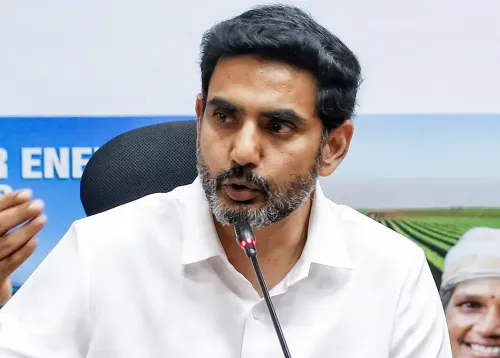
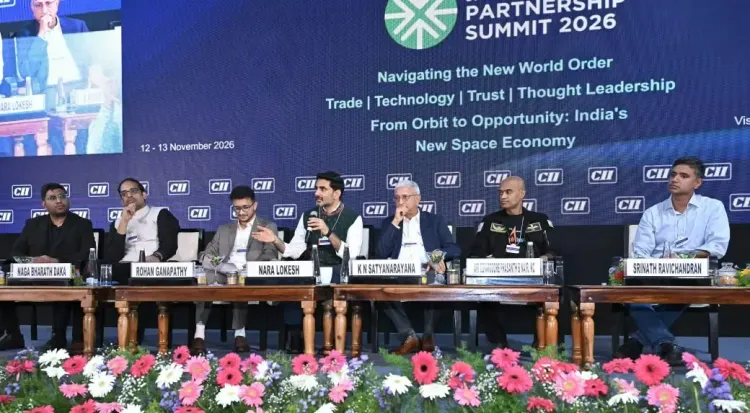
Andhra Pradesh Education and IT Minister Nara Lokesh on Friday, 13 November 2026, declared that Andhra Pradesh will build a distinctive space economy ecosystem unlike any other state in India, speaking at a session on India's New Space Economy at the CII Partnership Summit 2026 in Visakhapatnam. The minister outlined a systematic, multi-stakeholder strategy anchored in vertical and horizontal integration to position Andhra Pradesh as a national leader in the emerging space sector.
Andhra Pradesh's Space Economy Strategy
Lokesh said the space economy is at the beginning of an exciting phase, with enormous opportunities yet to be explored, and that Andhra Pradesh had already created a strong sense of excitement around the sector. He emphasised that a thriving industrial ecosystem cannot be built through incentives or freebies alone, but requires collective effort and collaboration among all stakeholders — including thought leaders, entrepreneurs, and academia.
The minister said the state is adopting a systematic approach to developing sector-specific ecosystems by identifying key industries, mapping all stakeholders, and attracting investments and companies to Andhra Pradesh.
Vertical Integration: Strengthening the Supply Chain
Lokesh explained that vertical integration involves attracting sub-component manufacturers, suppliers, and vendors that support major space companies such as Skyroot in developing and launching rockets. He noted that a significant number of these supporting companies are Micro, Small and Medium Enterprises (MSMEs), which play a crucial role in strengthening the supply chain. As an example, he cited meeting an MSME exhibitor that had manufactured a shield for a rocket, underscoring the depth of industrial capability already present in the state.
Horizontal Integration: Academia Meets Industry
On horizontal integration, Lokesh said it involves bringing academia and industry together by revamping academic curricula, encouraging research, and strengthening testing and certification facilities through Centres of Excellence. He highlighted an ongoing collaboration with IIT Tirupati to establish a Centre of Excellence in the energy sector, particularly relevant given the growing cluster of ingot, solar wafer, and solar cell manufacturing companies in the region. Addressing college students at the summit, he stressed the growing opportunities for startups, entrepreneurs, and research institutions in the space economy.
Call for a National Policy on Space Industry
Lokesh also called for a dedicated national policy to develop an integrated space industry ecosystem, saying state governments should proactively identify and attract companies such as Skyroot. He said a systematic approach to mapping the entire value chain — component manufacturers, suppliers, and vendors — and consolidating them within a common industrial ecosystem was essential for long-term success. He acknowledged that the space sector is largely governed by the Centre, but argued that state governments have a vital complementary role to play through targeted ecosystem development.
What's Next for Andhra Pradesh's Space Ambitions
With the CII Partnership Summit 2026 serving as a platform to signal intent to investors and industry, Andhra Pradesh is positioning itself to attract both anchor space companies and their broader supplier networks. The state's focus on combining MSME supply chain development, academic collaboration, and investment attraction could serve as a replicable model — if execution follows through on the vision outlined at Visakhapatnam.
Point of View
But the real question is whether Andhra Pradesh can move from ecosystem rhetoric to measurable industry anchoring — a gap that has tripped up multiple state-level industrial strategies before. The dual-track integration model, combining MSME supply chains with academic infrastructure, is structurally sound, but its success depends entirely on whether anchor companies like Skyroot actually scale operations in the state rather than merely participate in summits. The call for a national space policy is notable but ultimately outside the state's control, which highlights an inherent tension: Andhra Pradesh is building a strategy around a sector it cannot regulate. Execution discipline, not summit speeches, will determine whether this becomes a genuine cluster or another aspirational PowerPoint.
NationPress
14 Nov 2026
Frequently Asked Questions
What did Nara Lokesh announce at the CII Partnership Summit 2026?
Andhra Pradesh Minister Nara Lokesh outlined a strategy to build a unique space economy ecosystem in the state, focusing on vertical integration of MSME suppliers and horizontal integration of academia and industry. He spoke at the CII Partnership Summit 2026 in Visakhapatnam on 13 November 2026.
What is vertical integration in Andhra Pradesh's space economy plan?
Vertical integration, as described by Lokesh, involves attracting sub-component manufacturers, suppliers, and vendors — many of them MSMEs — that support major space companies like Skyroot in developing and launching rockets. The goal is to build a robust local supply chain that underpins anchor space firms operating in the state.
What is horizontal integration in Andhra Pradesh's space strategy?
Horizontal integration refers to bringing academia and industry together by revamping curricula, encouraging research, and creating Centres of Excellence. A collaboration with IIT Tirupati on an energy-sector Centre of Excellence was cited as an active example of this approach.
Why did Lokesh call for a national space industry policy?
Lokesh argued that a dedicated national policy is needed to develop an integrated space industry ecosystem because the sector is largely governed by the Centre. He said state governments should proactively identify and attract space companies and their supplier networks, complementing central regulation.
What role does Skyroot play in Andhra Pradesh's space economy plans?
Skyroot, a private Indian space launch company, was cited by Lokesh as an example of the kind of anchor space company around which Andhra Pradesh aims to build its supplier and vendor ecosystem. The state's vertical integration strategy is specifically designed to attract the MSME network that supports such firms.