Musk vs Altman: OpenAI founding mission row heads to Oakland courtroom
Synopsis
The trial that opens Monday isn't just about two billionaires in dispute—it's a referendum on whether AI research can stay true to public-good ideals once venture capital enters the picture. Musk's $38 million bet on OpenAI's nonprofit promise versus Altman's pivot to $852 billion valuations exposes the tension between founding principles and scaling imperatives that defines modern AI.
Key Takeaways
Elon Musk and Sam Altman face off in Oakland, California federal court starting Monday with jury selection.
Musk alleges OpenAI abandoned its nonprofit founding mission to become a $852 billion commercial enterprise aligned with Microsoft .
Musk invested $38 million in OpenAI between 2015–2017 and initially sought damages exceeding $100 billion , later scaled back.
The lawsuit demands Altman 's removal from OpenAI 's board and governance reforms; OpenAI calls claims unfounded and tied to Musk 's rival xAI venture.
Musk withdrew fraud allegations in April , narrowing the lawsuit's scope on the eve of trial.
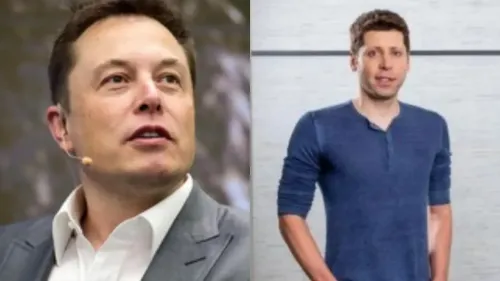
Elon Musk and Sam Altman — once aligned in building a nonprofit safeguard against unchecked artificial intelligence — are set to clash in federal court on Monday in Oakland, California, as a jury prepares to weigh whether Altman and OpenAI leadership abandoned their original mission to develop AI for public benefit in favour of a profit-maximising model now valued at $852 billion.
The trial, opening with jury selection, centres on allegations that OpenAI — co-founded in 2015 with early backing from Musk — pivoted from its founding pledge of developing AI as a public good toward a commercially driven enterprise aligned with major investors, including Microsoft. Musk filed suit in August 2024 against Altman, OpenAI's chief executive, and senior executive Greg Brockman, alleging they misled him and abandoned organisational founding principles.
The core allegations
The complaint asserts that OpenAI leadership shifted the company's direction without Musk's knowledge, transforming it into a commercial entity aligned with major investors. Musk, the world's richest person, invested approximately $38 million in OpenAI between 2015 and 2017, and initially sought damages exceeding $100 billion — a figure subsequently scaled back following pre-trial rulings.
OpenAI's defence
OpenAI has dismissed the allegations as unfounded and motivated by Musk's competitive interests, particularly his launch of rival AI company xAI in 2023. The company argues that its shift toward commercialisation was necessary to scale AI development and remain competitive in a rapidly evolving global industry.
What the lawsuit seeks
The case demands governance changes at OpenAI, including Altman's removal from its board, alongside financial remedies directed toward the company's nonprofit arm. US District Judge Yvonne Gonzalez Rogers will oversee proceedings, with the jury serving in an advisory capacity.
Narrowed scope on eve of trial
In April, Musk reportedly withdrew fraud claims against OpenAI and its co-founders, narrowing the lawsuit's scope just before trial commenced. The case will feature testimony from two of technology's most prominent and polarising figures, whose relationship has shifted from collaboration to confrontation since OpenAI's inception.
The broader context
Musk frames the case as rooted in concerns over OpenAI's departure from its founding mission, while the company contends that evolution was inevitable given the demands of scaling AI development at a global level. The outcome could reshape governance frameworks for AI research organisations and set precedent for founder disputes in the technology sector.
Point of View
Investors demand returns, and mission creep follows. Musk's complaint isn't wrong on the facts—OpenAI did pivot from nonprofit to for-profit-aligned structure. But Musk's timing and motive (xAI launch in 2023) undercut his moral authority. The real question the jury must answer is whether a founding promise made in 2015, before generative AI proved transformative, should bind a company through a $852 billion revaluation. Precedent here will matter for every AI startup that starts nonprofit and scales commercial.
NationPress
16 Sept 2026
Frequently Asked Questions
What is the core dispute between Elon Musk and Sam Altman in this lawsuit?
Musk alleges that OpenAI, co-founded in 2015 as a nonprofit safeguard against unchecked AI, was transformed into a $852 billion commercial enterprise aligned with Microsoft, abandoning its founding mission of developing AI for public benefit. Altman and OpenAI leadership, Musk contends, misled him and shifted the company's direction without his knowledge.
When did Elon Musk file the lawsuit and what damages did he initially seek?
Musk filed the lawsuit in August 2024 against Sam Altman, Greg Brockman, and OpenAI. He initially sought damages exceeding $100 billion, though that figure was scaled back following pre-trial rulings.
How much did Elon Musk invest in OpenAI, and when?
Musk invested approximately $38 million in OpenAI between 2015 and 2017, during the company's early nonprofit phase.
What is OpenAI's response to Musk's allegations?
OpenAI has dismissed the claims as unfounded and motivated by Musk's competitive interests, particularly his 2023 launch of rival AI company xAI. The company argues that its commercial pivot was necessary to scale AI development and remain competitive.
What specific remedies is Musk seeking in the lawsuit?
The lawsuit seeks governance changes at OpenAI, including Sam Altman's removal from its board, and financial remedies directed toward the company's nonprofit arm. The case will be overseen by US District Judge Yvonne Gonzalez Rogers.