What New Plant Species Did Nagaland Varsity Researchers Discover?
Synopsis
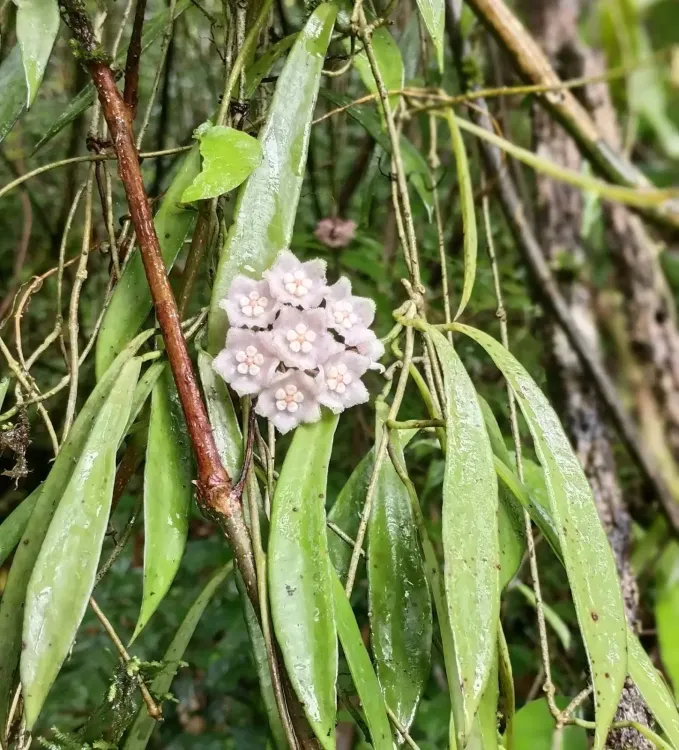
Nagaland University researchers have unveiled a new plant species, Hoya nagaensis, in the state's high-altitude forests. This significant discovery highlights the region's biodiversity and the crucial role of community-led forest conservation, proving vital for protecting endangered species.
Key Takeaways
New plant species identified: Hoya nagaensis.
Significant biodiversity hotspot located in Nagaland.
Importance of community-led forest conservation highlighted.
Critical status: Hoya nagaensis is Critically Endangered.
Research could pave the way for further botanical studies.
Kohima, Jan 27 (NationPress) Researchers from Nagaland University have made a remarkable discovery: a new plant species found in the state's high-altitude forests. This discovery emphasizes the region's critical role as a biodiversity hotspot in Northeast India and highlights the significance of community-led forest conservation, as noted by university officials on Tuesday.
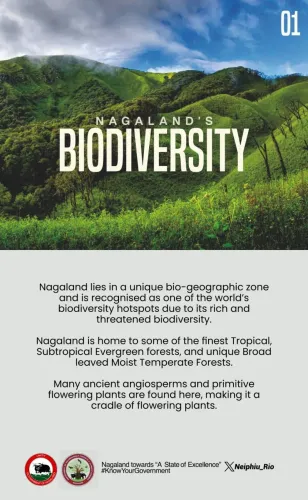
The newly identified species is named Hoya nagaensis, uncovered during thorough botanical explorations in lesser-known forest areas of the state, where over 52% of its 16,579 sq km geographical area is covered by forests.
Many sections of Nagaland’s forests remain scientifically undocumented, which hampers accurate biodiversity evaluation and effective conservation strategies.
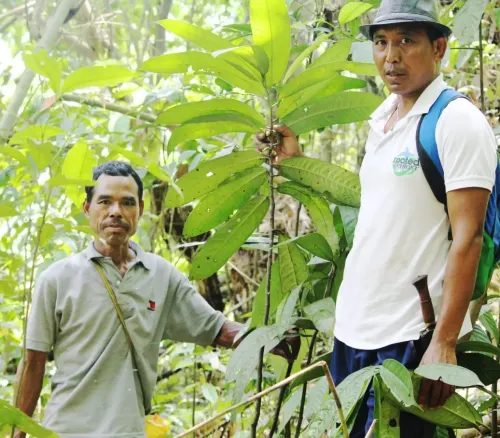
The research team conducted comprehensive field surveys and taxonomic studies to bridge this knowledge gap and enhance the scientific understanding of the region's plant diversity. This study, funded by Nagaland University under the Start-Up Project for Young Faculty (SUPYF), was spearheaded by Principal Investigator Dr. Gyati Yam, Assistant Professor in the Department of Forestry, along with researchers Vieneite-o Koza and Joynath Pegu.
The outcomes of their work were published in an international journal that focuses on authoritative research concerning plant and fungal taxonomy, systematics, nomenclature, and global biodiversity.
In praise of the researchers, Vice Chancellor Prof. Jagadish Kumar Patnaik remarked: "The discovery of a new plant species by researchers from Nagaland University showcases the remarkable biodiversity of Northeast India."
"It serves as compelling evidence that community-protected forests in Nagaland act as essential refuges for rare and endemic plants. This research not only bolsters India’s botanical records but also adds significant data to global plant science and conservation efforts," he stated.
Elaborating on the study, Dr. Yam mentioned that their focus was on exploring high-altitude forests, identifying and detailing previously unknown plant species, documenting local biodiversity, and evaluating the conservation status of rare and endemic plants.
"A crucial aspect of our research was to comprehend the role of community-reserved forests in safeguarding fragile ecosystems," she added.
Future efforts will aim to monitor the species in its natural habitat, examine its ecology, pollination biology, and ornamental potential, assess long-term conservation risks, and investigate nearby forest areas for more undocumented plant species.
Researcher Koza noted that a unique part of this research is the formal scientific identification of Hoya nagaensis, a species hitherto unknown to science. She emphasized that the plant exhibits distinctive leaf shapes and floral features that set it apart from other recognized species in the Hoya genus.
"The findings affirm that community-protected forests in Nagaland are vital sanctuaries for rare and endemic plant species, contributing invaluable data to global plant science and reinforcing India’s botanical records," Koza asserted.
Researcher Pegu highlighted that the species is currently only known from a single location within the Kavünhou Community Reserved Forest in Phek district. "Due to its severely limited distribution and threats like shifting cultivation and forest disturbances, it has been provisionally classified as Critically Endangered. This discovery underscores the efficacy of traditional forest stewardship practiced by local Naga communities in preserving biodiversity," he stated.
Beyond its scientific identification, this discovery underscores the Eastern Himalayas' temperate forest ecosystems as rich reservoirs of botanical novelty. The study delivers detailed habitat information and comparisons with related taxa, providing valuable baseline data for future botanical and ecological research in the area. By documenting the unique physical characteristics and ecological context of the plant, the researchers have enriched the taxonomic framework for the Hoya genus and opened doors for further investigations into morphological diversity within this group, according to university officials.
Frequently Asked Questions
What is the newly discovered plant species?
The newly discovered plant species is Hoya nagaensis , found in the high-altitude forests of Nagaland.
Why is this discovery significant?
This discovery is significant as it highlights the biodiversity of Northeast India and the critical role of community-led forest conservation in protecting rare and endemic plants.
What is the conservation status of Hoya nagaensis ?
Hoya nagaensis has been provisionally assessed as Critically Endangered due to its limited distribution and threats from shifting cultivation.
Who led the research team?
The research team was led by Dr. Gyati Yam, an Assistant Professor in the Department of Forestry at Nagaland University.
Where was Hoya nagaensis found?
Hoya nagaensis was discovered in the Kavünhou Community Reserved Forest in Phek district.