Could Indian Researchers' New Peptide Therapy Revolutionize Eye Infection Treatment?
Synopsis
A groundbreaking peptide therapy developed by Indian researchers offers hope for tackling fungal keratitis, a severe eye infection. This innovative solution promises reduced side effects and improved treatment outcomes, potentially transforming eye care in India.
Key Takeaways
Innovative Peptide Therapy: SA-XV offers a new approach to treat fungal keratitis.
Reduced Side Effects: The therapy presents a safer alternative to traditional antifungal medications.
Mechanism of Action: SA-XV effectively interacts with fungal cells, leading to their death.
Potential for Wound Healing: The peptide may also aid in healing corneal wounds.
Research Collaboration: The study involved collaboration between multiple prestigious institutions.
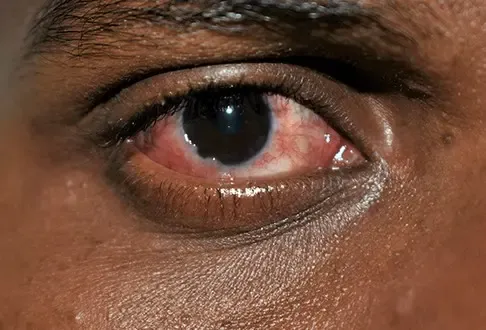
New Delhi, Dec 18 (NationPress) A team of researchers at Bose Institute in Kolkata has pioneered an innovative peptide therapy that presents a promising, multidisciplinary strategy for addressing fungal keratitis—a serious, sight-threatening infection of the cornea, the transparent front section of the eye.
The team, which includes experts from the L V Prasad Eye Institute in Hyderabad, developed a 15-residue peptide named SA-XV, derived from a larger host-defense peptide called S100A12. This peptide has previously been demonstrated to inhibit fungal growth and has been characterized for its antifungal effectiveness and operational mechanisms.
Featured in the Journal of Biological Chemistry, the researchers have praised the new therapy as a viable alternative to traditional antimycotics (antifungals) with diminished side effects.
Corneal infections, often described as a slow epidemic, impact a considerable segment of the population in India, especially among individuals with agricultural backgrounds. Additionally, the overuse and inadequate hygiene practices associated with contact lenses significantly contribute to these infections.
At present, amphotericin B is the sole medication available for fungal infections. However, its application is restricted due to kidney toxicity and high hemolytic activity, which leads to excessive destruction of red blood cells (RBCs). This situation underscores the urgent need for effective antimycotic treatments that are safe for mammalian cells.
In experiments conducted on mouse models, SA-XV demonstrated a decrease in the severity of keratitis.
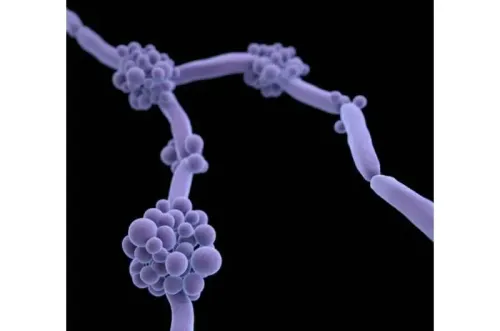
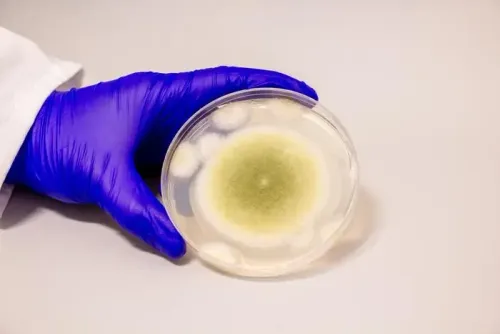
“The antimicrobial peptides are non-toxic, serum-stable, and proficient in inhibiting the growth of both planktonic and biofilm forms of Fusarium and Candida species,” stated the team led by Professor Anirban Bhunia from Bose Institute, which operates under the Department of Science and Technology.
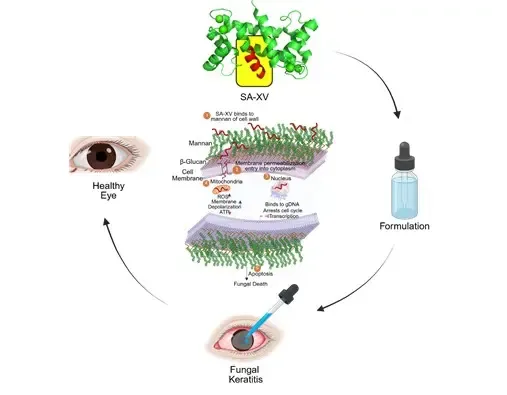
“SA-XV functions by initially interacting with the fungal cell wall and plasma membrane, after which it translocates through the cell membrane and accumulates within the cytoplasm. The peptide then colocalizes in the nucleus, binding to genomic DNA to halt the cell cycle. Ultimately, it targets the mitochondria, causing them to permeabilize and leading to fungal cell death through apoptosis,” the researchers elaborated.
The study emphasizes that SA-XV serves not only as an antifungal agent but can also aid in promoting wound healing for corneal infections.
The findings indicate that SA-XV could emerge as a groundbreaking therapeutic option for combating fungal infections and expediting corneal wound healing, providing an alternative to existing treatments.
Point of View
It is essential to highlight the significance of the innovative peptide therapy developed by Indian researchers. This advancement signals a hopeful breakthrough in the treatment of fungal keratitis, a condition affecting many in India, particularly among agricultural communities. The potential of SA-XV to offer a safer and effective alternative to existing treatments is commendable and could pave the way for improved health outcomes.
NationPress
30 Sept 2026
Frequently Asked Questions
How does SA-XV work?
SA-XV interacts with the fungal cell wall, translocates across the membrane, accumulates in the cytoplasm, binds to genomic DNA, halts the cell cycle, and promotes cell death through apoptosis.
What are the advantages of SA-XV over traditional antifungals?
SA-XV presents a reduced side effect profile compared to traditional antifungals like amphotericin B, which can cause kidney damage and hemolytic activity.
Who conducted this research?
The research was conducted by a team from Bose Institute in Kolkata, in collaboration with researchers from L V Prasad Eye Institute in Hyderabad.
What is the significance of this research?
This research highlights a promising new treatment option for fungal keratitis, which is a significant health concern in India, potentially leading to better patient outcomes.