NITI Aayog Introduces Innovative Training Manuals for Farmers

Synopsis
NITI Aayog's recent workshop on natural farming aims to revolutionize agriculture in India through innovative training manuals, emphasizing sustainable practices for better farmer livelihoods.
Key Takeaways
NITI Aayog launched new manuals for natural farming .
Workshop emphasized sustainable agriculture .
Participants included farmers, scientists, and policymakers.
Field demonstrations were a key focus.
Over 770 participants engaged in discussions.
New Delhi, March 2 (NationPress) - On Monday, NITI Aayog announced the initiation of a two-day national workshop focused on natural farming as part of its State Support Mission (SSM). This event united farmers, policymakers, scientists, start-ups, and civil society organizations from across the nation to explore strategies for enhancing sustainable agriculture.
A key feature of the workshop was the unveiling of new training manuals on natural farming, available in both Hindi and English.
These manuals aim to deliver practical and region-specific advice to farmers, extension personnel, and field workers, enabling them to adopt natural farming techniques with greater efficacy.
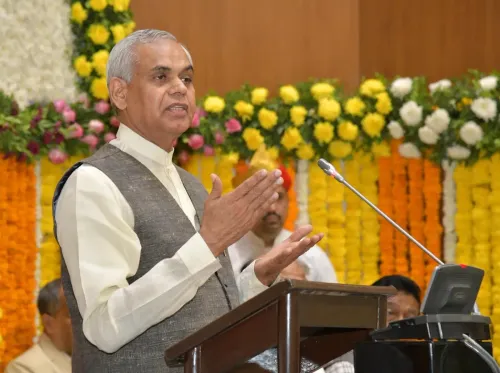
The workshop included a virtual keynote by Acharya Devvrat, the Governor of Gujarat and Maharashtra.
During his address, he emphasized the critical need for a transition towards sustainable and farmer-centric agricultural systems.
“Natural farming can enhance soil health, lower chemical input costs, and gradually elevate farmers' incomes,” he asserted.
Several prominent agricultural and research institutions, such as Junagadh Agricultural University, Dr. Y.S. Parmar University of Horticulture and Forestry, and Gujarat Natural Farming Science University, actively contributed to the discussions, enriching the talks with scientific insights on natural farming practices.
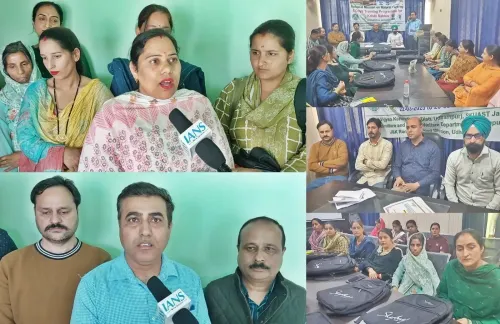
Farmers, agricultural officers, and scientists from Krishi Vigyan Kendras across Punjab, Rajasthan, Madhya Pradesh, Gujarat, Maharashtra, Karnataka, Andhra Pradesh, Kerala, and Odisha showcased a robust nationwide interest in transitioning to natural farming.
Officials from key central agencies and ministries shared insights on certification, market linkages, financial support, and inter-institutional collaboration to assist farmers in embracing natural farming.
The workshop also included participation from agri-startups, civil society organizations, farmer producer groups, and seasoned practitioners, reflecting the evolving ecosystem surrounding natural farming in India.
On the first day, approximately 770 participants engaged in the sessions. An open discussion allowed farmers and practitioners to voice their concerns and share real-world challenges concerning adoption, certification, and market access.
There was a shared consensus on the necessity for enhanced field demonstrations, scientific validation, and farmer-led models to instill confidence in natural farming practices.
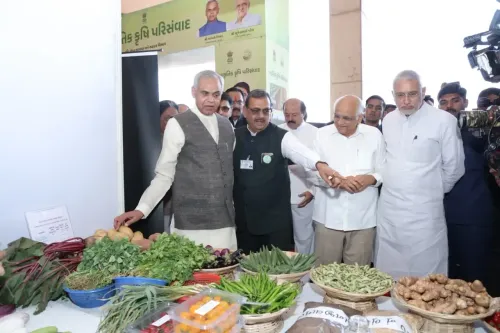
The second day centered on field visits and live demonstrations, where attendees observed natural farming techniques in practice, including various exotic crop management and bio-input preparation methods, both manually and through automated systems.
Point of View
It's evident that initiatives like NITI Aayog's workshop are pivotal in driving sustainable agricultural practices. The strong participation across states highlights a collective commitment to enhancing farmer welfare through innovative approaches.
NationPress
19 Sept 2026
Frequently Asked Questions
What is the purpose of the training manuals launched by NITI Aayog?
The training manuals aim to provide practical and region-specific guidance to farmers, helping them adopt natural farming methods effectively.
Who were the participants in the NITI Aayog workshop?
The workshop brought together farmers, policymakers, scientists, agri-startups, and civil society groups from various states across India.
What are the benefits of natural farming?
Natural farming can enhance soil health, reduce costs associated with chemical inputs, and potentially increase farmers' incomes over time.
How many people attended the workshop?
Approximately 770 participants attended the first day of the workshop.
What were the key topics discussed during the workshop?
Discussions included certification, market linkages, financial support, and the need for field demonstrations and scientific validation of natural farming practices.