Nvidia CEO Jensen Huang Visits Astana to Champion AI
Synopsis
Nvidia CEO Jensen Huang visited Astana, Kazakhstan, meeting students and startups at alem.ai and holding talks with Deputy Prime Minister Zhaslan Madiyev on the country's AI ambitions, extending Nvidia's global emerging-market AI ecosystem outreach.
Key Takeaways
Jensen Huang , CEO of Nvidia , visited Astana, Kazakhstan on 23 October 2026 as part of the company's AI outreach.
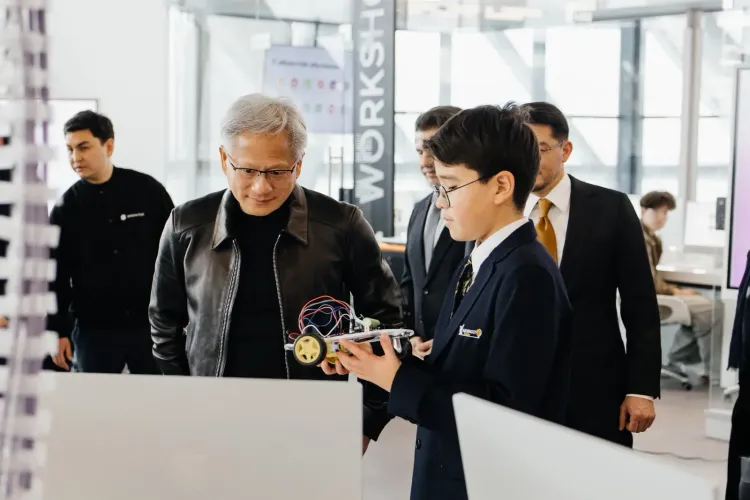
Huang spent time with students and early-stage startups at the tech education platform alem.ai .
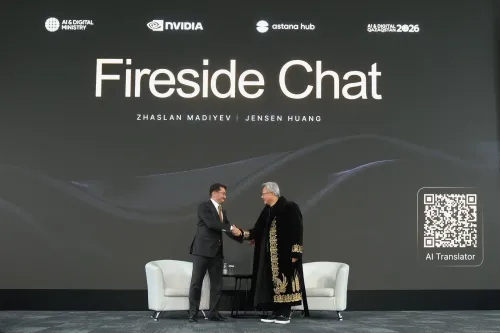
He met Deputy Prime Minister Zhaslan Madiyev to discuss Kazakhstan's AI future at a government level.
Kazakhstan has pursued digital-economy ambitions since launching the Digital Kazakhstan programme in 2017 .
The visit fits Nvidia's broader pattern of engaging emerging markets through education, startup access, and government dialogue.
No specific commitments or partnership details have been publicly announced following the meeting.
In the gleaming capital of Central Asia, one of Silicon Valley's most recognisable executives sat down with students, startup founders, and a cabinet minister — a signal that the global AI race now runs through Astana, Kazakhstan. Nvidia confirmed on Friday, 23 October 2026, that chief executive Jensen Huang visited the tech education platform alem.ai and held talks with Deputy Prime Minister Zhaslan Madiyev to discuss Kazakhstan's AI future.
Jensen Huang at alem.ai: Silicon Valley Meets the Steppe
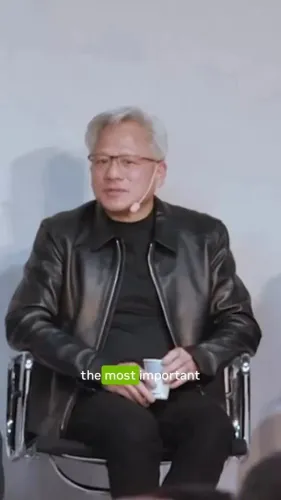
Huang's visit to alem.ai placed him in direct conversation with the cohort Kazakhstan is betting on: young engineers and early-stage startups building inside the country's emerging tech ecosystem. Nvidia's corporate post described him 'spending time with students and startups' — the kind of grassroots engagement that rarely travels at this level of seniority. It is, in short, a statement of intent.
The choice of alem.ai as the venue is pointed. Kazakhstan has invested significantly in coding and AI education infrastructure as part of its decade-long push to diversify an economy historically anchored in oil and gas. A visit from the CEO of the world's dominant AI-chip maker lends that infrastructure a fresh layer of global credibility.
Kazakhstan's Digital Ambition and the Madiyev Meeting
The government dimension of the visit — Huang's sit-down with Deputy Prime Minister Zhaslan Madiyev — tracks with a broader pattern in Astana's technology diplomacy. Kazakhstan launched its Digital Kazakhstan programme in 2017, an initiative designed to fast-track IT infrastructure and digital-skills development across the country. Nearly a decade on, meetings of this kind between senior ministers and global tech executives are the programme's most visible currency.
Madiyev, who has been closely involved in the country's digital-economy agenda, represents the government interlocutor most likely to translate a CEO visit into a pipeline of institutional partnerships. What exactly was agreed — new Nvidia-supported AI curricula, pilot projects, or infrastructure commitments — has not been publicly disclosed.
Nvidia's Emerging-Market Playbook
The Astana stop fits a pattern Nvidia has rehearsed across multiple emerging markets: arrive, engage with students and founders, meet a minister, photograph the moment, and plant the seeds of an ecosystem that ultimately runs on Nvidia hardware and software. The company's AI Developer programmes and academic outreach efforts have followed similar beats in Southeast Asia, the Middle East, and Sub-Saharan Africa.
For Kazakhstan, the symbolism translates into something more concrete — the attention of a company whose chips underpin virtually every frontier AI model in production today. If even a fraction of the Astana startups Huang met secure access to Nvidia's developer ecosystem, the country's AI trajectory shifts meaningfully.
The next measure of seriousness will be whether this meeting produces any announced curriculum agreements or infrastructure projects involving alem.ai and Kazakhstani institutions. If it does, a CEO photo-op becomes a founding chapter in Central Asia's AI story.
Point of View
Where governments are using tech-CEO engagements as sovereign credibility signals. For Nvidia, whose chips sit at the chokepoint of every serious AI build, these visits are low-cost, high-return ecosystem-seeding exercises — the developer relationships and government goodwill cultivated today translate into hardware procurement pipelines tomorrow. Kazakhstan's positioning as a regional AI hub is credible precisely because it has a decade of digital-programme scaffolding to show for itself. Watch whether alem.ai emerges as a named Nvidia academic partner — that would be the clearest sign this was strategy, not a photo opportunity.
NationPress
23 Oct 2026
Frequently Asked Questions
Why did Jensen Huang visit Kazakhstan?
Jensen Huang visited Astana, Kazakhstan, to meet students and startups at the AI education platform alem.ai and to hold discussions with Deputy Prime Minister Zhaslan Madiyev about the country's artificial intelligence future.
What is alem.ai in Kazakhstan?
alem.ai is a technology education and startup platform based in Astana, Kazakhstan, focused on building coding and AI skills among young Kazakhstani engineers and entrepreneurs.
What is Kazakhstan's Digital Kazakhstan programme?
The Digital Kazakhstan programme, launched in 2017, is a national initiative to accelerate digital technology adoption, build IT infrastructure, and develop digital skills across Kazakhstan as part of its economic diversification strategy.
Who is Zhaslan Madiyev?
Zhaslan Madiyev is the Deputy Prime Minister of Kazakhstan, closely involved in the country's digital economy and emerging technology agenda, including discussions with global tech executives on AI development.
What deals did Nvidia sign with Kazakhstan during the visit?
No specific deals or commitments have been publicly announced following Huang's visit to Astana. The discussions covered Kazakhstan's AI future, but concrete partnership details remain undisclosed.