Karnataka CM Office bans hospitals from withholding bodies over bills
Synopsis
Karnataka's Chief Minister's Office has directed private hospital body FANA to end the practice of detaining deceased patients' bodies over unpaid bills, and tasked the Health and Family Welfare Department with framing a formal policy to protect families and preserve the dignity of the dead.
Key Takeaways
Karnataka's Chief Minister's Office declared on October 23, 2026 that withholding a body over pending hospital bills is an 'inhuman practice' that will not be allowed.
Directions have already been issued to FANA , the association of private hospitals and nursing homes in the state.
The Health and Family Welfare Department has been mandated to draft a clear, formal policy on the issue — to be released shortly.
The move builds on the Karnataka Private Medical Establishments Act, 2007 , which regulates private healthcare providers.
Protecting the dignity of the deceased and reducing the suffering of bereaved families has been stated as a priority of the state government .
Enforcement will hinge on whether the forthcoming policy includes specific penalties and a redress mechanism for affected families.
At the sharpest edge of grief, Karnataka's government has drawn a firm line: no private hospital may hold a deceased patient's body hostage over an unpaid bill. The Chief Minister's Office of Karnataka announced on Friday, October 23, 2026 that the state considers such practices a violation of human dignity — and will now move to outlaw them through formal policy.
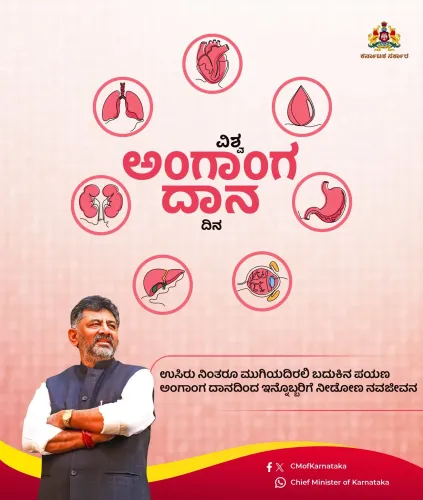
The post, written in Kannada, states clearly: 'ಬಿಲ್ ಬಾಕಿಯ ನೆಪದಲ್ಲಿ ಮೃತದೇಹವನ್ನು ತಡೆಹಿಡಿಯುವ ಅಮಾನವೀಯ ವರ್ತನೆಗೆ ಅವಕಾಶ ನೀಡುವುದಿಲ್ಲ' — 'We will not permit the inhuman practice of withholding a dead body on the pretext of pending bills.' The government frames this as a question of basic human values: protecting the dignity of the deceased and sparing bereaved families additional pain at an already devastating moment.
Directions to FANA and a formal policy on the way
The government has already issued necessary directions to FANA, the association representing private hospitals and nursing homes in Karnataka. Going further, the Health and Family Welfare Department has been tasked with drafting a clear, enforceable policy — to be released shortly — that will govern how private medical establishments handle deceased patients when bills remain outstanding.
The move grounds itself in existing regulatory architecture. The Karnataka Private Medical Establishments Act, 2007, and its subsequent amendments already regulate private hospitals with provisions aimed at curbing exploitative practices. The forthcoming policy is expected to sharpen those protections with explicit language on body custody — closing a gap that has allowed hospitals to leverage grief as a debt-collection tool.
A recurring crisis, not an isolated incident
Karnataka's intervention follows a pattern seen across India: hospitals detaining bodies, sometimes for days, while traumatised families scramble to arrange funds. These incidents have sparked outrage in multiple states, and several administrations have issued directives — though follow-through has been uneven. What distinguishes this announcement is its two-step structure: an immediate directive to the hospital association combined with a mandate to the health department to formalise the rule in writing, making enforcement possible rather than discretionary.
The primary stakeholders are the tens of thousands of Karnataka families who navigate private hospital admissions every year, often without the financial safety net to settle large bills instantly. For them, the promise is simple — death will not become a negotiating chip.
The real test arrives when the Health and Family Welfare Department publishes the policy: whether it includes specific penalties for non-compliant hospitals, a redress mechanism for affected families, and oversight powers for regulators will determine whether this directive becomes enforceable law or another well-intentioned circular.
Point of View
The Karnataka government signals a two-track approach: immediate institutional pressure backed by eventual legislative teeth — a sequencing that sidesteps the delay of a pure regulatory route. The move taps into a well of public outrage over hospital commercialisation that cuts across caste, class, and party lines, giving the ruling dispensation politically cost-free moral high ground. The critical question is whether the Health and Family Welfare Department's forthcoming policy will carry penal provisions or remain advisory, since similar directives in other states have faded without enforcement. If Karnataka codifies penalties into the amended Private Medical Establishments framework, it could become a template for national healthcare dignity legislation.
NationPress
23 Oct 2026
Frequently Asked Questions
Can private hospitals in Karnataka hold a dead body if the bill is unpaid?
No. The Karnataka government has explicitly stated it will not permit hospitals to withhold a deceased patient's body over pending bills, and has directed the private hospital association FANA accordingly. A formal policy from the Health and Family Welfare Department is being drafted to enforce this.
What is FANA and what role does it play in this directive?
FANA is the association representing private hospitals and nursing homes in Karnataka. The government has issued it necessary directions to ensure member hospitals stop the practice of detaining bodies over unpaid dues.
When will Karnataka release its official policy on hospitals withholding bodies?
The Chief Minister's Office stated the Health and Family Welfare Department will formulate a clear policy 'shortly', but an exact date has not been announced as of October 23, 2026.
What law governs private hospitals in Karnataka?
The Karnataka Private Medical Establishments Act, 2007, and its subsequent amendments regulate private hospitals in the state, including provisions aimed at preventing exploitative practices against patients and their families.
Is withholding a body over hospital bills a problem in other Indian states too?
Yes. Several Indian states have seen incidents of hospitals detaining bodies until families settle bills, prompting multiple state governments to issue directives. Karnataka's move follows this national pattern, but adds the step of formal policy framing rather than relying solely on advisories.