Karnataka CM's Office flags health and infra gains on Independence Day
Synopsis
On Independence Day 2026, Karnataka's Chief Minister's Office claimed a 19% fall in maternal mortality, approval of 112 water projects worth Rs 16,000 crore, completion of Ettinahole Phase 1 by November, and construction of over 1,663 km of state highways in a single year.
Key Takeaways
The Chief Minister's Office of Karnataka posted a governance update on Independence Day, 15 August 2026 , citing health and infrastructure milestones.
Maternal mortality in Karnataka has reportedly fallen by 19 per cent and 78 per cent of eligible girls have received the cervical cancer vaccine.
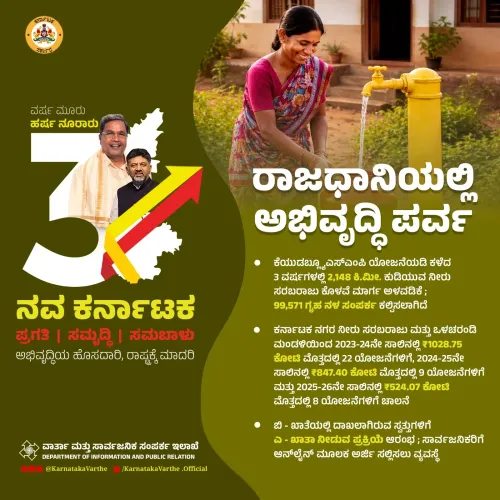
112 major water-resource projects worth Rs 16,000 crore were approved in the current year; the Ettinahole project's first phase is set to deliver water to Tumakuru district by November .
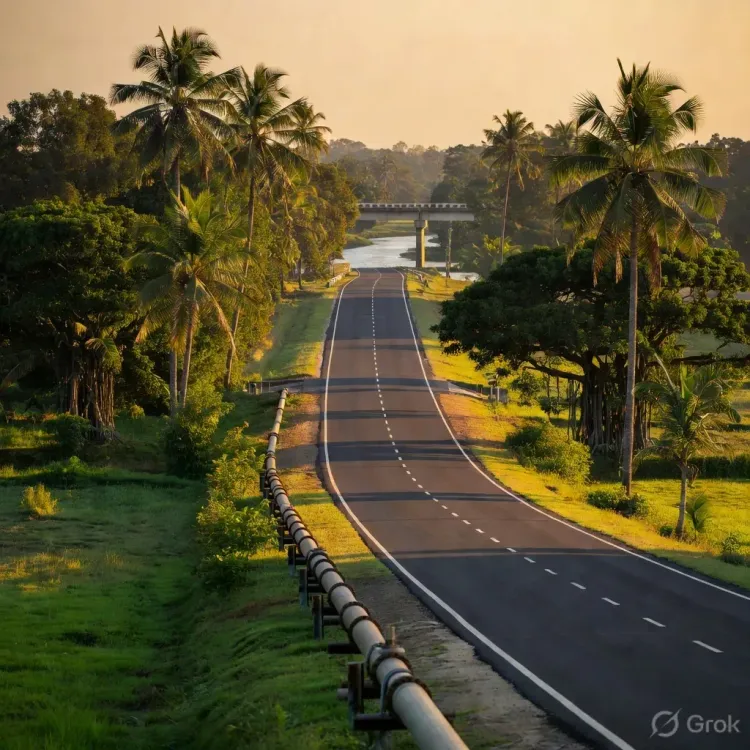
In one year, the state claims to have built 1,663 km of state highways , 2,939 km of district roads , and 125 bridges .
The Pragatipatha Yojane is upgrading 7,100 km of rural roads at a cost of Rs 5,200 crore ; the Kalyana Patha Yojane is adding 1,150 km of roads in the historically underserved Kalyana Karnataka region.
On Independence Day, 15 August 2026, the Chief Minister's Office of Karnataka laid out a sweeping account of what the state government says it has delivered — from falling maternal deaths to thousands of kilometres of new roads — in a post that reads less like a social-media update and more like a mid-term report card.
The post, written in Kannada, opens with a declaration: 'Aarogyave namma modala aadhyate' — 'Health is our first priority.' The government claims that sustained investment in the public health system has driven a 19 per cent drop in maternal mortality across the state. Alongside that, it says 78 per cent of eligible girls have received the cervical cancer vaccine — a figure that, if borne out, would represent one of the higher HPV vaccination coverage rates among Indian states.
Ettinahole's first phase and the promise to Tumakuru
On water security, the post is specific and time-bound. The government says it has approved 112 major water-resource projects worth Rs 16,000 crore in the current year alone. The centrepiece is the Ettinahole Integrated Drinking Water Project, a multi-stage scheme that draws from the Netravathi river to supply chronically water-scarce districts in central Karnataka. The first phase, the post states, is being completed, with water expected to reach Tumakuru district by November. Tumakuru has faced persistent shortages for decades; a firm delivery deadline from the Chief Minister's Office gives residents a date to hold the government to.1,663 km of highways and 125 bridges in a single year
The infrastructure numbers are the most striking part of the post. The government claims that in the past year alone it has built 1,663 km of state highways, 2,939 km of major district roads, and 125 new bridges — a pace it describes as unprecedented for Karnataka. The Pragatipatha Yojane is upgrading 7,100 km of rural roads with an investment of Rs 5,200 crore, explicitly targeting the connectivity gap between villages, towns, and markets. A parallel scheme, the Kalyana Patha Yojane, is building 1,150 km of roads in the Kalyana Karnataka region — the seven northern districts once known as Hyderabad Karnataka, which carry a constitutional mandate for accelerated development under Article 371J. Karnataka has historically used road-length addition and rural connectivity as headline metrics in budget speeches and economic surveys, and the Kalyana Karnataka focus continues a pattern of directing disproportionate infrastructure spend toward the region's historical deficit.Numbers that will face scrutiny
The claims are large, and the post is explicit about them — which also makes them verifiable. Physical completion certificates for the Ettinahole first phase, water-release schedules for Tumakuru, and utilisation audits for the rural roads programme will be the real test in the months ahead. Independence Day is a traditional moment for governments to present their best case; the specificity of the figures here — a November deadline, a kilometre count, a vaccination percentage — means accountability is baked in. Karnataka's development story in 2026 is being written in roads, pipes, and vaccination drives. Whether the numbers hold up to audit will determine whether this report card becomes a legacy or a liability.Point of View
A fault line that has shaped Karnataka politics for decades. If the November water deadline slips or the road-kilometre claims face audit challenges, the specificity that makes this post credible today becomes a political liability tomorrow.
NationPress
29 Sept 2026
Frequently Asked Questions
What is the Ettinahole project in Karnataka?
The Ettinahole Integrated Drinking Water Project draws water from the Netravathi river to supply chronically water-scarce districts in central Karnataka. The government says the first phase will be completed and water will reach Tumakuru district by November 2026.
What is Karnataka's maternal mortality claim in 2026?
The Chief Minister's Office of Karnataka stated on Independence Day 2026 that maternal mortality in the state has fallen by 19 per cent, attributing the drop to sustained strengthening of the public health system.
What is the Pragatipatha Yojane scheme?
Pragatipatha Yojane is a Karnataka government programme to upgrade rural roads. It targets 7,100 km of rural roads with an investment of Rs 5,200 crore to improve connectivity between villages, towns, and markets.
What is Kalyana Karnataka and why does it get special focus?
Kalyana Karnataka is a region of seven northern districts in Karnataka, formerly known as Hyderabad Karnataka. It is constitutionally designated for accelerated development under Article 371J due to its historical infrastructure and socio-economic deficit. The Kalyana Patha Yojane is building 1,150 km of roads there.
How many roads and bridges did Karnataka build in one year?
According to the Chief Minister's Office, Karnataka built 1,663 km of state highways, 2,939 km of major district roads, and 125 new bridges in a single year — described as an unprecedented pace of infrastructure construction for the state.