Karnataka CM Office Calls for End to Organ Donation Hesitancy
Synopsis
The Chief Minister's Office of Karnataka issued a Kannada-language appeal on August 13, 2026, calling on citizens to pledge organs and dismantle cultural reluctance around donation, noting that a single brain-dead donor can save up to eight lives.
Key Takeaways
The Chief Minister's Office of Karnataka posted a public appeal on August 13, 2026 urging greater organ donation awareness.
A single brain-dead donor can save up to 8 lives if organs are retrieved in time, according to the post.
The CMO identified cultural hesitancy and reluctance as the primary barrier to voluntary organ pledges in society.
India's organ transplant system is governed by the Transplantation of Human Organs Act, 1994 , with national coordination through NOTTO .
Karnataka participates in the national framework via a state-level transplant coordination body.
The appeal frames organ donation as a collective moral duty — a way to bring life to others even after death.
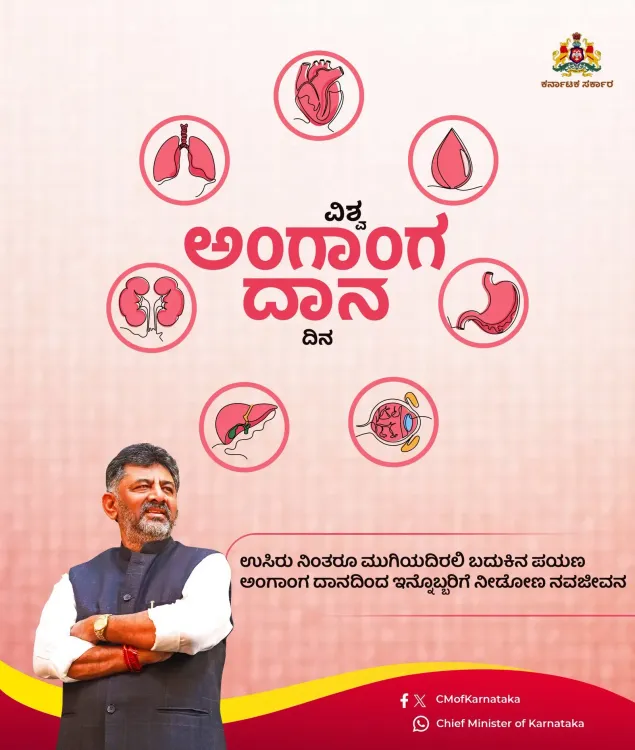
Every day, thousands of lives end in organ failure — not because medicine has failed them, but because a donor never came in time. On Thursday, August 13, 2026, the Chief Minister's Office of Karnataka issued a powerful public appeal on X, urging citizens to overcome the cultural hesitancy surrounding organ donation and recognise it as a profound act of service.
One brain-dead donor, up to eight lives saved
The post states plainly: a single brain-dead individual can, if organs are retrieved in time, give up to eight people a second chance at life. The arithmetic of that gift — one death, eight survivals — is the sharpest argument against inaction. Yet across India, brain-death donations remain strikingly rare relative to the scale of need, a gap that has persisted for decades despite repeated awareness efforts by both central and state governments.
The CMO's message, written in Kannada, frames organ donation not as a medical procedure but as a moral calling: 'Sāvina nantaravū mattobbarā usirāgi, kaṇṇina beḷakāgi jīvanada sārthakateyannu paḍeyōṇa' — 'Even after death, let us find life's fulfilment by becoming another's breath, another's light of sight.'
The legal framework and Karnataka's role
India's organ transplant ecosystem is anchored by the Transplantation of Human Organs Act, 1994, which regulates the removal, storage, and transplantation of organs. At the national level, the National Organ and Tissue Transplant Organisation (NOTTO) coordinates procurement and allocation; Karnataka operates through a state-level transplant coordination body that feeds into this framework.
Despite these structures, cultural reluctance — rooted in religious misconceptions, family grief, and simple unawareness — continues to suppress voluntary pledges. The CMO's post directly targets this hesitancy, calling it a collective duty to erase it: 'It is the responsibility of all of us to remove the reluctance surrounding organ donation and build awareness in society.'
Why this message lands differently from the government
When a Chief Minister's Office speaks on organ donation, it signals more than goodwill — it primes the administrative machinery for follow-through. Awareness drives backed by state governments have historically moved donor registration numbers, even when legislation alone could not. The bereaved families of brain-dead patients, who must consent under enormous grief and time pressure, are the real audience here: the post reframes that agonising moment as an opportunity to bring 'new light to families who have lost hope.'
Karnataka's appeal arrives as India continues to grapple with one of the world's largest gaps between transplant need and organ availability. The message is clear, the urgency is real, and the science is unambiguous. What remains is the harder work — turning a social media post into a sustained, ground-level campaign.
Point of View
The government is targeting the emotional and cultural barriers that policy cannot reach. The real test is whether this post is a standalone gesture or the opening salvo of a structured state campaign with hospital network expansion and donor registry targets. India's chronic transplant gap will not close on sentiment alone — but sentiment, amplified by government authority, is where every successful public health shift has begun.
NationPress
27 Sept 2026
Frequently Asked Questions
How many lives can one organ donor save in India?
A single brain-dead donor can save up to 8 lives if all viable organs are retrieved and transplanted in time, as stated by the Karnataka Chief Minister's Office.
What is the law governing organ donation in India?
The Transplantation of Human Organs Act, 1994 governs the removal, storage, and transplantation of human organs in India, with national coordination managed by NOTTO .
How can I register as an organ donor in Karnataka?
Citizens can register as organ donors through the NOTTO national registry or through Karnataka's state-level transplant coordination body. Hospital helpdesks and government health portals also facilitate pledges.
Why is organ donation so low in India despite laws being in place?
Cultural hesitancy, religious misconceptions, and lack of awareness among families of brain-dead patients are the primary reasons. India has a large gap between transplant need and available organs, which successive governments have tried to address through awareness campaigns.
What did the Karnataka government say about organ donation on August 13, 2026?
The Chief Minister's Office of Karnataka posted a Kannada-language appeal calling it every citizen's duty to remove hesitancy around organ donation and build social awareness, noting that one donor can give up to eight people a new life.