Nvidia Cosmos Teaches Robots to Dream Before Acting

Synopsis
Nvidia has spotlighted Cosmos, its world-model platform for physical AI, describing it as technology that teaches robots to dream — letting machines simulate possible futures before acting in the real world. The announcement signals Nvidia's deepening push from GPU hardware into AI simulation infrastructure for robotics.
Key Takeaways
NVIDIA Cosmos is a platform designed to give physical AI systems the ability to simulate real-world interactions and possible futures before acting.
Nvidia describes the capability in plain terms as 'teaching robots to dream,' making world models accessible to a general audience.
World models are increasingly critical for embodied AI — robots and autonomous systems where real-world errors carry physical consequences.
The announcement reflects Nvidia's strategic expansion from GPU hardware into software and simulation infrastructure for robotics developers and AI researchers.
The post was shared on 6 August 2026 via Nvidia's official corporate X account.
What if a robot could rehearse reality before stepping into it? Nvidia is betting that is exactly the capability that unlocks the next generation of physical AI — and on 6 August 2026, the company used a disarmingly simple question to make the case: how do you explain world models to your sibling?
The post frames NVIDIA Cosmos not in dense technical language but in the most human terms possible: 'it teaches robots to dream.' That is not mere marketing poetry. It points to a fundamental shift in how AI systems are being designed to operate in physical environments.
What world models actually do
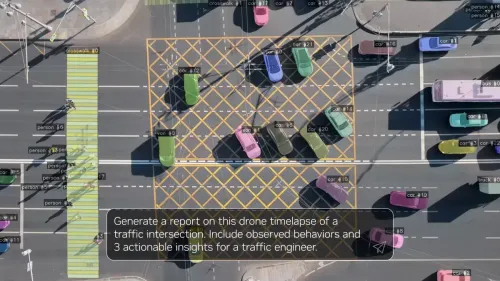
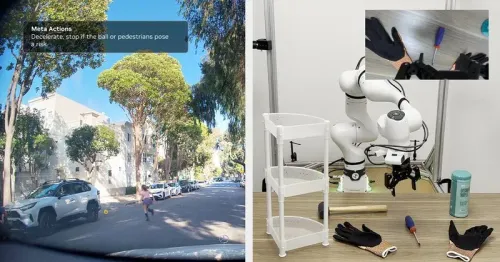
At their core, world models allow an AI system to build an internal simulation of its environment — a mental map of cause and effect, physics, and consequence. Rather than reacting to the world in real time with no prior frame of reference, an AI equipped with a world model can run through possible futures internally before committing to an action. NVIDIA Cosmos is Nvidia's platform built specifically to give physical AI systems this capability, enabling them to reason about real-world interactions and simulate outcomes ahead of deployment. The analogy to dreaming is precise in one important way: dreams are the brain rehearsing scenarios it has not yet lived. A robot trained on Cosmos, in theory, does something structurally similar — stress-testing its responses to environments and edge cases it may never have physically encountered.Nvidia's move from chips to simulation infrastructure
This is not Nvidia simply selling faster GPUs. The company has been methodically building a software and platform layer on top of its hardware dominance — and Cosmos is a clear expression of that ambition. The target audience is robotics developers and AI researchers who need their systems to operate safely and reliably in the unpredictable physical world: factory floors, warehouses, autonomous vehicles, surgical suites. The industry challenge is real. Embodied AI — robots and autonomous systems that must navigate physical space — fails in ways that language models do not. A chatbot that gets a fact wrong is embarrassing. A robot that misjudges a step on a staircase is dangerous. World models are increasingly seen as a critical safety and reliability layer for this reason. Nvidia's decision to explain Cosmos through the lens of a sibling conversation is itself a signal: the company wants world models to be understood as a mainstream concept, not a research curiosity locked inside academic papers. The robots are not just learning. They are learning to imagine first — and that changes everything about what comes next.Point of View
World models may prove as foundational as transformers were for language AI. Nvidia is staking out that territory early, and the simplicity of its messaging suggests it wants enterprise buyers and the public to arrive at that conclusion together.
NationPress
6 Aug 2026
Frequently Asked Questions
What is NVIDIA Cosmos?
NVIDIA Cosmos is a platform for world models that enables physical AI systems — such as robots and autonomous machines — to simulate real-world interactions and possible futures before taking action in the real world.
What is a world model in AI?
A world model is an internal simulation an AI builds of its environment, allowing it to reason about cause and effect and test possible outcomes before acting, rather than reacting purely in real time.
Why does Nvidia say Cosmos teaches robots to dream?
The 'dreaming' analogy refers to how the platform lets robots rehearse scenarios internally — much like how dreams allow the brain to process and simulate experiences — before the robot encounters those situations in the real world.
How is NVIDIA Cosmos different from regular AI training?
Traditional AI training often relies on large datasets of past observations. World models like Cosmos allow AI to simulate novel futures it has not directly experienced, which is especially important for physical environments where mistakes have real consequences.
Why does physical AI need world models?
Embodied AI operating in physical spaces — factories, roads, hospitals — faces unpredictable conditions where errors can be dangerous. World models give these systems a way to reason about and rehearse responses to edge cases before deployment, improving safety and reliability.