Nvidia Launches Cosmos 3, Open Omni-Model for Physical AI
Synopsis
Nvidia has launched Cosmos 3, its open world foundation model and first omni-model for physical AI, capable of generating across text, image, video, sound, and action. The model targets robot policy development and smart-city vision AI, and claims the top spot among open models on public physical-AI leaderboards.
Key Takeaways
Cosmos 3 is Nvidia's new open world foundation model and the first omni-model designed specifically for physical AI applications.
It generates natively across five modalities : text, image, video, sound, and action — enabling direct robot control signal output.
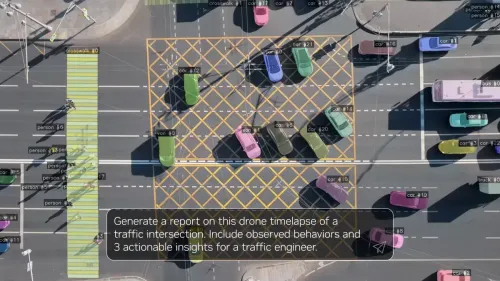
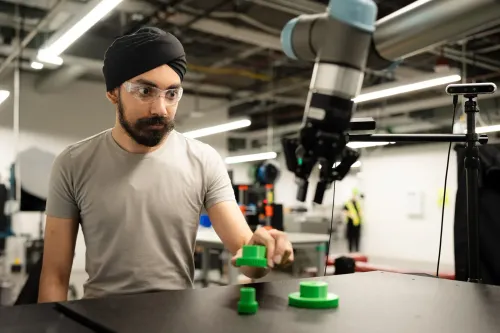
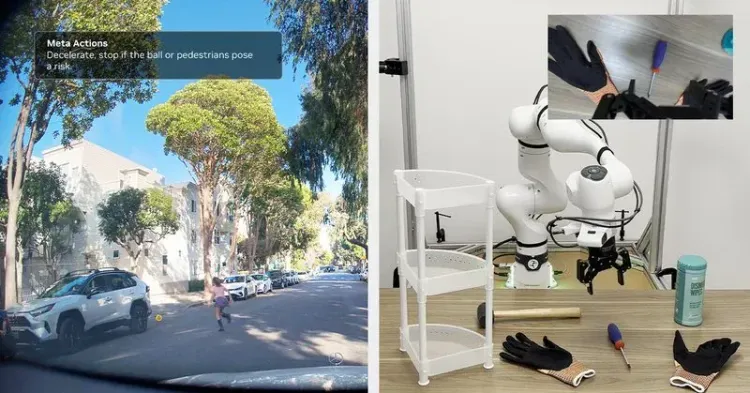
Two primary use cases: robot policy development (any embodiment or task) and vision AI agents for smart cities and industrial anomaly detection.
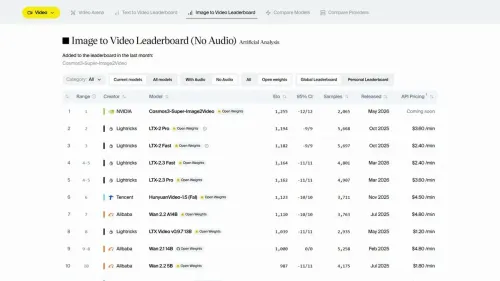
Nvidia claims Cosmos 3 is the #1 open model on public leaderboards across capabilities, pending independent benchmark verification.
The launch extends a software strategy that began with the Isaac platform in 2019 and continued with Project GR00T in 2024.
The release heightens competition among chip and cloud providers to supply the base model layer for physical-AI and robotics developers.
Chip giant Nvidia on Friday, June 6, 2026, unveiled Cosmos 3, describing it as an open world foundation model and the first omni-model built specifically for physical AI — a system capable of understanding and generating across text, image, video, sound, and action through what the company calls a new breakthrough architecture.
Context
Nvidia's announcement positions Cosmos 3 as a single unified model that bridges perception and physical control — the long-standing bottleneck in robotics and industrial automation. Unlike conventional multimodal models that stop at language or vision outputs, Cosmos 3 is designed to generate action data natively, meaning it can directly produce the control signals needed to train and deploy robotic systems across different hardware embodiments and tasks.
The company claims Cosmos 3 ranks #1 on public leaderboards across capabilities among open models, though independent corroboration of that benchmark position is pending. The model is being released as an open model, continuing Nvidia's recent pattern of publishing foundation model weights alongside its proprietary hardware and cloud offerings.
Policy Backdrop
Cosmos 3 is the latest milestone in a software strategy Nvidia has been building since at least 2019, when it released the Isaac robotics simulation platform to support AI-driven robot development and testing. In 2024, the company introduced Project GR00T, a foundation model initiative aimed at general-purpose humanoid robots — a direct precursor to the broader omni-model ambition now embodied in Cosmos 3.
Together, these releases mark a deliberate expansion by Nvidia from pure hardware dominance into the software and model layers that sit above its GPUs. By releasing open models, Nvidia embeds itself into the development pipelines of robotics companies, industrial AI integrators, and smart-city platform builders who rely on its compute infrastructure.
Stakeholders and Impact
The two primary use cases Nvidia highlighted are robot policy development and vision AI agents for smart cities and industries. For robotics developers, Cosmos 3 promises native action-data generation and the ability to post-train for any embodiment or task — reducing the expensive, time-consuming process of collecting real-world training data for each new robot platform.
For industrial AI users and smart-city operators, the model offers scene understanding combined with anomaly detection, capabilities that underpin applications from automated quality inspection on factory floors to traffic and crowd monitoring in urban environments. Both segments represent fast-growing markets in India, where government-backed smart-city programmes and manufacturing automation initiatives have accelerated demand for capable, deployable AI infrastructure.
The release also intensifies competition among chip and cloud providers — including rivals building their own foundation models — to become the default base layer for downstream physical-AI applications.
What's Next
The immediate signals to watch are the availability of Cosmos 3 model weights or APIs on public repositories, and independent submissions to physical-AI benchmarks that can verify the claimed leaderboard position. Early integrations with commercial robot platforms or industrial vision systems will indicate how quickly the developer community adopts the model.
More broadly, Cosmos 3 signals that the race to close the gap between AI perception and real-world physical action is entering a new phase — one where open, omni-capable foundation models, rather than narrow task-specific systems, become the standard starting point for anyone building robots or intelligent infrastructure.
Point of View
Nvidia lowers the barrier to adoption while ensuring that every robot or smart-city system trained on Cosmos 3 is implicitly optimised for Nvidia compute. This mirrors the playbook used in data-centre AI, where open model releases drove GPU demand far more effectively than closed offerings. For India's fast-expanding smart-city and industrial-automation programmes, the arrival of a capable open omni-model could accelerate local deployment timelines — but it also deepens dependence on a single foreign technology stack at a critical infrastructure layer.
NationPress
20 Oct 2026
Frequently Asked Questions
What is Nvidia Cosmos 3?
Cosmos 3 is Nvidia's open world foundation model and the first omni-model for physical AI, capable of understanding and generating text, image, video, sound, and action data from a single unified architecture announced on June 6, 2026.
What can Cosmos 3 be used for?
Cosmos 3 is designed for two primary applications: building robot policies by generating action data natively and post-training for specific robot hardware or tasks, and scaling vision AI agents for smart-city and industrial use cases such as scene understanding and anomaly detection.
Is Nvidia Cosmos 3 available for free?
Nvidia has described Cosmos 3 as an open model, suggesting the weights will be publicly available, but specific licensing terms and the release timeline for model weights or APIs had not been independently confirmed at the time of announcement.
How does Cosmos 3 relate to Nvidia's earlier robotics work?
Cosmos 3 builds on a software strategy Nvidia began with the Isaac robotics simulation platform in 2019 and advanced with Project GR00T in 2024, which was a foundation model initiative for humanoid robots and physical AI tasks.
What does physical AI mean in the context of Cosmos 3?
Physical AI refers to AI systems that must understand the real world and take actions within it — such as robots navigating environments or industrial cameras detecting defects — as opposed to AI that only processes or generates digital content like text or images.