Spirit AI v1.6 tops RoboArena, beats Nvidia in embodied AI race
Synopsis
Hangzhou start-up Spirit AI's v1.6 model scored 1,924 on the Nvidia-co-developed RoboArena benchmark — overtaking Nvidia's own Cosmos3-Nano-Policy just 48 hours after its launch — marking the first time a Chinese model has topped the global embodied intelligence ranking.
Key Takeaways
Spirit AI , based in Hangzhou, Zhejiang , became the first Chinese company to top the RoboArena global embodied intelligence leaderboard on 4 June 2026 .
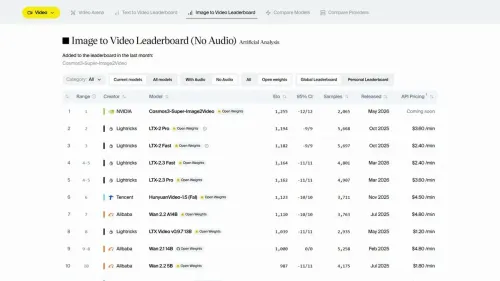
Spirit v1.6 scored 1,924 , surpassing Nvidia's Cosmos3-Nano-Policy (score: 1,881 ) and DreamZero (score: 1,763 ), both Nvidia projects.
The RoboArena benchmark was co-developed by Nvidia , Stanford University , and the University of California, Berkeley .
Nvidia launched its Cosmos 3 physical AI model just two days before Spirit AI's announcement.
Nvidia announced partnerships with China's Unitree Robotics and Singapore -based Sharpa on 2 June 2026 , highlighting deep Asia ties in physical AI.
Spirit AI, a robotics start-up headquartered in Hangzhou, Zhejiang province, China, has become the first Chinese company to lead the RoboArena global leaderboard for embodied intelligence models, surpassing Nvidia just two days after the US chip giant released its latest physical AI foundation model. The milestone, announced on Wednesday, 4 June 2026, signals an intensifying China-US contest over the 'brains' that will power next-generation robots.
The benchmark breakthrough
Spirit v1.6, the company's foundation model for embodied intelligence, recorded a score of 1,924 on the RoboArena benchmark — edging out Nvidia's Cosmos3-Nano-Policy, which placed second with a score of 1,881. Third place went to DreamZero, another Nvidia project unveiled in February, with a score of 1,763.
The RoboArena benchmark evaluates how effectively generalist robot policies translate to real-world physical actions. It was co-developed by Nvidia alongside elite institutions including Stanford University and the University of California, Berkeley.
Why it matters
The timing is striking: Nvidia launched its Cosmos 3 model — designed to help physical AI 'think before it acts' — just two days before Spirit AI's announcement. For a Chinese start-up to immediately displace a Nvidia model atop a benchmark co-designed by Nvidia itself underscores how rapidly the competitive landscape in physical AI is shifting.
Embodied intelligence — the capacity for AI systems to perceive, reason, and act in the physical world — is widely regarded as the next critical frontier after large language models. Whoever leads in foundation models for robotics stands to shape the hardware-software stack that factories, logistics networks, and consumer robotics will depend on for decades.
The competitive backdrop
The rivalry extends well beyond Spirit AI and Nvidia. Chinese players including AgiBot and XYZ Embodied AI are also active in the embodied intelligence space, while Nvidia has been deepening partnerships across Asia. On Monday, 2 June 2026, Nvidia announced collaborations with Unitree Robotics of China and Sharpa, a Singaporean robotic-hand pioneer, further illustrating that the physical AI supply chain is deeply intertwined across geopolitical lines.
The pattern mirrors earlier contests in large language models and AI chips: Chinese firms absorbing open benchmarks and rapidly iterating to reach or exceed Western performance thresholds, even as export controls limit access to the most advanced semiconductors.
What's next
The leaderboard position is a snapshot, not a verdict — Nvidia and other US labs are expected to respond with updated models. Investors and enterprise buyers will be watching whether Spirit v1.6's benchmark lead translates into real-world deployment wins in manufacturing and logistics. As physical AI moves from research labs to factory floors, the model layer is becoming as strategically contested as the chip layer.
Point of View
Yet Chinese labs are now outscoring American incumbents on evaluation frameworks built by those same incumbents. The deeper contest is not over a single leaderboard position but over which country's model ecosystem becomes the default stack for the coming wave of industrial robotics — a market orders of magnitude larger than consumer AI. Enterprises and policymakers watching the chip war should now track the model war with equal urgency.
NationPress
21 Oct 2026
Frequently Asked Questions
What is Spirit AI and what did it achieve on RoboArena?
Spirit AI is a robotics start-up based in Hangzhou, Zhejiang province, China . Its foundation model Spirit v1.6 scored 1,924 on the RoboArena global leaderboard on 4 June 2026 , making it the first Chinese model to reach the top position on the benchmark.
How does Spirit v1.6 compare to Nvidia's Cosmos 3 model?
Spirit v1.6 outscored Nvidia's Cosmos3-Nano-Policy by 43 points — recording 1,924 against Nvidia's 1,881 . Nvidia had launched Cosmos 3 just two days earlier, making the overtake particularly notable.
What is the RoboArena benchmark and who developed it?
RoboArena is a benchmark that measures how effectively generalist robot policies translate into real-world physical actions. It was co-developed by Nvidia together with Stanford University and the University of California, Berkeley .
Why is embodied AI considered the next big tech battleground?
Embodied AI enables machines to perceive, reason, and act in the physical world — powering next-generation robots for manufacturing, logistics, and consumer use. As large language models become commoditised, the foundation models that drive physical robots are emerging as the new high-stakes layer of the AI stack.
Which other companies are competing in the embodied intelligence space?
Beyond Spirit AI and Nvidia , Chinese firms AgiBot and XYZ Embodied AI are active in embodied intelligence. Nvidia has also partnered with China's Unitree Robotics and Singapore -based robotic-hand pioneer Sharpa , announced on 2 June 2026 .