Nvidia Launches Cosmos 3 Edge World Model for Local AI Devices
Synopsis
Nvidia has open-sourced Cosmos 3 Edge, a 4-billion-parameter omnimodel announced at SIGGRAPH 2026 that can process and generate text, image, video, sound, and action data on local edge devices — targeting robotics, autonomous vehicles, and smart infrastructure without cloud dependency.
Key Takeaways
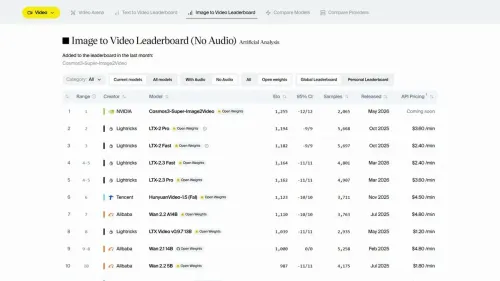
Nvidia announced Cosmos 3 Edge as openly available on 20 July 2026 at SIGGRAPH 2026 .
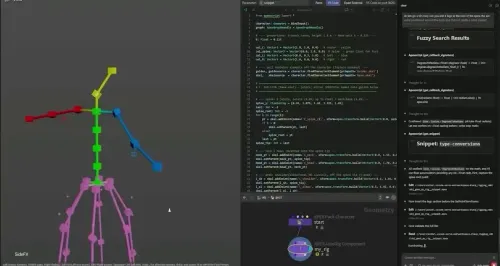
The model has 4 billion parameters and is classified as an omnimodel capable of understanding and generating text, image, video, ambient sound, and action .
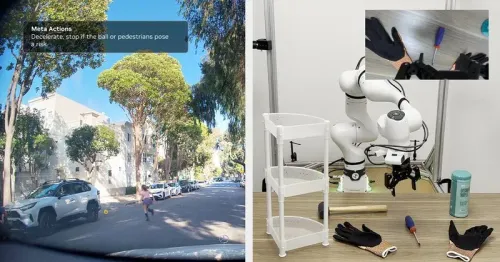
It is designed for physical AI use cases: robotics, autonomous vehicles, and smart infrastructure.
Running on local edge devices eliminates cloud dependency, reducing latency and data-transmission costs.
The open-availability release broadens access beyond large OEMs to startups and research institutions globally.
The launch extends Nvidia's decade-long edge AI strategy, originally anchored by its Jetson module family.
Chip giant Nvidia announced on Monday, 20 July 2026 the open availability of NVIDIA Cosmos 3 Edge, a frontier world model designed to run directly on local edge devices rather than centralised cloud servers, marking a significant step in bringing physical AI capabilities to robotics, autonomous vehicles, and smart infrastructure.
Context
Nvidia made the announcement at SIGGRAPH 2026, the annual computer graphics and interactive techniques conference where the company has historically unveiled major AI and simulation breakthroughs. The post describes Cosmos 3 Edge as a 4-billion-parameter omnimodel — a single model capable of understanding and generating text, image, video, ambient sound, and action data simultaneously.
The model is positioned for 'physical AI' applications, a term Nvidia uses to describe AI systems that must perceive and act within the real world, as opposed to purely digital or conversational environments. By making the model 'openly available,' Nvidia is lowering the barrier for developers to deploy world-model capabilities without cloud dependency.
Policy Backdrop
Nvidia's push toward edge inference is not isolated. The company introduced its Jetson family of edge AI modules in the 2010s to bring accelerated computing to embedded systems and robotics, establishing an early foothold in on-device AI well before large language models dominated public discourse.
The Cosmos 3 Edge launch comes against a backdrop of US export controls on advanced semiconductors, which have constrained Nvidia's ability to sell its most powerful data-centre chips to certain markets. Distributing capable models that run on accessible edge hardware may help the company maintain developer ecosystems in regions where high-end cloud GPU access is restricted. Growing competition in on-device AI from rivals across the United States and Asia adds further urgency to Nvidia's edge strategy.
Stakeholders and Impact
Robotics developers stand to gain immediate access to a multimodal model that can process sensor streams — visual, audio, and action signals — within the device itself, reducing latency that would otherwise make real-time physical control impractical over a cloud link. Autonomous vehicle makers similarly benefit from on-board inference that does not depend on network connectivity.
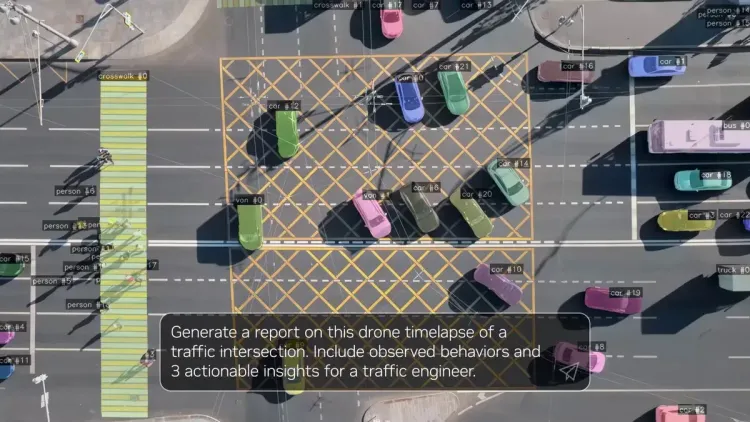
Smart infrastructure operators — managing traffic systems, industrial facilities, or logistics hubs — represent a third major stakeholder group. For these deployments, edge inference reduces both data-transmission costs and privacy risks associated with streaming raw sensor footage to remote servers. The open availability of Cosmos 3 Edge means smaller startups and research institutions, not just large OEMs, can integrate the model into their stacks.
What's Next
The key question for the industry is how quickly Cosmos 3 Edge integrates into commercial robotics and autonomous-vehicle software stacks. Hardware compatibility details and any associated Nvidia Jetson or partner-device certifications will determine real-world adoption timelines.
Nvidia is expected to disclose further technical and ecosystem details at ongoing SIGGRAPH 2026 sessions. The broader trajectory — moving AI workloads from centralised data centres toward distributed edge devices — suggests that world models capable of generating action and sensor data will become a defining battleground in physical AI over the next product cycle.
Point of View
Nvidia is effectively commoditising cloud inference for physical AI — a domain where latency and connectivity constraints make on-device compute non-negotiable. For India's growing robotics and autonomous-systems ecosystem, open availability lowers the entry cost significantly, potentially accelerating indigenous development in smart manufacturing and urban mobility. The broader arc points to a future where the competitive moat in AI shifts from who controls the largest GPU cluster to who owns the most capable edge inference stack.
NationPress
20 Oct 2026
Frequently Asked Questions
What is Nvidia Cosmos 3 Edge?
Nvidia Cosmos 3 Edge is a 4-billion-parameter multimodal AI world model announced at SIGGRAPH 2026 that runs on local edge devices and can understand and generate text, image, video, ambient sound, and action data for physical AI applications.
What does 'openly available' mean for Cosmos 3 Edge?
'Openly available' means developers, researchers, and companies can access and deploy Cosmos 3 Edge without being restricted to Nvidia's cloud services, lowering the barrier to integration in robotics and autonomous vehicle projects.
How does Cosmos 3 Edge help robotics and autonomous vehicles?
By running directly on the device, Cosmos 3 Edge enables real-time perception and action generation without relying on a cloud connection, which is critical for robotics and autonomous vehicles where network latency or outages could be dangerous.
What is SIGGRAPH 2026 and why did Nvidia announce this there?
SIGGRAPH is the annual ACM conference on computer graphics and interactive techniques. Nvidia has historically used it to unveil major AI and simulation technologies, making it a natural venue for a frontier world-model announcement.
What is a world model in AI?
A world model is an AI system trained to understand and simulate how the physical world works — predicting outcomes, generating realistic sensor data like video and sound, and planning actions — which is essential for robots and autonomous systems operating in real environments.