Nvidia says Cosmos 3 tops seven physical AI leaderboards
Synopsis
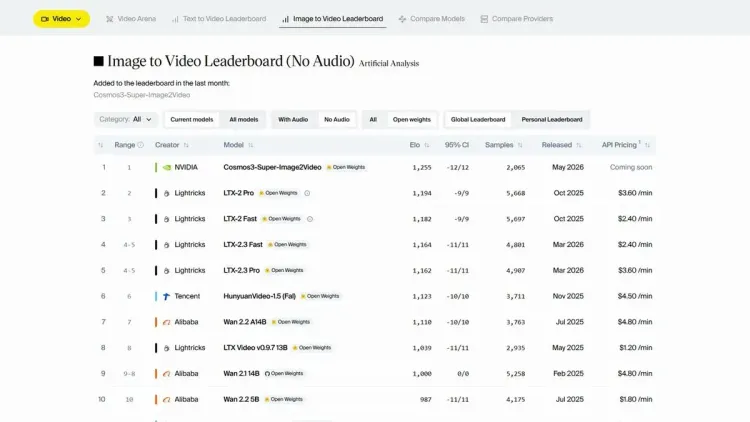
Chip giant Nvidia announced that Cosmos 3, its open omni-model for physical AI, has topped seven leaderboards covering world generation, robot action policy and industrial vision understanding. The company cited rankings on Artificial Analysis, PAI-Bench, Physics-IQ and R-Bench, framing the release as a major step in embodied AI development.
Key Takeaways
Nvidia claims Cosmos 3 ranks #1 across seven physical AI leaderboards .
The model is positioned as an open omni-model for physical AI workloads.
Top rankings span world generation , robot action policy and industrial vision understanding .
Named world-generation benchmarks: Artificial Analysis , PAI-Bench , Physics-IQ , R-Bench .
Cosmos builds on Nvidia's Isaac robotics and Omniverse simulation stack unveiled at GTC 2024.
Open release strategy intensifies competition in embodied AI amid US chip export controls.
Chip giant Nvidia announced on 3 June 2026 that its newly released Cosmos 3 model has secured the top rank across seven physical AI leaderboards, positioning the open omni-model as a front-runner in world generation, robot action policy and industrial vision understanding. The corporate post, issued from Nvidia's official handle, framed Cosmos 3 as an open release aimed at developers building embodied and simulation-driven AI systems.
In its post, Nvidia said 'NVIDIA Cosmos 3, the open omni-model for physical AI, ranks #1 across world generation, robot action policy, and industrial vision understanding.' The company listed four world-generation benchmarks where Cosmos 3 reportedly leads — Artificial Analysis, PAI-Bench, Physics-IQ and R-Bench — alongside additional rankings in robot action policy and industrial vision categories.
Context
Cosmos is Nvidia's platform of foundation models built specifically for physical AI — systems that must reason about real-world physics, motion and perception rather than purely linguistic tasks. The 'omni-model' framing signals a single model spanning multiple modalities and task families, from generating synthetic worlds for robot training to producing executable action policies for machines on factory floors.
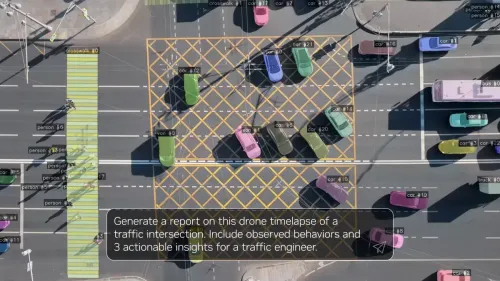
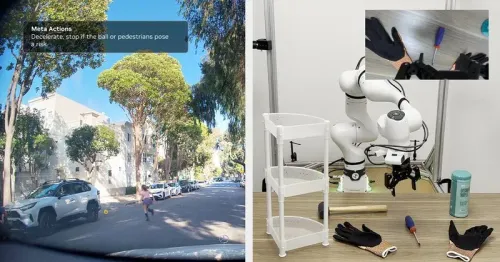
The leaderboard claims span three distinct workloads. World generation benchmarks test how realistically a model can simulate physical scenes and dynamics. Robot action policy evaluates the quality of motor commands a model produces for embodied agents. Industrial vision understanding measures perception accuracy in factory and inspection settings.
Policy backdrop
Nvidia's push into physical AI builds directly on infrastructure unveiled at its GTC 2024 keynote, where the company expanded its Isaac robotics stack and Omniverse simulation platform. Cosmos sits atop that stack as the model layer, intended to be trained and deployed using Nvidia's own GPUs and developer tools.
The open release strategy is notable. By publishing Cosmos 3 as an open model, Nvidia is competing not only with proprietary robotics-foundation efforts from other large technology firms but also with open-weight releases from research labs worldwide. The move tends to accelerate ecosystem adoption while quietly setting de facto evaluation standards in a field that still lacks settled benchmarks.
The release also lands amid continuing US export controls on advanced AI chips, which have reshaped how Nvidia's most powerful hardware reaches markets including China. Models like Cosmos, distributed openly, travel more freely than the silicon they ideally run on — a dynamic that matters for Indian robotics start-ups and academic labs increasingly building on Nvidia's stack.
Stakeholders and impact
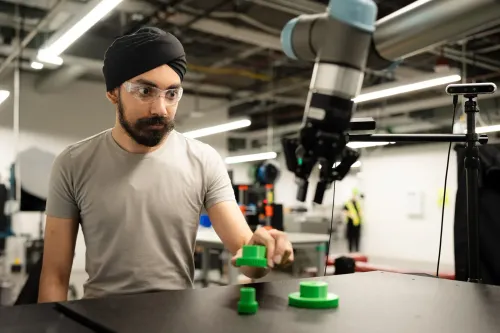
The immediate audience is robotics developers, AI researchers and industrial manufacturers. For developers, a top-ranked open model lowers the barrier to prototyping warehouse robots, autonomous inspection systems and simulation-trained manipulation policies without building foundation models from scratch.
For Indian industry, where automation in manufacturing, logistics and electronics assembly is expanding under schemes such as the Production Linked Incentive (PLI) programme, openly available physical-AI models could shorten development cycles. Academic groups at the IITs and applied robotics labs are among the likely early adopters.
Competitors will scrutinise the leaderboard claims closely. Benchmarks in physical AI remain young, and rankings can shift quickly as evaluation suites are updated or as rival labs publish their own results. Nvidia's listing of four named world-generation benchmarks invites direct reproducibility checks from the research community.
What's next
Attention now turns to Nvidia's next GTC conference, where the company typically unveils model updates, robotics hardware refreshes and ecosystem partnerships. Further Cosmos releases — and any tighter coupling with the Isaac and Omniverse stacks — would signal how aggressively Nvidia intends to convert its current GPU dominance into a durable lead in embodied AI.
For policymakers and industry leaders tracking the AI race, the broader implication is clear: the frontier of competition is steadily moving from chatbots and text models toward systems that perceive, plan and act in the physical world — and the companies that own both the silicon and the models stand to define the rules of that contest.
Point of View
Robot policy and industrial vision, the company is bidding to make its stack the default substrate for embodied AI — much as CUDA became for deep learning. The leaderboard claims will face scrutiny, but the strategic signal is unmistakable: Nvidia wants to own both the silicon and the model layer for the next AI wave. For India's manufacturing and robotics ecosystem, that means an expanding menu of open tools, tethered to a single vendor's broader platform.
NationPress
20 Oct 2026
Frequently Asked Questions
What is Nvidia Cosmos 3?
Nvidia Cosmos 3 is an open omni-model for physical AI released by chip giant Nvidia. It is designed to handle multiple physical-world tasks including world generation, robot action policy and industrial vision understanding within a single model.
What is physical AI?
Physical AI refers to artificial intelligence systems that perceive, reason about and act in the real physical world, such as robots, autonomous machines and industrial inspection systems. It contrasts with purely text-based AI like chatbots.
Which benchmarks did Cosmos 3 top?
Nvidia said Cosmos 3 ranks #1 on world-generation benchmarks including Artificial Analysis, PAI-Bench, Physics-IQ and R-Bench. The company also claimed top rankings in robot action policy and industrial vision understanding categories, totalling seven leaderboards.
How does Cosmos relate to Nvidia Isaac and Omniverse?
Cosmos is the model layer that sits on top of Nvidia's Isaac robotics platform and Omniverse simulation environment. Together they form an integrated stack for training, simulating and deploying physical AI systems.
Why does Nvidia release Cosmos as an open model?
Open releases accelerate adoption among developers, researchers and start-ups while helping Nvidia shape emerging benchmarks and standards in physical AI. The strategy also broadens reach in markets affected by US export controls on advanced chips.