Nvidia Cuts StudyFetch AI Inference Cost by Nearly 10x

Synopsis
Nvidia announced that edtech startup StudyFetch cut its largest AI inference workload cost by nearly 10x using Nvidia Riva, Parakeet ASR, and NIM microservices — enabling voice tutoring, real-time personalisation, and a new agentic learning platform.
Key Takeaways
StudyFetch reduced its largest AI inference workload cost by nearly 10x using Nvidia's software stack.
The tools used were NVIDIA Riva , Parakeet ASR , and NVIDIA NIM microservices .
The savings directly support voice tutoring , real-time personalisation , and a new agentic learning platform .
NVIDIA NIM provides pre-optimised inference containers that reduce deployment complexity and cost for AI developers.
The case study extends Nvidia's enterprise inference narrative into the edtech sector .
An edtech startup just made its heaviest AI workload nearly ten times cheaper — and the engine behind that leap is Nvidia's speech and inference software stack. Nvidia Corporation announced on Saturday, August 1, 2026, that StudyFetch slashed the cost of its largest AI inference workload by close to 10x using NVIDIA Riva, Parakeet ASR, and NVIDIA NIM microservices.
What StudyFetch Built — and What It Cost Before
StudyFetch is an edtech company building AI-driven voice tutoring and personalised learning tools. Its core product relies on real-time speech recognition and dynamic personalisation — workloads that are notoriously expensive to run at scale. By integrating Nvidia Riva (a speech AI framework) and Parakeet ASR (an automatic speech recognition model) via NIM microservices, the company brought those costs down dramatically without sacrificing the responsiveness that voice tutoring demands.
The efficiency gains now underpin three pillars of StudyFetch's platform: voice tutoring, real-time personalisation, and a new agentic learning platform — one where AI agents can guide students through tasks autonomously, not just respond to prompts.
Nvidia's NIM Stack and the Inference Cost Problem
NVIDIA NIM microservices are pre-packaged, optimised inference containers that let developers deploy large AI models quickly and efficiently on Nvidia hardware. Rather than building and tuning inference pipelines from scratch, companies like StudyFetch can plug into NIM and immediately inherit Nvidia's hardware-software co-optimisation. Riva adds a production-grade speech layer on top — handling automatic speech recognition, text-to-speech, and translation at low latency.
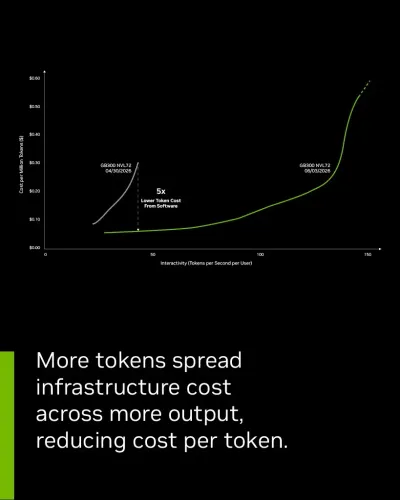
The combination targets one of the most persistent pain points in production AI: the cost of running large models in real time, continuously, at user scale. For an edtech platform where a student might speak to an AI tutor for an extended session, every second of inference has a price tag. Cutting that by nearly 10x changes the unit economics entirely — and opens the door to serving more students at lower cost.
Why Edtech Is Nvidia's Next Case-Study Frontier
Nvidia has been systematically publishing enterprise case studies that demonstrate cost and performance gains from its inference stack across industries — from healthcare to financial services. The StudyFetch example extends that pattern into education, a sector where margins are tight and real-time AI interaction is both the core product and the biggest infrastructure bill.
The move also signals where agentic AI is heading in edtech: not just chatbots that answer questions, but autonomous learning agents that adapt, guide, and respond in voice — in real time. That requires inference infrastructure that is both fast and affordable. Nvidia's argument, made concrete here, is that its stack delivers both.
If the 10x cost reduction holds at scale, it sets a benchmark every AI-first edtech company will now have to reckon with.
Point of View
The cost of real-time inference has been the hidden ceiling on scale. Nvidia's NIM and Riva stack effectively lowers that ceiling, and by publishing concrete cost-reduction numbers, Nvidia is commoditising the conversation around inference efficiency — on its own terms. The broader pattern is clear: Nvidia is positioning its software layer, not just its chips, as the competitive moat in the AI infrastructure race.
NationPress
1 Aug 2026
Frequently Asked Questions
What is NVIDIA NIM and how does it reduce AI costs?
NVIDIA NIM microservices are pre-packaged, optimised inference containers that allow developers to deploy large AI models efficiently on Nvidia hardware, reducing the engineering effort and compute cost of running models in production.
What is Parakeet ASR used for?
Parakeet ASR is an automatic speech recognition model developed by Nvidia, designed for high-accuracy, low-latency transcription of spoken language — making it suitable for real-time voice applications like tutoring platforms.
How did StudyFetch use Nvidia Riva?
StudyFetch integrated Nvidia Riva, a production-grade speech AI framework, to power voice tutoring and real-time personalisation features, achieving a nearly 10x reduction in inference costs for its largest AI workload.
What is an agentic learning platform?
An agentic learning platform uses autonomous AI agents that can guide students through tasks, adapt to their responses, and make decisions — going beyond simple question-and-answer chatbots to provide dynamic, voice-driven tutoring.
Why is AI inference cost important for edtech companies?
Edtech platforms that offer real-time voice tutoring must run AI models continuously per user session, making inference costs a major operational expense. Reducing those costs by 10x dramatically improves unit economics and allows companies to serve more students affordably.