Nvidia Earth-2 to Shield 100 Million Farmers by 2030
Synopsis
At the Earthshot Prize Impact Assembly in Mumbai, Pula joined NVIDIA Inception and will use the Earth-2 AI climate platform, backed by AWS, to deliver faster drought forecasts and scale parametric insurance coverage to 100 million smallholder farmers by 2030.
Key Takeaways
Pula announced it is joining NVIDIA Inception and will deploy NVIDIA Earth-2 for high-resolution climate and drought forecasting.
The startup aims to protect 100 million smallholder farmers from climate shocks by 2030 .
The announcement was made at The Earthshot Prize's Impact Assembly in Mumbai , where Pula is a 2026 Finalist .
Amazon Web Services (AWS) is providing additional cloud infrastructure to help Pula scale its coverage geographically.
NVIDIA Earth-2 , launched in 2022 , generates AI-driven, high-resolution simulations of extreme weather events, enabling more precise insurance triggers for farmers.
NVIDIA Inception , running since 2016 , gives Pula access to GPU compute, technical support and go-to-market resources it could not otherwise afford at speed.
One hundred million smallholder farmers. One climate-modeling supercomputer. One Mumbai stage. Nvidia announced on Wednesday, 18 November 2026 that agricultural insurtech startup Pula is joining NVIDIA Inception and will deploy the NVIDIA Earth-2 climate platform to protect farming families from droughts and extreme weather — with the ambition of reaching 100 million farmers by 2030.
Mumbai's Earthshot Stage and What Pula Announced
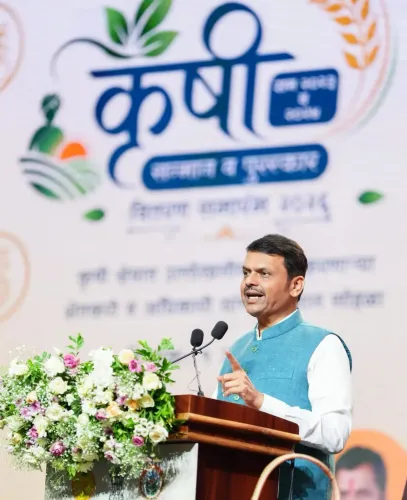
The announcement landed at The Earthshot Prize's Impact Assembly in Mumbai, where Pula — named a 2026 Finalist of The Earthshot Prize — stepped into the spotlight. The Earthshot Prize, founded in 2021 by Prince William, was created to fund and accelerate scalable solutions to the planet's most urgent environmental challenges. Mumbai's hosting of the Impact Assembly places India at the centre of a global conversation about climate adaptation and agricultural resilience.
Pula's core business is parametric insurance and climate risk products for smallholder farmers — a population that feeds much of the developing world but has historically been invisible to formal financial protection systems. The partnership with Nvidia and Amazon Web Services (AWS) is designed to change that calculus at scale.
What Earth-2 Actually Does for Drought Forecasting
NVIDIA Earth-2 is a digital twin and AI simulation platform, introduced in 2022, built to generate high-resolution models of planetary weather systems faster and at finer granularity than conventional forecasting allows. For Pula, that means moving beyond coarse regional averages and producing localised drought and extreme-weather projections that map directly onto the fields smallholder farmers actually cultivate.
Faster, more precise forecasts translate into better-calibrated insurance triggers — the thresholds that determine when a payout kicks in for a farmer who has lost a crop. Without that precision, parametric insurance products risk either under-serving farmers or becoming financially unviable for the insurer. Earth-2 is the tool Pula is betting can close that gap.
AWS provides the scalable cloud backbone that allows Pula to run those simulations and distribute protection products across multiple geographies simultaneously, moving from pilot programmes to continental-scale operations.
NVIDIA Inception and the Startup-Accelerator Dimension
NVIDIA Inception, running since 2016, is the company's global accelerator programme that gives AI-focused startups access to GPU compute resources, technical mentorship and go-to-market support. Pula's admission into the programme signals Nvidia's recognition of climate-tech and agri-insurtech as a serious frontier for accelerated computing — not a peripheral social-impact side project.
The combination of Inception membership, Earth-2 access and AWS cloud infrastructure gives Pula a technology stack that would be prohibitively expensive to assemble independently, effectively subsidising the speed at which the startup can expand coverage to vulnerable farming communities.
Why 100 Million Farmers Is the Number That Matters
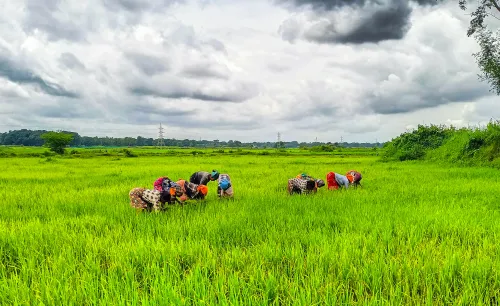
Smallholder farmers — typically defined as those cultivating fewer than two hectares — account for the majority of food production across Sub-Saharan Africa and South Asia, including hundreds of millions of Indians. They are also disproportionately exposed to climate shocks: a single failed monsoon or an unseasonal heat event can wipe out an entire season's income with no safety net.
Pula's 100-million-by-2030 target is not a corporate aspiration — it is the operational rationale for bringing in Nvidia's modeling power and AWS's infrastructure at this stage of the company's growth. The goal frames every technical choice as a question of reach: can the platform get cheap enough, fast enough, and accurate enough to work for a farmer in rural Maharashtra or northern Kenya?
As climate volatility intensifies, the gap between the farmers who have protection and those who do not is widening. The Mumbai announcement is a bet that AI-powered climate modeling can close it — and that the technology sector, not just development finance, will drive how that happens.
Point of View
Potentially making products financially viable at a scale that development-finance grants alone never achieved. The three-way stack of Nvidia compute, AWS cloud and Earthshot Prize branding also illustrates how big-tech companies are using credible climate platforms as distribution rails to reach frontier markets. If Earth-2 deployments prove actuarially sound in the field, expect competing GPU and cloud vendors to pursue similar agri-climate partnerships across South Asia and Africa.
NationPress
18 Nov 2026
Frequently Asked Questions
What is NVIDIA Earth-2 and how does it help farmers?
NVIDIA Earth-2 is an AI-powered digital twin platform that generates high-resolution simulations of extreme weather events such as droughts and floods. For smallholder farmers, it enables more precise, localised forecasts that can trigger faster and more accurate insurance payouts when crops fail.
What is Pula and what does it do?
Pula is an agricultural insurtech startup that designs and delivers parametric insurance and climate-risk products for smallholder farmers, primarily in Africa and Asia. It aims to protect 100 million farming families from climate shocks by 2030.
What is The Earthshot Prize and why was it held in Mumbai?
The Earthshot Prize is a global environmental award founded in 2021 by Prince William to accelerate scalable solutions to climate and ecological challenges. Mumbai hosted the 2026 Impact Assembly, bringing together finalists, funders and technology partners.
What is NVIDIA Inception?
NVIDIA Inception is a global accelerator programme launched in 2016 that provides AI-focused startups with access to GPU computing resources, technical mentorship and go-to-market support. Pula's admission gives it preferential access to Nvidia infrastructure.
How does AWS support Pula's climate insurance plans?
Amazon Web Services provides the scalable cloud infrastructure that allows Pula to run Earth-2 climate simulations and distribute its insurance products across multiple countries simultaneously, enabling the startup to move beyond small pilot programmes to continental-scale operations.