Nvidia Launches Higher Education and Research Portal

Synopsis
Nvidia launched a dedicated Higher Education and Research portal on 29 May 2026, consolidating use cases in Physical AI, Robotics, Climate, and Agentic AI alongside workshops, hackathons, and grants for university researchers, educators, and students worldwide.
Key Takeaways
Nvidia unveiled its Higher Education and Research portal on 29 May 2026 , targeting researchers, educators, and students.
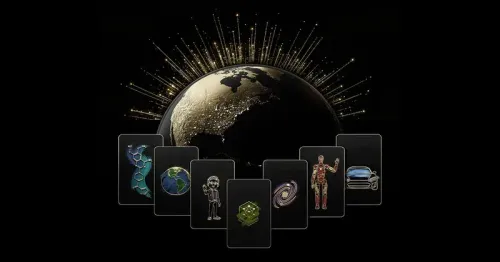
The portal covers use cases in Physical AI and Robotics , Climate , and Agentic AI , among other domains.
Users can access workshops, hackathons, grants , and hands-on learning experiences through a single platform.
Nvidia has supported academic computing since launching the CUDA platform in 2007 and the Deep Learning Institute in 2015 .
The initiative reflects a broader industry pattern of semiconductor firms cultivating academic ecosystems to build talent pipelines and drive hardware adoption.
Chip giant Nvidia Corporation unveiled a dedicated Higher Education and Research web portal on Friday, 29 May 2026, targeting university researchers, educators, and students working at the frontiers of artificial intelligence and physical sciences. The platform consolidates access to use cases, training programmes, grants, and hands-on learning experiences across high-priority domains including Physical AI and Robotics, Climate, and Agentic AI.
Context
Nvidia announced the launch via its official corporate account on X, stating: 'Our new Higher Education and Research page is live. Built for researchers, educators, and students redefining what's possible.' The post highlighted curated use cases in Physical AI and Robotics, Climate, and Agentic AI, alongside access to workshops, hackathons, grants, and hands-on experiences. The portal represents a single destination for academic communities seeking to leverage Nvidia's hardware and software ecosystem for cutting-edge research.
Nvidia's move deepens a long-standing commitment to academic engagement. The company launched its CUDA parallel computing platform in 2007, giving university researchers accessible GPU programming tools that became foundational for high-performance computing. A decade later, in 2015, Nvidia established the Deep Learning Institute to deliver hands-on AI training and certification programmes to students and faculty worldwide.
Policy Backdrop
The new portal arrives as governments and corporations alike race to build AI talent pipelines. Nvidia's strategy mirrors a wider pattern among semiconductor and cloud infrastructure firms that supply free or subsidised tools, grants, and curricula to academia in exchange for ecosystem growth and early access to skilled graduates. By anchoring academic work in domains such as robotics and climate modelling, Nvidia steers research toward areas where its hardware delivers the greatest commercial and scientific value.
For India, where government initiatives have pushed universities to integrate AI into research and teaching, a centralised resource hub from the world's leading GPU maker carries particular relevance. Indian institutions have increasingly adopted Nvidia platforms for research in agriculture, climate resilience, and autonomous systems — all domains now featured on the new portal.
Stakeholders and Impact
The primary beneficiaries are university researchers, STEM educators, and graduate students globally. By aggregating workshops, hackathons, and grant opportunities in one place, the portal lowers the discovery barrier for institutions that may lack dedicated industry liaison offices. Smaller universities and those in emerging markets stand to gain disproportionately from streamlined access to resources previously scattered across Nvidia's developer ecosystem.
Corporate stakeholders — including Nvidia's enterprise customers — also benefit indirectly. A larger pool of GPU-trained researchers and engineers expands the talent base available for industries deploying AI infrastructure, reinforcing demand for Nvidia's data-centre and edge-computing products over the long term.
What's Next
Observers will watch Nvidia's next GPU Technology Conference (GTC) for announcements on expanded academic grants or new curricula partnerships that could accompany the portal's rollout. University adoption metrics for the new platform are expected to surface in forthcoming academic-year reports, offering a clearer picture of reach and engagement. As AI regulation and national competitiveness debates intensify, corporate-academic platforms of this kind are likely to draw increasing scrutiny over data practices, grant conditionality, and the concentration of research infrastructure in the hands of a single hardware vendor.
Point of View
The company shapes which hardware becomes the default for the next generation of AI scientists and engineers. This mirrors moves by cloud majors to lock in academic users early, with long-term implications for procurement decisions at research institutions. For India, where government policy is actively pushing AI adoption in higher education, the portal could accelerate Nvidia's already strong foothold in domestic academic computing. The key question regulators and university administrators must eventually confront is whether dependence on a single vendor's ecosystem constrains the independence of publicly funded research.
NationPress
14 Oct 2026
Frequently Asked Questions
What is Nvidia's new Higher Education and Research portal?
It is a dedicated online platform launched by Nvidia on 29 May 2026 that brings together AI and computing use cases, workshops, hackathons, grants, and hands-on experiences for university researchers, educators, and students.
Which subjects or domains does the Nvidia research portal cover?
The portal features use cases and resources in Physical AI and Robotics, Climate, and Agentic AI, among other emerging technology domains.
How can Indian students and researchers access Nvidia's education resources?
Indian students, educators, and researchers can visit Nvidia's Higher Education and Research portal online to explore use cases, apply for grants, and register for workshops and hackathons.
What is Nvidia's Deep Learning Institute?
Nvidia's Deep Learning Institute, established in 2015, delivers hands-on AI training and certification programmes to students and faculty at universities worldwide.
Why is Nvidia investing in academic and research programmes?
Nvidia expands academic resources to cultivate skilled users of its GPU hardware, build long-term talent pipelines, and steer university research toward high-value domains such as robotics and climate modelling.