Nvidia Pushes AI Agents Into Creative Tools at SIGGRAPH 2026
Synopsis
Nvidia announced at SIGGRAPH 2026 that leading creative applications are opening Model Context Protocol connections, enabling AI agents to work inside production tools — scenes, timelines, and asset libraries — while keeping human creators in control. The company says applications are no longer just getting faster; they are becoming agent-ready.
Key Takeaways
Nvidia announced at SIGGRAPH 2026 that creative applications are opening Model Context Protocol (MCP) connections for AI agents.
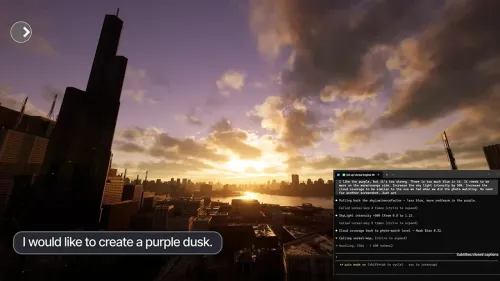
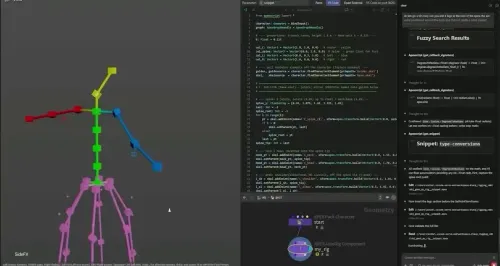
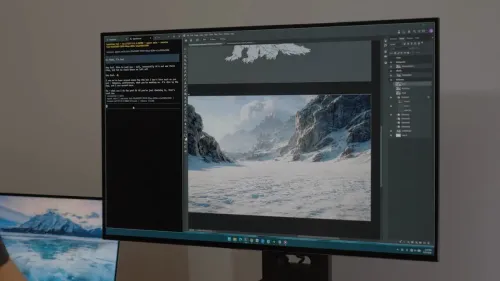
MCP allows AI agents to operate inside live creative environments — including scenes, shots, timelines, and asset libraries — with awareness of the working context.
Nvidia framed the shift as 'the next chapter of accelerated creativity,' emphasising that applications are 'becoming agent-ready,' not just faster.
Human creators remain in control, with Nvidia explicitly positioning the technology around augmentation rather than automation.
The announcement extends Nvidia's CUDA and Omniverse ecosystem into agentic workflows targeting professional content-creation pipelines.
Developer adoption and tool-integration announcements from creative software vendors in the weeks after SIGGRAPH will indicate the real-world pace of uptake.
Chip giant Nvidia on Monday, 20 July 2026 announced that leading creative applications are opening Model Context Protocol (MCP) connections, enabling AI agents to operate directly inside the tools where scenes, shots, timelines, assets, and edits are built — while keeping human creators in control.
Context
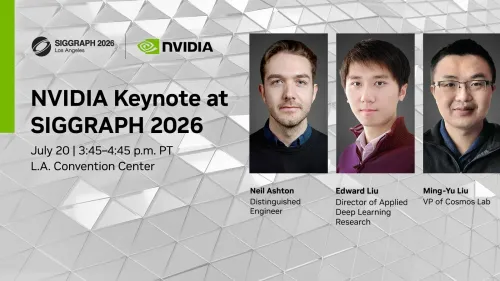
The announcement, made in the context of SIGGRAPH 2026 — the premier annual conference on computer graphics and interactive techniques — marks a significant step in how AI is being woven into professional creative workflows. Nvidia described the shift plainly: 'Applications aren't just getting faster. They're becoming agent-ready.'
The Model Context Protocol is a framework that allows AI agents to establish live connections with software environments, giving them awareness of the working context — whether that is a 3D scene, a video timeline, or an asset library — without displacing the human operator at the centre of the process.
Policy Backdrop
Nvidia has spent years embedding AI capabilities into professional content-creation pipelines, building on its CUDA computing platform and its Omniverse ecosystem for collaborative 3D workflows. Each successive SIGGRAPH conference has served as a key venue for the company to unveil advances in GPU-accelerated rendering, simulation, and now agentic integration.
The broader industry direction has been toward 'agentic AI' — systems that do not merely respond to prompts but can take sequences of actions inside live software environments. Nvidia's MCP push places it at the intersection of that trend and the professional creative market, a segment where its GPUs already dominate rendering pipelines.
Stakeholders and Impact
The primary beneficiaries are content creators — including visual effects artists, animators, game designers, and video editors — who use GPU-intensive applications daily. For them, agent-ready tools could mean AI assistants that understand the current state of a project and take contextual actions, rather than requiring manual prompt engineering outside the application.
Creative software developers are the second key stakeholder group. By opening MCP connections, application makers signal a new integration layer that third-party AI agents and Nvidia-backed tools can plug into. This could reshape how software companies compete, with 'agent compatibility' becoming a product differentiator alongside raw performance.
Nvidia's move also reinforces its position as infrastructure for the AI era, extending its relevance beyond data centres and into the desktops and workstations of creative professionals worldwide.
What's Next
Attention will now turn to which specific applications have opened MCP connections and what developer adoption looks like in the weeks following SIGGRAPH 2026. Tool integrations and partnership announcements from major creative software vendors will be the clearest signal of how quickly agent-ready workflows move from announcement to everyday use.
For the broader AI industry, Nvidia's framing of MCP as 'the next chapter of accelerated creativity' suggests the company intends to position this protocol layer as a standard rather than a proprietary feature — a strategic choice that, if successful, could lock in Nvidia's ecosystem at the agentic layer of creative computing.
Point of View
The company is staking out infrastructure-level relevance in professional content creation, not just hardware sales. The move mirrors the pattern Nvidia established with CUDA — making a technical layer so foundational that developers build around it rather than past it. For creative professionals in India and globally, the promise of agent-ready tools carries real productivity implications, but the critical question is whether Nvidia's framing of 'human control' holds up as agents take on more complex, multi-step tasks inside live projects. Regulators and industry bodies focused on AI transparency in creative industries will be watching how these agentic integrations are disclosed to end users.
NationPress
21 Jul 2026
Frequently Asked Questions
What did Nvidia announce at SIGGRAPH 2026?
Nvidia announced that leading creative applications are opening Model Context Protocol (MCP) connections, allowing AI agents to work directly inside tools used for scenes, shots, timelines, assets, and edits, while human creators remain in control.
What is Model Context Protocol (MCP) in Nvidia's creative AI context?
MCP is a framework that lets AI agents establish live connections with software environments, giving them awareness of the current working context — such as a 3D scene or video timeline — so they can take contextual actions without the user having to leave the application.
What is SIGGRAPH and why does Nvidia announce there?
SIGGRAPH is the annual ACM conference on computer graphics and interactive techniques, widely regarded as the premier venue for advances in visual computing. Nvidia has consistently used it to unveil GPU and AI rendering milestones relevant to creative professionals.
How does Nvidia's MCP announcement affect content creators?
For content creators, agent-ready applications could mean AI assistants that understand the live state of a project and take contextual actions — such as suggesting edits or automating repetitive asset tasks — without requiring manual prompting outside the software.
Is this related to Nvidia Omniverse or CUDA?
Yes. Nvidia's MCP push extends its existing CUDA computing platform and Omniverse ecosystem, which have long underpinned GPU-accelerated rendering and collaborative 3D workflows, into a new layer of agentic AI integration for professional creative pipelines.