Giriraj Singh Hails BharatTex2026 as Milestone for Indian Textiles
Synopsis
Union Textiles Minister Giriraj Singh on 21 July 2026 lauded BharatTex2026 as a landmark platform that showcased India's diverse handloom, handicraft and textile traditions to global buyers, opening new trade avenues for local enterprises and artisans.
Key Takeaways
Union Textiles Minister Giriraj Singh publicly praised BharatTex2026 on 21 July 2026 via a post on X.
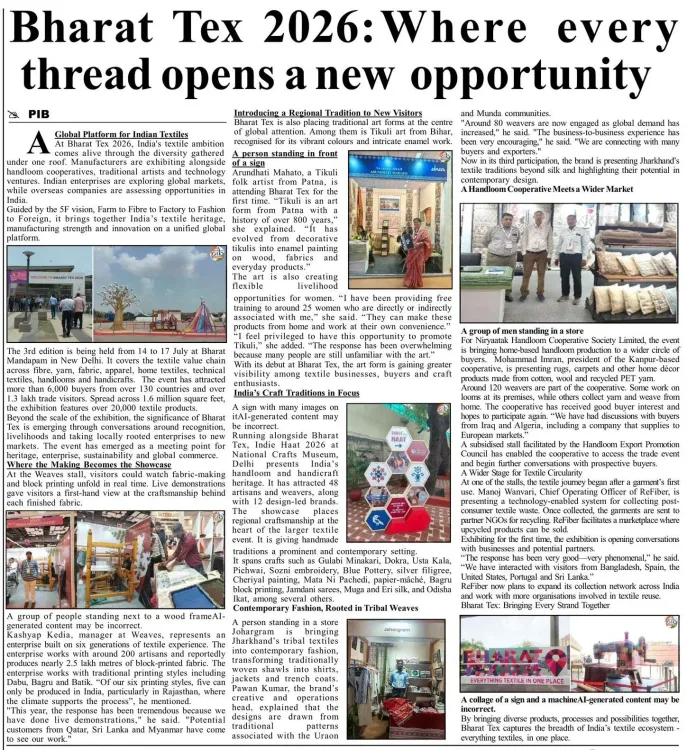
BharatTex2026 brought together textile traditions, handloom, handicrafts and innovations from multiple Indian states on a single platform.
The minister highlighted growing engagement with global buyers and the emergence of new trade opportunities as key outcomes.
Local enterprises and artisans received direct international recognition through the event.
The event aligns with existing policy frameworks including the PLI scheme for textiles (2021) and PM MITRA Parks (2021).
Future policy watchers will monitor buyer commitments and potential updates to the National Textile Policy following the event.
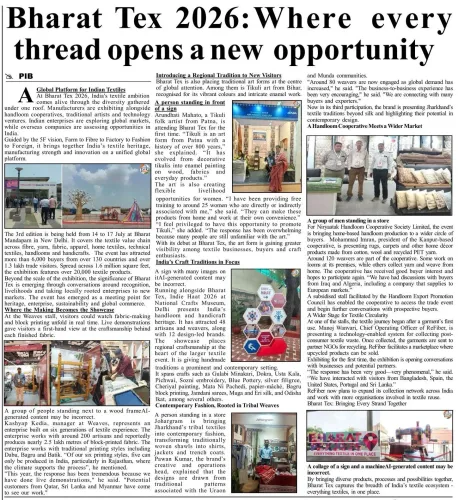
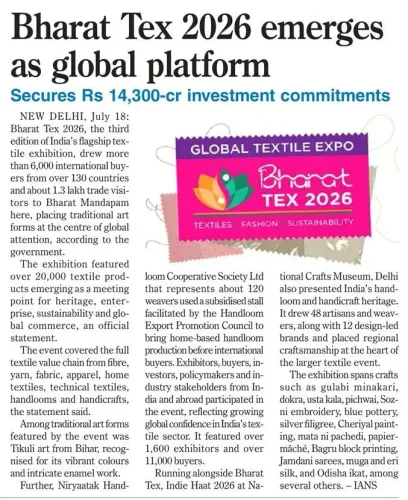
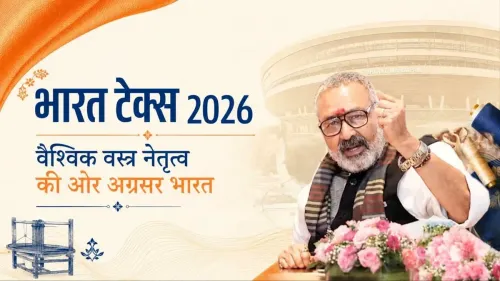
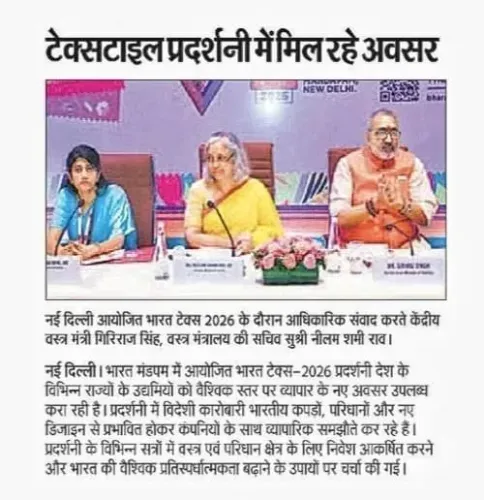
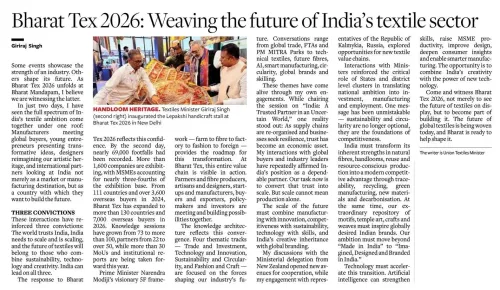
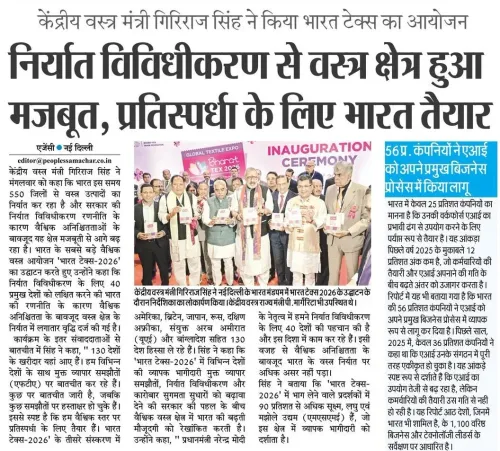
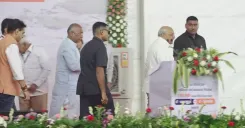
Union Textiles Minister Giriraj Singh on Tuesday, 21 July 2026 highlighted the success of BharatTex2026, calling it a significant platform that brought together India's rich textile traditions, handloom, handicrafts, and innovations under one roof and deepened engagement with global buyers.
Context
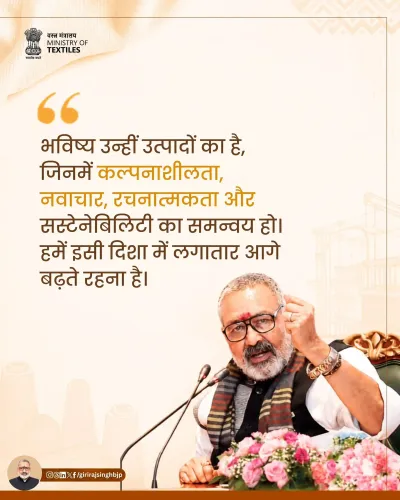
Posting on X, Minister Singh wrote: 'देश के विभिन्न राज्यों की समृद्ध वस्त्र परंपराओं, हथकरघा, हस्तशिल्प और नवाचारों ने एक ही मंच पर भारत की विविधता और क्षमता का परिचय दिया' — 'The rich textile traditions, handloom, handicrafts and innovations of various states of the country introduced India's diversity and capability on a single platform.' He added that growing engagement with global buyers, new trade opportunities, and the recognition being received by local enterprises are proof that BharatTex2026 has emerged as an important link in this direction.
The minister's remarks position BharatTex2026 as a flagship convergence event for India's textile sector, bringing together weavers, artisans, exporters, and international buyers in a single forum. The event's emphasis on regional diversity — spanning handloom clusters and handicraft traditions from across Indian states — reflects the Ministry of Textiles' broader strategy of showcasing India's decentralised textile ecosystem to the world.
Policy Backdrop
India's textile sector has been the focus of sustained policy attention over the past decade. The Production Linked Incentive (PLI) scheme for textiles, approved in 2021, was designed to boost man-made fibre apparel manufacturing and drive export growth. In the same year, the government announced the PM Mega Integrated Textile Region and Apparel (PM MITRA) Parks scheme to develop integrated textile infrastructure at scale.
These initiatives form part of a longer continuum of textile policy going back to the early 2000s, with successive frameworks emphasising modernisation, cluster development, and global market linkages. BharatTex2026 sits within this arc, serving as a demand-side complement to the supply-side investments made through PLI and PM MITRA. The Ministry of Textiles has consistently sought to bridge traditional handloom and handicraft strengths with export-oriented industrial growth.
Stakeholders and Impact
The primary beneficiaries of platforms such as BharatTex2026 are handloom weavers, handicraft artisans, and textile exporters — segments that have historically faced challenges in accessing global markets directly. By placing local enterprises in front of international buyers, the event creates linkages that can translate into sustained orders and improved livelihoods at the grassroots level.
For larger exporters and manufacturers, the platform offers an opportunity to showcase innovation and product range to a concentrated audience of global procurement decision-makers. Minister Singh's specific mention of 'new trade opportunities' and 'recognition for local enterprises' signals that buyer engagement at the event moved beyond ceremonial showcasing toward concrete commercial interaction.
What's Next
Attention will now turn to the tangible outcomes of BharatTex2026 — including any buyer commitments, memoranda of understanding, or order pipelines that the Ministry of Textiles formalises in the weeks ahead. Observers will also watch for any revision to the National Textile Policy that incorporates learnings and momentum from the event. If the government moves to institutionalise BharatTex as a recurring annual or biennial platform, it could become a permanent fixture in India's export promotion calendar, reinforcing the country's ambition to expand its share of global textile and apparel trade.
Point of View
He is framing the event as proof-of-concept for the demand-side ecosystem that PLI and PM MITRA are meant to supply. The timing, mid-2026, is notable: it gives the Ministry of Textiles a public-facing narrative of momentum ahead of any potential National Textile Policy revision. Politically, championing grassroots artisans and weavers alongside export growth allows the BJP to stitch together a message that resonates with both rural constituencies and the industrial lobby.
NationPress
21 Jul 2026
Frequently Asked Questions
What is BharatTex2026?
BharatTex2026 is a platform organised to showcase India's textile traditions, handloom, handicrafts and innovations to global buyers, bringing together enterprises from various Indian states under one roof to facilitate trade and international market linkages.
What did Giriraj Singh say about BharatTex2026?
Union Textiles Minister Giriraj Singh said that BharatTex2026 demonstrated India's diversity and capability on a single platform, with growing engagement from global buyers, new trade opportunities, and increased recognition for local enterprises proving its importance.
What is the PLI scheme for textiles?
The Production Linked Incentive (PLI) scheme for textiles was approved by the Indian government in 2021 to boost man-made fibre apparel manufacturing and increase textile exports by providing financial incentives linked to incremental production.
What are PM MITRA Parks?
PM Mega Integrated Textile Region and Apparel (PM MITRA) Parks are integrated textile infrastructure hubs announced in 2021 to consolidate spinning, weaving, processing and garmenting under one location, reducing logistics costs and improving competitiveness.
How does BharatTex2026 help handloom weavers and artisans?
BharatTex2026 gives handloom weavers and handicraft artisans direct access to international buyers, helping them secure orders and gain global recognition that would otherwise be difficult to achieve independently, supporting livelihoods at the grassroots level.