Goyal congratulates UK's new trade minister as CETA kicks in
Synopsis
Union Commerce Minister Piyush Goyal congratulated Jonathan Reynolds on his appointment as UK's Secretary of State for Business, Innovation, Science and Trade, noting the India-UK CETA entered force on 15 July 2026 and pledging to deepen investment flows and mobility provisions between the two nations.
Key Takeaways
Union Commerce Minister Piyush Goyal congratulated Jonathan Reynolds on becoming the UK's Secretary of State for Business, Innovation, Science and Trade .
The India-UK Comprehensive Economic and Trade Agreement (CETA) came into force on 15 July 2026 .
Goyal described Reynolds as a personal contact, indicating prior ministerial-level engagement on trade.
Key priority areas flagged by Goyal include investment flows , mobility provisions , and building a 'modern, resilient trade corridor.' The message signals New Delhi's intent to move swiftly on CETA implementation under the new UK ministerial arrangement.
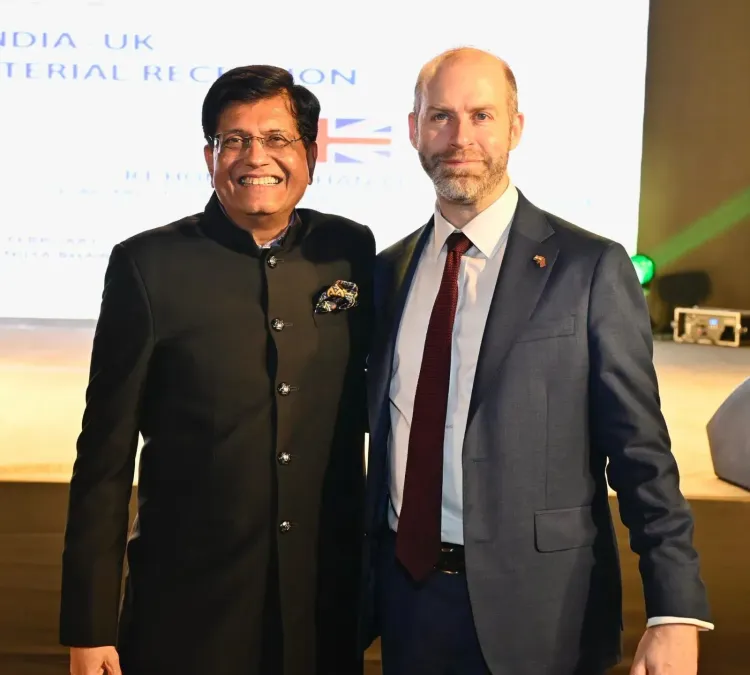
Union Commerce and Industry Minister Piyush Goyal on Tuesday, 21 July 2026, congratulated Jonathan Reynolds on his appointment as Secretary of State for Business, Innovation, Science and Trade of the United Kingdom, calling the moment 'a defining moment for India-UK economic relations' with the Comprehensive Economic and Trade Agreement now in force.
Context
Goyal's post on X welcomed Reynolds — referred to as 'my friend @JReynoldsMP' — to his new cabinet role, noting that the India-UK CETA came into force on 15 July 2026. The minister signalled continuity in the bilateral trade relationship, expressing a desire to 'partner once again' with Reynolds, suggesting prior engagement between the two on trade matters. The congratulatory message was framed not as a courtesy alone but as a forward-looking statement of intent on deepening economic ties.
Policy Backdrop
The India-UK Comprehensive Economic and Trade Agreement, commonly referred to as CETA, represents one of the most significant bilateral trade deals India has concluded in recent years. Negotiations between New Delhi and London stretched over multiple rounds spanning several years before a final agreement was reached. The deal covers tariff reductions, investment protections, services trade, and crucially, mobility provisions — a long-contested element that eases movement of professionals between the two countries.
The agreement's entry into force on 15 July 2026 marks the transition from signed text to live implementation, meaning businesses and individuals on both sides can now begin availing its benefits. Goyal's message specifically highlights 'investment flows, mobility provisions, and the shared vision of our leaders' as priority areas, aligning with the broader strategic framing of the deal as a 'modern, resilient trade corridor.'
Stakeholders and Impact
For India, the CETA with the UK opens preferential access to one of Europe's largest standalone economies following Brexit. Indian sectors expected to benefit include information technology and services, pharmaceuticals, textiles, and skilled professional mobility. British industries, in turn, gain improved access to India's large consumer market and manufacturing base, particularly in financial services and high-value goods.
The appointment of Reynolds — a figure Goyal has previously worked with — to the UK's top trade and business portfolio is seen in New Delhi as a signal of continuity on the British side. Smooth ministerial relationships have historically been cited as a factor in accelerating implementation timelines for complex trade agreements. Goyal's emphasis on 'strengthening investment flows' suggests the two sides are expected to move quickly toward operationalising the deal's investment chapters.
What's Next
With CETA now live, attention will shift to the Joint Committee and implementation mechanisms that both governments are expected to activate. Ministerial-level meetings between Goyal and Reynolds are likely to be scheduled to set near-term priorities under the agreement. The reference in Goyal's post to 'the shared vision of our leaders' points to the political backing the deal enjoys at the highest levels — from Prime Minister Narendra Modi on the Indian side — which typically accelerates bureaucratic follow-through.
The coming months will test whether the goodwill expressed in diplomatic exchanges translates into tangible gains for businesses and workers on both sides of the India-UK corridor.
Point of View
' Goyal anchors the agreement to the highest political level, insulating it from bureaucratic delays. The personal framing ('my friend') also suggests New Delhi is betting on an established relationship with Reynolds to fast-track the deal's more contested provisions, particularly professional mobility. This fits a broader pattern in Indian trade diplomacy of using ministerial chemistry as a lever to accelerate complex, multi-chapter agreements.
NationPress
20 Oct 2026
Frequently Asked Questions
What is the India-UK CETA and when did it come into force?
The India-UK Comprehensive Economic and Trade Agreement (CETA) is a bilateral free trade deal covering tariffs, investment, services, and professional mobility. It came into force on 15 July 2026 .
Who is Jonathan Reynolds and what is his new role?
Jonathan Reynolds is a UK Member of Parliament who was appointed Secretary of State for Business, Innovation, Science and Trade of the United Kingdom, making him the counterpart minister to India's Commerce Minister Piyush Goyal.
Why did Piyush Goyal congratulate the UK trade minister?
Goyal congratulated Reynolds on his new appointment and used the occasion to reaffirm India's commitment to deepening trade ties under the newly live CETA, highlighting investment flows and mobility provisions as priorities.
What does the India-UK trade deal mean for Indians?
The CETA is expected to benefit Indian professionals through easier mobility to the UK, boost exports in sectors like IT, pharmaceuticals, and textiles, and provide a structured framework for Indian companies to invest in the UK market.
What are the next steps after India-UK CETA came into force?
Both governments are expected to activate joint implementation committees and schedule ministerial meetings to operationalise CETA's chapters on investment, services, and mobility, with Goyal signalling readiness to engage Reynolds directly.