Nvidia Spotlights LangChain in Latest AI Developer Push
Synopsis
Nvidia's corporate X account on 8 July 2026 publicly tagged LangChain and pointed developers to new resources, reinforcing the chip giant's strategy of deepening software ecosystem ties beyond its GPU hardware to dominate the full AI infrastructure stack.
Key Takeaways
Nvidia's corporate X account on 8 July 2026 directly tagged LangChain and shared a 'Learn more' link for developers.
LangChain , founded around 2022 , is one of the most widely used open-source frameworks for building large language model applications.
Nvidia has been expanding CUDA and AI software tooling partnerships with LLM frameworks since at least 2023 .
The move is part of Nvidia's broader strategy to position itself as a full-stack AI infrastructure provider, not just a chip maker.
Indian AI startups and developers using LangChain on Nvidia-powered cloud infrastructure could benefit from any deeper runtime or enterprise integration.
The next GTC conference or a joint technical release is the most likely venue for concrete details on the partnership's scope.
Chip giant Nvidia on Wednesday, 8 July 2026 directed its global developer community toward a new resource tied to LangChain, the open-source framework widely used for building large language model (LLM) applications, in a post on X that underscores the company's deepening investment in the full AI software stack.
Context
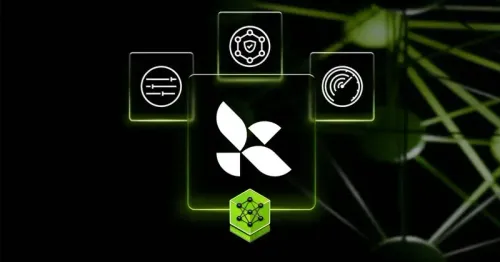
Nvidia's post, addressed directly to LangChain, carried a 'Learn more' call-to-action linking to what the company flagged as additional information on the collaboration or resource. While the precise content behind the link could not be independently verified at the time of publication, the public tagging of LangChain by Nvidia's corporate account signals an intentional amplification of the framework within Nvidia's developer ecosystem.
LangChain, launched around 2022, has become one of the most widely adopted open-source tools for developers building applications on top of large language models. It abstracts away much of the complexity in chaining model calls, memory management, and tool integrations, making it a foundational layer for enterprise and research AI pipelines alike.
Policy Backdrop
Since at least 2023, Nvidia has systematically expanded its CUDA and AI software tooling partnerships with LLM frameworks, positioning itself not merely as a hardware vendor but as an end-to-end AI infrastructure provider. The strategy reflects a calculated effort to ensure that popular developer tools run optimally on Nvidia's GPU architecture, creating a reinforcing loop between software adoption and hardware demand.
This approach mirrors moves seen across the semiconductor industry, where chip makers increasingly compete on software ecosystems as much as raw silicon performance. For Nvidia, whose H100 and Blackwell-series GPUs dominate accelerated computing for machine learning workloads, keeping LLM frameworks tightly integrated with its stack is a critical competitive moat.
Stakeholders and Impact
AI developers and LLM application builders are the most immediate audience for this signal. A formal or deepened Nvidia-LangChain integration could mean runtime optimisations, enterprise support tiers, or certified deployment blueprints that reduce friction for teams building production-grade AI systems on Nvidia hardware.
For Indian technology companies and startups — many of which rely on LangChain to build generative AI products on cloud infrastructure powered by Nvidia GPUs — any enhancement to the Nvidia-LangChain compatibility layer could translate directly into lower latency, reduced compute costs, and faster time-to-market for AI-native applications.
What's Next
Observers will watch Nvidia's next GTC conference sessions and any joint technical releases for details on runtime optimisations or enterprise support arrangements for LangChain on Nvidia platforms. A formal technical brief or developer documentation update is the most likely near-term follow-through to this public signal.
As the generative AI application layer matures, Nvidia's continued courtship of framework-level partners like LangChain suggests the company views software ecosystem dominance as inseparable from its hardware ambitions — a posture that will shape how the next generation of AI products is built globally, including across India's fast-growing developer community.
Point of View
Not a casual retweet — it reflects the company's sustained effort to make its GPU stack the default substrate for LLM application development. By amplifying framework-level tools, Nvidia is effectively raising the switching cost for developers who build on its hardware, a playbook that has historically proven durable in platform competition. For India's AI developer cohort, which is among the fastest-growing globally, this kind of upstream tooling endorsement often shapes which cloud and hardware stacks startups standardise on. The broader arc here is one of infrastructure lock-in through software affinity — a strategy that will define AI platform competition well into the late 2020s.
NationPress
9 Jul 2026
Frequently Asked Questions
What did Nvidia post about LangChain on 8 July 2026?
Nvidia's corporate X account tagged LangChain and shared a 'Learn more' link, signalling a resource or collaboration update for AI developers building LLM applications on Nvidia hardware.
What is LangChain and why does it matter for AI developers?
LangChain is an open-source framework launched around 2022 that simplifies building applications with large language models by handling model chaining, memory, and tool integrations — it is widely used by developers globally, including in India.
Why is Nvidia partnering with LLM frameworks like LangChain?
Nvidia has been expanding software ecosystem partnerships since at least 2023 to ensure popular AI frameworks run optimally on its GPUs, reinforcing hardware demand through software adoption.
How does the Nvidia-LangChain tie-up affect Indian AI startups?
Indian startups using LangChain on Nvidia-powered cloud infrastructure could benefit from runtime optimisations, lower latency, and enterprise support if the partnership deepens, potentially reducing compute costs and development time.
What should developers watch for next from Nvidia and LangChain?
Developers should watch Nvidia's next GTC conference sessions and any joint technical documentation for details on runtime optimisations, certified deployment blueprints, or enterprise support tiers for LangChain on Nvidia platforms.