Is India Still a Key Energy Partner for Putin Amid Sanctions?
Synopsis
Russian President Vladimir Putin has confirmed India's crucial role in energy partnerships despite prevailing sanctions. This assurance comes as India's imports from Russia hit a five-month high, revealing the complexities and resilience of this energy alliance.
Key Takeaways
Putin's visit highlights the commitment to energy cooperation.
India's imports of Russian crude have surged significantly.
Refiners are adapting to maintain supply amidst sanctions.
Shipping costs for the Russia-India route have increased.
Russian oil remains competitively priced, ensuring continued demand.
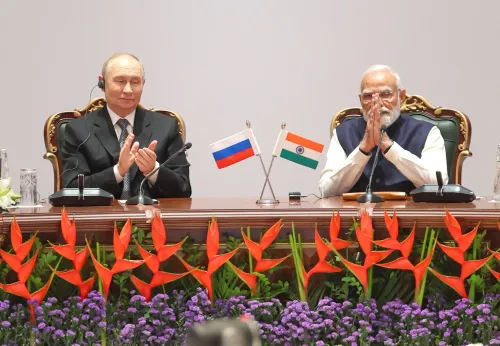
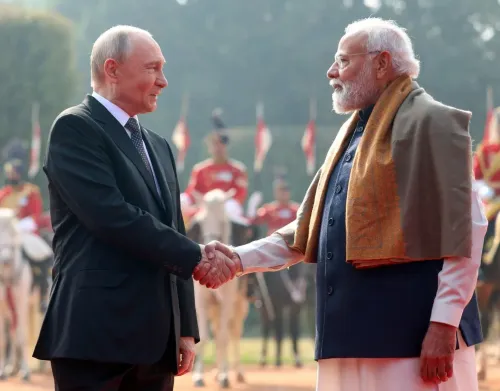
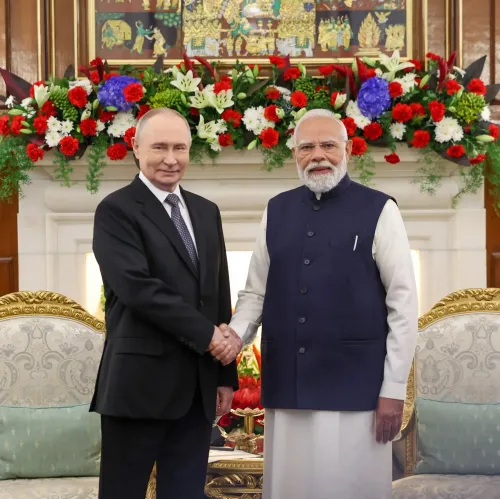
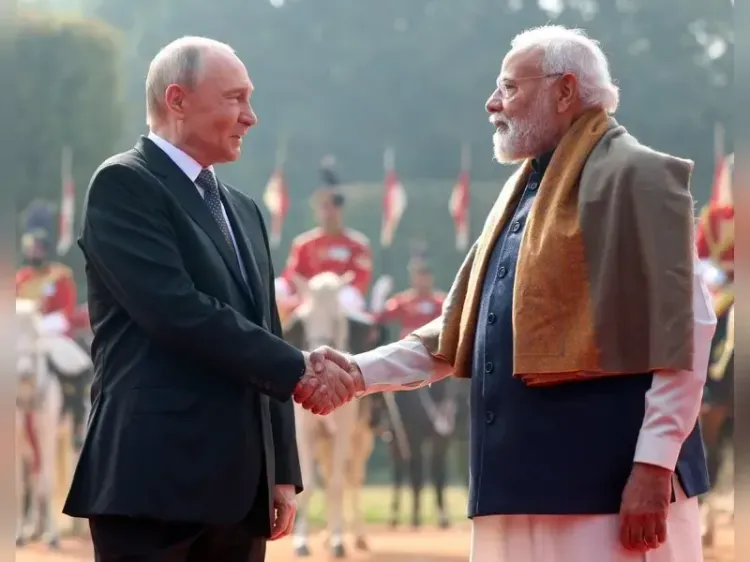
New Delhi, Dec 7 (NationPress) Russian President Vladimir Putin reassured India during his visit from December 3 to 5, 2025, that energy collaboration remains a priority for Moscow, according to a report.
While addressing Indian officials, he emphasized that Russia is dedicated to ensuring “uninterrupted shipments” of fuel to India, commending Indian partners as “very reliable”, as reported by the India Narrative.
This reassurance comes at a pivotal time as India's imports of Russian crude have surged to a five-month peak, even following the implementation of new US secondary sanctions on November 21.
India's reliance on Russian oil has seen a significant increase since 2022, with refiners showing resistance to reduce their intake despite the mounting obstacles. Nayara Energy stands out as one of the largest purchasers.
From 2023 to 2025, Nayara sourced over half of its total crude imports from Russia.
In several months of 2024, nearly 60 percent of the crude handled at its Vadinar refinery was from Russian varieties such as Urals and ESPO.
Nevertheless, maintaining the flow of Russian crude is becoming increasingly challenging. Numerous Western insurance companies have withdrawn coverage for vessels linked with the “dark fleet,” leading to an uptick in shipping costs.
Freight rates for the Russia-India shipping route have escalated by nearly 20 percent compared to mid-2025. Maritime brokers indicate that almost 40 percent of tankers previously utilized for this route are now deemed high-risk or uninsurable, compelling refiners to depend on unfamiliar carriers and more intricate shipping pathways.
Payment processes are also evolving. As US regulations tighten, Indian buyers are shifting towards dirham- and yuan-based settlement options. While functional, these systems introduce compliance and currency stability risks.
Despite this, analysts point out that US sanctions do not categorically ban Russian crude; they target specific entities. Therefore, refiners are more inclined to adapt their strategies rather than sever connections.
Industry experts reveal that methods such as ship-to-ship transfers, mixed cargoes, and re-documentation through hubs like Fujairah, Malaysia, and selected Turkish ports are increasingly being implemented to facilitate the delivery of Russian oil to India without a direct association with sanctioned exporters.
These practices resemble past global instances where sanctioned oil continued reaching buyers through less transparent but dependable routes, as stated in the report.
Indian refiners favor Russian crude for a straightforward reason: price. Russian oil remains available at a discount ranging from $4 to $7 per barrel compared to comparable Middle Eastern varieties.
Putin’s visit has reinforced Moscow's commitment to maintaining this energy partnership, according to the report.
Point of View
Our perspective aligns with the notion that India and Russia's energy relationship is not only vital but also reflects a strategic collaboration that withstands external pressures. This partnership underscores the importance of India securing its energy needs while navigating complex geopolitical landscapes.
NationPress
1 Oct 2026
Frequently Asked Questions
Why is Russia a key energy supplier for India?
Russia offers competitive pricing and reliable supply, making it an essential partner for India's growing energy needs.
How have recent sanctions affected Russian oil shipments to India?
While sanctions have complicated logistics, Indian refiners continue to adapt, finding alternative shipping methods and payment systems.
What strategies are Indian refiners using to import Russian crude?
Refiners are employing ship-to-ship transfers and using indirect shipping routes to circumvent sanctions.
What is the current state of Russian crude pricing?
Russian crude is available at a significant discount, typically between $4 and $7 per barrel compared to Middle Eastern oil.
What is the future of the India-Russia energy partnership?
Given the mutual benefits and ongoing commitment, the partnership is likely to continue despite geopolitical challenges.