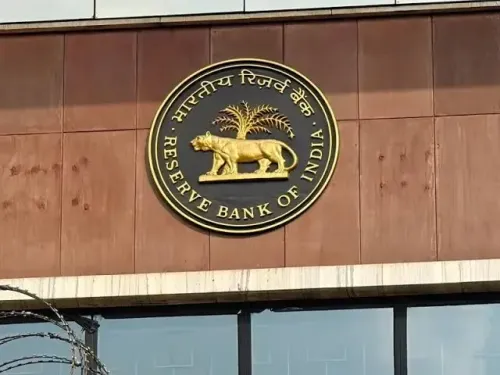
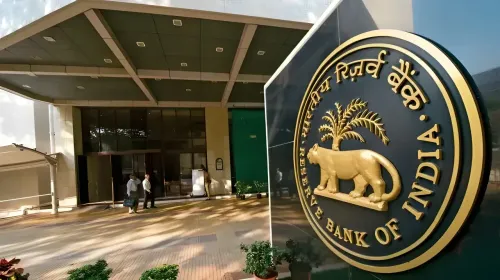
RBI likely to hold rates as supply-side inflation stays in focus
Synopsis
Yes Bank's latest note argues the RBI has little reason to hike rates just yet — supply shocks haven't sparked second-round inflation effects, and the government is unlikely to pass on OMC under-recoveries. But with the West Asia crisis unresolved and manufactured goods prices still firming, the 'wait-and-watch' window could close faster than markets expect.
Key Takeaways
Yes Bank projects headline WPI at 9.0 per cent and headline CPI at 4.8 per cent year-on-year for the year.
July WPI came in at 9.8 per cent year-on-year, softening marginally from 9.9 per cent in June.
The RBI is expected to maintain a 'wait-and-watch' stance as supply-side shocks have not yet triggered broad second-round price effects.
The West Asia crisis remains the primary upside risk to manufacturing input costs.
Input PPI eased for the second consecutive month , partly due to cooling petroleum and chemical-linked costs.
Core manufactured goods price pressures continued to firm in the July WPI print, keeping the inflation outlook uncertain.
The Reserve Bank of India (RBI) is widely expected to maintain a 'wait-and-watch' stance on policy rates, even as inflation pressures persist, according to a research note by Yes Bank. While a rate hike is not entirely off the table, analysts argue the bar for such action remains high as long as supply-side shocks have not triggered broad second-round effects on prices.
Inflation Readings: WPI and CPI in Focus
Yes Bank's estimates project headline Wholesale Price Index (WPI) averaging 9.0 per cent for the year, while headline Consumer Price Index (CPI) is expected at 4.8 per cent year-on-year. For July, the headline WPI print came in at 9.8 per cent year-on-year — broadly in line with market expectations of 9.75 per cent — and reflected a mild softening from 9.9 per cent recorded in June.
On the producer side, Output PPI remained broadly aligned with wholesale price trends. Notably, Input PPI offered some relief as input costs eased for the second consecutive month, partly driven by cooling in petroleum and chemical-linked inputs.
Why the RBI Is Expected to Hold
According to the Yes Bank note, recent supply-side shocks have not yet translated into broad second-round effects — a key condition the RBI is likely monitoring before considering any rate action. The note, titled 'Steady upward climb without rude surprises', reiterates the case for the central bank to delay any rate move despite expectations of headline CPI rising further.
'As we await for a sense of the extent of pass-through from the WPI to the CPI, we reiterate our view for the RBI to stay on wait-and-watch and delay any rate action, despite expectations of Headline CPI rising,' the note stated.
West Asia Crisis: The Critical Wildcard
The unresolved West Asia crisis remains the single most significant upside risk to manufacturing input costs, according to the note. Most global commodity prices held firm through July, with similar trends visible into August, keeping the sustainability of any input-cost easing in question.
The persistence of a gap between retail and wholesale inflation also means pass-through from WPI to CPI cannot be ruled out. However, analysts believe the government is unlikely to fully pass on under-recoveries of Oil Marketing Companies (OMCs) to pump-head prices of petrol and diesel — a move that would add further pressure on retail inflation.
Core Inflation Remains a Concern
Despite some headline softening, core-side price pressures remain elevated. Underlying price trends in manufactured categories continued to firm up in the July WPI print, signalling that input cost pressures have not fully dissipated. This keeps the RBI's task complex — looking through transient supply shocks while remaining alert to any broadening of inflationary impulses.
With global commodity markets still unsettled and domestic pass-through dynamics uncertain, the RBI's next policy decision will hinge critically on whether the WPI-to-CPI transmission materialises in the months ahead.
Point of View
The RBI's window for comfortable inaction may be narrower than the Yes Bank note implies. The more pointed question is whether the government's reluctance to pass on OMC under-recoveries is a fiscal buffer or a deferred inflation shock — and that distinction matters enormously for the RBI's next move.
NationPress
2 Oct 2026
Frequently Asked Questions
What is the RBI's current stance on interest rates?
The RBI is expected to maintain a 'wait-and-watch' approach and delay any policy rate action, according to a Yes Bank research note. The central bank is likely to look through supply-side inflation pressures as long as they have not triggered broad second-round effects on prices.
What are Yes Bank's inflation forecasts for India?
Yes Bank projects headline WPI to average 9.0 per cent for the year and headline CPI at 4.8 per cent year-on-year. July WPI came in at 9.8 per cent, a slight easing from 9.9 per cent in June.
Why is the West Asia crisis relevant to Indian inflation?
The unresolved West Asia crisis poses an upside risk to manufacturing input costs in India, as global commodity prices — particularly petroleum and chemicals — remained firm through July and into August. Any escalation could reverse the recent easing in input costs.
Could there be a pass-through from WPI to CPI inflation?
Analysts say a WPI-to-CPI pass-through cannot be ruled out, given the persistent gap between wholesale and retail inflation. However, the government is expected to hold back from fully passing on Oil Marketing Company under-recoveries to pump-head petrol and diesel prices, which would limit some of that transmission.
What is the risk of a rate hike by the RBI?
A rate hike is not a zero-probability event, but the bar for one is currently high, according to the Yes Bank note. The RBI is likely to act only if supply-side shocks translate into sustained second-round inflationary effects — something that has not yet materialised.