South Korean Airlines Set to Enforce Record Fuel Surcharges for May Flights
Synopsis
As global oil prices rise due to Middle East tensions, South Korean airlines are implementing unprecedented fuel surcharges for May flights. Travelers are advised to purchase tickets soon to avoid higher costs as the highest tier surcharge is set to take effect.
Key Takeaways
South Korean airlines are imposing the highest fuel surcharges for May flights.
Global oil prices are driving this increase, with the average reaching US$214.71 per barrel.
Korean Air's one-way surcharge will rise significantly, especially for long-haul routes.
Travelers are encouraged to purchase tickets soon to avoid higher costs.
South Korea has seen a record influx of foreign tourists in early 2023.
Seoul, April 16 (NationPress) In a significant move, South Korean airlines are set to implement the highest fuel surcharges for flights in May, driven by soaring global oil prices amidst rising tensions in the Middle East, according to industry insiders.
These carriers have established the May surcharges based on the Mean of Platts Singapore (MOPS), which averaged US$214.71 per barrel from March 16 to April 15, placing them in the highest Level 33 tier. MOPS is a crucial benchmark for refined petroleum products in the Asia-Pacific region.
Fuel surcharges, which are additional fees added to ticket prices to mitigate rising fuel expenses, are adjusted monthly as per a government-directed distance-based pricing framework, as reported by the Yonhap news agency.
The adjustment for May marks a notable increase from the Level 18 surcharge in April, representing the steepest month-on-month rise since the introduction of the current system in 2016 and the first application of the highest tier.
This latest change will impact tickets purchased in May.
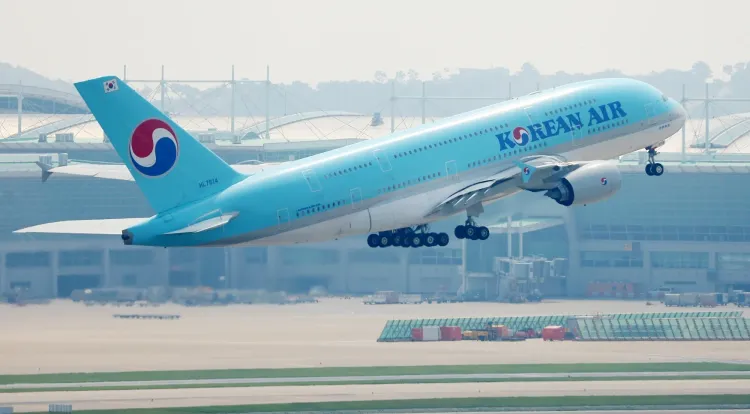
Korean Air, the largest full-service airline in the nation, announced that its international one-way fuel surcharge will increase to between 75,000 won ($50.89) and 564,000 won for May, a significant rise from the previous range of 42,000 won to 303,000 won in April.
For long-haul routes, including destinations like New York, Paris, and London, the surcharge will see an 86 percent increase to 564,000 won.
Asiana Airlines Inc., the second-largest airline, along with low-cost carriers such as Jeju Air Co., are expected to announce their May surcharges shortly.
Industry experts suggest that ticket purchases may surge this month, as the surcharges are based on the ticket issuance date, allowing travelers to secure comparatively lower fares before the new rates take effect.
In related news, South Korea experienced a record influx of foreign tourists during the first quarter of this year, largely due to a massive turnout for a landmark performance by K-pop sensation BTS in central Seoul last month.
According to preliminary figures from the Ministry of Culture, Sports and Tourism, 4.76 million foreign tourists visited South Korea between January and March, marking a 23 percent increase from the same period in 2022, the highest recorded for any first quarter.
China was the leading source of inbound travel, with approximately 1.45 million visitors, a rise of 29 percent, followed by Japan with 940,000 visitors, an increase of 20 percent. Taiwan saw the most significant year-on-year growth of 37.7 percent, totaling 540,000 visitors, while arrivals from the Americas and Europe increased by 17 percent to 690,000.
Foreign tourist spending reached 3.21 trillion won (US$2.18 billion), up 23 percent from the previous year, and travel satisfaction ratings improved to 90.8 points, an increase of 1.1 points from 89.7 in the previous year, according to a poll.
Point of View
Reflecting a broader trend in the market.
NationPress
19 Sept 2026
Frequently Asked Questions
What are fuel surcharges?
Fuel surcharges are additional fees added to airfares to compensate for rising fuel costs, adjusted monthly based on government guidelines.
Why are surcharges rising now?
Surcharges are rising due to soaring global oil prices, influenced by escalating tensions in the Middle East.
How do fuel surcharges affect ticket prices?
Fuel surcharges increase the overall ticket price, prompting travelers to purchase tickets earlier to avoid higher costs.
What is the new surcharge level for May?
The new surcharge level for May has reached the highest tier, Level 33, marking a significant increase from April's Level 18.
Which airlines are affected by the new surcharges?
The new surcharges will affect major airlines like Korean Air and Asiana Airlines, along with low-cost carriers.