Robots Greet Voters at Vellore Polling Booths in TN Elections
Synopsis
During the Tamil Nadu Assembly elections on April 23, humanoid robots dressed in sarees greeted voters in Tamil, offered flowers and chocolates, guided them through voting procedures, and directed senior citizens and disabled voters to special queues — all at just two of Vellore district's 1,427 polling booths in a landmark pilot.
Key Takeaways
Humanoid robots were deployed at two polling booths in Vellore district during the Tamil Nadu Assembly elections on April 23, 2025 .
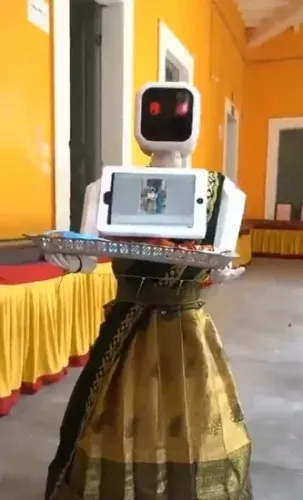
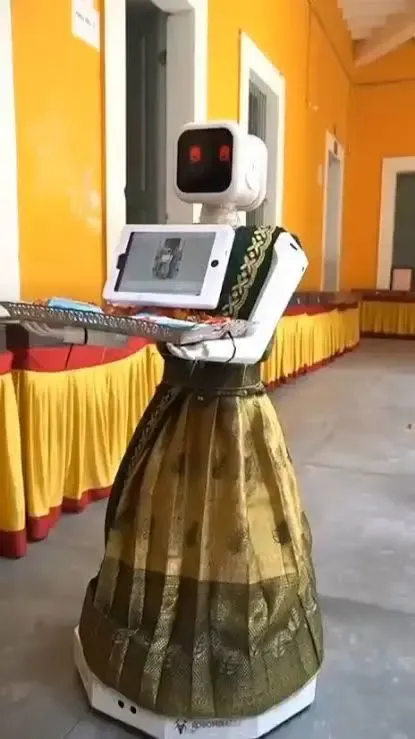
A saree-clad robot at the Government Municipal Higher Secondary School, Gudiyatham greeted voters in Tamil and distributed flowers and chocolates .
A second robot at the Government Muslim Higher Secondary School, Vellore constituency used interactive sensors to shake hands and provide voting instructions.
Only 2 out of 1,427 polling booths in Vellore district were selected for this pilot robot deployment by election authorities.
The robots directed senior citizens, pregnant women, and persons with disabilities to dedicated queues and informed voters about wheelchair availability .
Officials described the initiative as a step toward making elections more accessible, efficient, and technology-integrated , with wider rollout pending evaluation.
Vellore, Tamil Nadu – April 23: In a first-of-its-kind initiative during the Tamil Nadu Assembly elections, humanoid robots were deployed at select polling stations across Vellore district to welcome and assist voters, marking a significant fusion of democracy and modern technology. The pilot program, launched by election authorities, positioned robots at booths in Gudiyatham and Vellore Assembly constituencies to streamline the voting experience and boost voter engagement.
Saree-Clad Robot Steals the Show in Gudiyatham
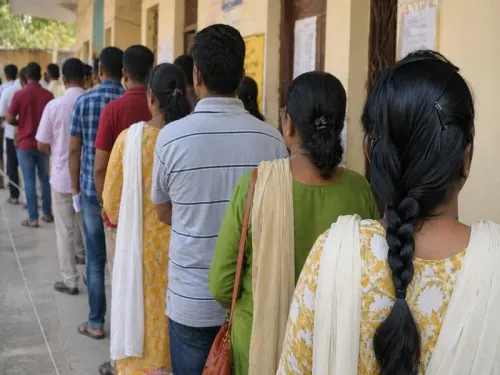
At the Government Municipal Higher Secondary School in Gudiyatham town, a robot dressed in a traditional saree greeted voters as they lined up outside the polling booth. The robot spoke fluently in Tamil, holding a tray filled with flowers and chocolates, creating a warm, festive atmosphere that caught both first-time and seasoned voters off guard.
"We were pleasantly surprised to see a robot greeting voters at the polling booth. It was speaking in Tamil and even gave tips on how to stay safe in the heat," said one voter who interacted with the machine.
Beyond the warm welcome, the robot also guided voters through the facilities available inside the polling station, helping reduce confusion and improving the overall flow of the voting process.
Tech-Enabled Assistance at Vellore Assembly Constituency Booth
A second robot was deployed at the Government Muslim Higher Secondary School in the Vellore Assembly constituency. This unit was equipped with interactive sensors, enabling it to offer a handshake to approaching voters — a detail that drew considerable curiosity and smiles from the public.
The robot provided clear, step-by-step instructions on the voting procedure, including the mandatory rule of depositing mobile phones at designated counters before entering the booth — a regulation that often causes delays when communicated manually.
It also made public announcements about special arrangements for senior citizens, pregnant women, and persons with disabilities, directing them to dedicated queues to avoid long waiting times. Voters were also informed about the availability of wheelchairs and other accessibility facilities at the station.
Pilot Scale: Only 2 of 1,427 Booths Selected
Election officials confirmed that out of 1,427 polling booths across Vellore district, only two were chosen for this experimental robot deployment. The limited rollout reflects a cautious, data-driven approach by authorities to test feasibility before any potential large-scale adoption in future elections.
Officials described the initiative as part of broader efforts to make polling more accessible, efficient, and citizen-friendly in an increasingly technology-driven public service environment.
Broader Significance: Technology Meets Electoral Democracy
This initiative is part of a growing national trend where the Election Commission of India and state-level authorities are experimenting with technology to improve voter participation and experience. From EVMs (Electronic Voting Machines) and VVPATs to digital voter ID cards, India's electoral machinery has steadily embraced innovation over the decades.
The deployment of robots at polling booths, however, represents a qualitative leap — moving from backend digitization to front-facing, human-interactive technology. This is particularly significant in a state like Tamil Nadu, which has historically seen high voter turnout and strong civic participation.
Notably, this comes at a time when global democracies are grappling with how to use artificial intelligence and robotics responsibly in public life. India's use of robots in an electoral setting — even on a pilot basis — places it among a small group of nations experimenting at this intersection.
Voter Reaction and On-Ground Impact
The robots drew widespread attention and curiosity, with many voters pausing briefly to interact with the machines before proceeding to cast their votes. The initiative appeared to ease anxiety among first-time voters and helped reduce bottlenecks at the booth entrance by pre-informing voters about procedures.
Election officials and observers noted that the machines served a dual purpose: they were both a functional tool for voter guidance and a symbolic statement about the future of civic infrastructure in India.
As Tamil Nadu's 2025 election cycle progresses, the success of this pilot could influence whether similar technology is adopted in other districts or states in upcoming by-elections and general elections. The Election Commission of India is expected to review feedback from this deployment before deciding on wider implementation.
Point of View
Not just backend infrastructure. However, the real test lies in scalability and equity: can such innovations reach rural, low-literacy booths where they're needed most, or will they remain urban spectacles? The pilot's success should be measured not by viral appeal but by whether it tangibly improved turnout or reduced procedural confusion. If the Election Commission treats this as a genuine data-gathering exercise rather than a PR moment, it could mark a meaningful step toward a more accessible democratic process.
NationPress
16 Sept 2026
Frequently Asked Questions
What happened with robots at Vellore polling booths during Tamil Nadu elections?
Humanoid robots were deployed at two polling stations in Vellore district during the Tamil Nadu Assembly elections on April 23, 2025. The robots welcomed voters in Tamil, distributed flowers and chocolates, guided them through voting procedures, and directed senior citizens and disabled voters to special queues.
Where exactly were the robots deployed in Vellore?
The robots were placed at the Government Municipal Higher Secondary School in Gudiyatham town and the Government Muslim Higher Secondary School in the Vellore Assembly constituency. These were the only two booths out of 1,427 in Vellore district selected for the pilot.
What functions did the robots perform at the Tamil Nadu polling booths?
The robots welcomed voters, spoke in Tamil, offered flowers and chocolates, provided voting procedure instructions, reminded voters to deposit mobile phones, and announced special queues for senior citizens, pregnant women, and persons with disabilities. One robot was also equipped with sensors to offer a handshake.
Is this the first time robots have been used at Indian polling booths?
This pilot in Vellore is among the earliest known deployments of humanoid robots at Indian polling stations for voter interaction. It represents a new frontier in India's ongoing effort to integrate technology into its electoral process, which has previously focused on EVMs, VVPATs, and digital voter IDs.
Will robots be used at more polling booths in future Tamil Nadu or Indian elections?
Election officials described the Vellore deployment as an experimental pilot, and a wider rollout would depend on the feedback and data gathered from these two booths. The Election Commission of India is expected to evaluate the initiative before deciding on broader adoption in future elections.