OECD: South Korea's Growth Rate to Hit Record Low by Late 2027
Synopsis
South Korea's potential growth rate is projected to hit a historic low of 1.52% in Q4 2027, marking 15 consecutive years of decline, as OECD data reveals the country now trails the US in growth potential, a stark warning for Asia's fourth-largest economy.
Key Takeaways
South Korea's potential growth rate is forecast to hit a record low of 1.52 percent in Q4 2027 , per the latest OECD projections.
The decline has been uninterrupted since 2012 , when the rate stood at 3.63 percent , and will mark 15 consecutive years of contraction if it continues through 2027.
South Korea has trailed the United States in potential growth since 2023 , with the gap projected to widen to 0.38 percentage points by 2026 .
The IMF has kept its 2026 South Korea growth forecast unchanged at 1.9 percent , citing strong exports and supplementary budget effects, even as the global forecast was cut to 3.1 percent .
The South Korean government pledged to maintain its emergency economic response framework to stabilise prices, supply chains, and financial markets .
Structural factors including a total fertility rate of 0.72 in 2023 , one of the world's lowest, are identified as primary long-term drivers of the growth decline.
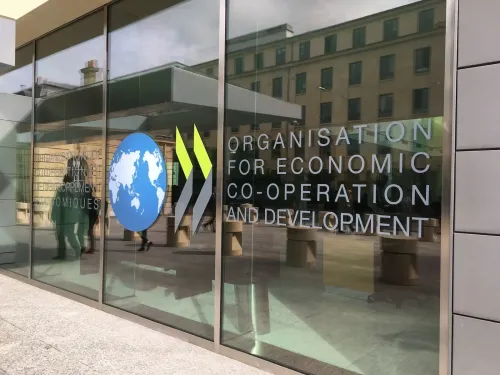
South Korea's potential growth rate is on course to touch a historic low of 1.52 percent in the fourth quarter of 2027, according to the latest data released by the Organisation for Economic Co-operation and Development (OECD). The decline marks the continuation of a downward spiral that has persisted for over a decade, raising serious concerns about the long-term economic trajectory of Asia's fourth-largest economy.
Record Low on the Horizon
The OECD's latest projections show that South Korea's potential GDP growth rate stood at 1.92 percent in 2024 and is estimated at 1.71 percent for 2025. It is forecast to slip further to 1.57 percent in 2026 before hitting the record trough of 1.52 percent in the October-December quarter of 2027.
The potential growth rate measures the maximum sustainable pace at which an economy can expand by fully deploying its labour, capital, and other productive resources without stoking inflationary pressures. A falling potential growth rate signals structural weaknesses, not just cyclical slowdowns.
Notably, South Korea's potential growth rate has been in continuous decline since 2012, when it was recorded at a comparatively robust 3.63 percent. If the current trajectory persists through 2027, the country will have endured 15 consecutive years of declining growth potential.
Widening Gap With the United States
The OECD data also exposes a growing divergence between South Korea and the United States. As recently as 2023, the gap between the two nations' potential growth rates was a negligible 0.03 percentage points. By 2026, that gap is projected to balloon to 0.38 percentage points, with the US consistently outperforming its East Asian ally.
This reversal is significant. For decades, South Korea was celebrated as one of the world's fastest-growing economies, its rise from post-war poverty to technological powerhouse described as the Miracle on the Han River. The fact that it now trails the US in potential growth underscores how profoundly demographic pressures, slowing productivity gains, and structural rigidities are reshaping its economic future.
IMF Holds 2026 Growth Forecast Steady
Separately, the International Monetary Fund (IMF) has kept its 2026 growth forecast for South Korea unchanged at 1.9 percent, even as it revised down its global growth projection by 0.2 percentage points to 3.1 percent, a cut attributed in part to the ongoing Middle East crisis.
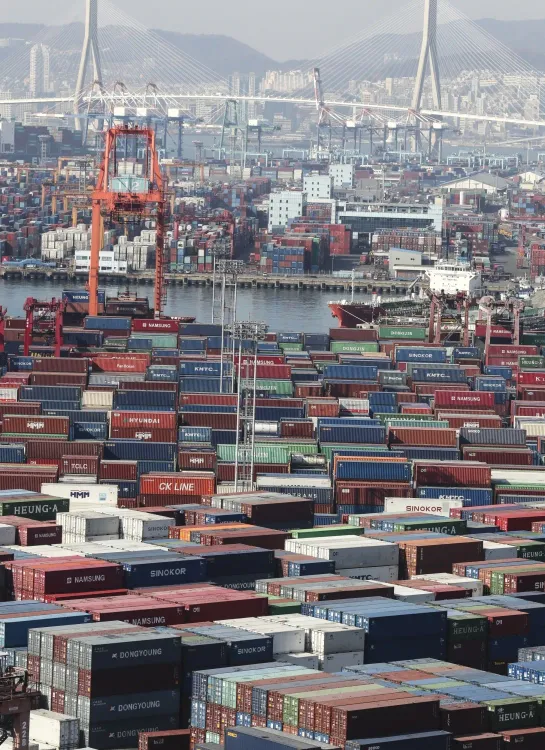
The South Korean Ministry of Economy and Finance confirmed that the IMF's decision to hold the forecast steady was underpinned by the country's strong export performance and the stabilising effects of a supplementary budget. The ministry cited the IMF's World Economic Outlook report in its statement.
Despite the impact of the Middle East situation, the country's growth outlook remained unchanged on the back of strong exports and offsetting effects from a supplementary budget, the ministry stated.
Government Response and Policy Stance
The South Korean government has pledged to maintain its emergency economic response framework in the face of heightened uncertainties. Authorities say they will move swiftly to stabilise prices, supply chains, and financial markets as global headwinds intensify.
However, critics and economists argue that short-term stabilisation measures do little to address the deeper structural forces driving the long-term decline. Chief among these is South Korea's rapidly ageing population and one of the world's lowest birth rates, recorded at a total fertility rate of just 0.72 in 2023, far below the replacement level of 2.1.
Structural Roots of a Prolonged Decline
Combined with slowing capital accumulation and productivity growth, the demographic headwind makes reversing the potential growth decline exceptionally difficult without bold structural reforms. Seoul has launched various pro-natalist policies and labour market reforms, but their impact remains limited and slow to materialise.
For India, this trajectory presents both a cautionary tale and a strategic opportunity. As South Korea's structural constraints deepen, India's young and expanding workforce could attract capital and manufacturing investment that once flowed to East Asia. As the OECD data makes clear, the window for course correction in Seoul is narrowing, and all eyes will be on upcoming fiscal and structural reform announcements as the country confronts this defining economic challenge.
Point of View
A far larger and more mature economy, in growth potential. For India, this is both a cautionary tale and an opportunity, as South Korea's constraints deepen, India's young workforce and rising productivity could position it as the preferred destination for capital that once flowed to East Asia. The real question is whether New Delhi will seize that structural advantage before the window closes.
NationPress
16 Sept 2026
Frequently Asked Questions
What is South Korea's projected potential growth rate in 2027?
South Korea's potential growth rate is projected to reach a record low of 1.52 percent in the fourth quarter of 2027, according to the latest OECD data. This compares to 1.92 percent in 2024 and an estimated 1.71 percent in 2025.
Why is South Korea's potential growth rate declining?
The decline is driven primarily by South Korea's severe demographic crisis, including one of the world's lowest fertility rates at 0.72 in 2023, a shrinking labour force, slowing capital investment, and structural rigidities. These factors reduce the economy's maximum sustainable output capacity over time.
How does South Korea's growth compare to the United States?
Since 2023, South Korea has trailed the United States in potential growth rate. The gap has widened from just 0.03 percentage points in 2023 to a projected 0.38 percentage points by 2026, reflecting stronger structural growth drivers in the US economy.
What is the IMF's growth forecast for South Korea in 2026?
The IMF has maintained its 2026 growth forecast for South Korea at 1.9 percent, unchanged from its previous projection. The forecast was held steady due to strong export performance and the stabilising impact of a supplementary budget despite global uncertainties.
How long has South Korea's potential growth rate been declining?
South Korea's potential growth rate has been on a continuous downward trend since 2012, when it stood at 3.63 percent. If the decline extends through 2027 as projected, it will mark 15 consecutive years of falling potential growth.