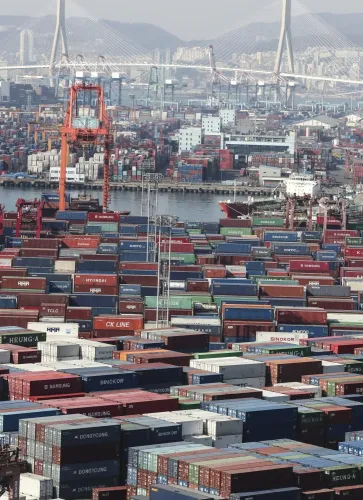
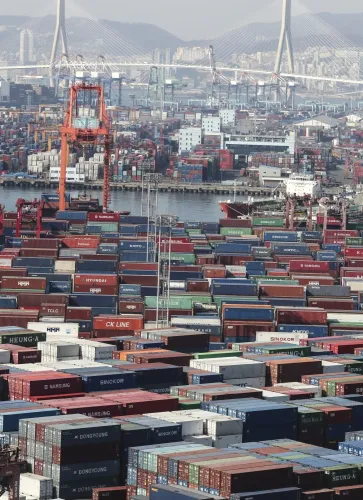
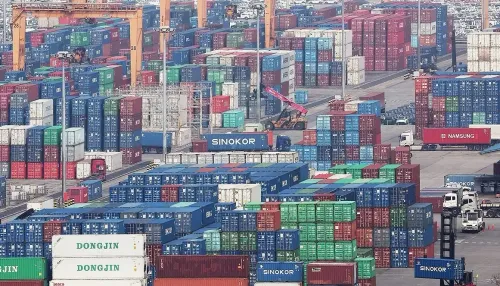
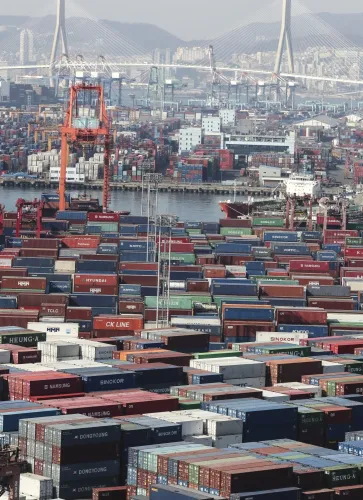
South Korea industrial output drops 0.3% in May on chip production cuts
Synopsis
South Korea's factory output slipped for a second consecutive month in May, with semiconductor production tumbling 10% on volume adjustments and a base effect. Officials insist the chip sector's fundamentals remain intact and expect a rebound once new fabs come online — but Middle East supply disruptions add an unpredictable variable to the recovery timeline.
Key Takeaways
South Korea's industrial output fell 0.3 percent in May from April, marking a second consecutive month of on-month decline.
The semiconductor industry saw production drop 10 percent , driven by a base effect and DRAM shipment volume adjustments.
Pharmaceutical output fell 17.5 percent , while vehicle production rose 2.7 percent .
Service sector output grew 1.3 percent on-month, led by finance and science industries.
Retail sales edged up 0.1 percent ; facility investment dipped 0.1 percent .
Officials cited Middle East war -related raw material supply disruptions as a contributing external factor.
South Korea's industrial output declined 0.3 percent in May compared to the previous month, extending on-month losses for a second consecutive month, according to data released on Tuesday by the Ministry of Data and Statistics. The contraction was driven primarily by a pullback in semiconductor production, even as retail sales edged slightly higher over the same period.
Chip Sector Leads the Decline
Output in the mining and manufacturing sector — a cornerstone of the South Korean economy — fell 3 percent month-on-month. The semiconductor industry bore the brunt of the decline, with production falling 10 percent, attributed to a base effect and deliberate volume adjustments in memory chip shipments, including dynamic random-access memory (DRAM).
Lee Doo-won, a senior official at the data ministry, told reporters: 'The fundamentals of the chip sector remain strong. With chipmakers' production capacity reaching its limits, there were some adjustments in line with shipment schedules.'
Lee further noted: 'If new chip fabs launch operations in a full-fledged manner, we believe there will be an increase not only in terms of value but also in volume.'
Pharma Output Slumps, Auto Sector Gains
Output of pharmaceutical products fell a steep 17.5 percent during the month, compounding the drag from semiconductors. In contrast, vehicle production bucked the trend, rising 2.7 percent over the period, offering a partial offset within the manufacturing segment.
External Pressures and Supply Chain Disruptions
The Ministry of Finance and Economy attributed the broader industrial contraction partly to disruptions in the supply of raw materials stemming from the Middle East war, alongside the chip production adjustment. This comes amid a period when semiconductor output had recently surged sharply, making the current pullback partly a corrective normalisation rather than a structural deterioration, according to officials.
Services, Retail, and Investment
Not all indicators pointed downward. Output in the service sector rose 1.3 percent on-month in May, led by stronger performance in finance and science industries. Retail sales, a key gauge of private consumption, edged up 0.1 percent, supported by gains in automobile fuel and cosmetics.
Within retail, sales of durable goods such as automobiles fell 3.4 percent, while non-durable goods including fuel rose 0.9 percent and semi-durable goods such as clothing climbed 2.3 percent. Facility investment dipped 0.1 percent, with the machinery industry — including precision equipment — falling 0.2 percent, partially offset by a 0.2 percent gain in the transportation segment.
With new semiconductor fabrication plants expected to ramp up operations, officials remain cautiously optimistic that both output volumes and values will recover in the months ahead.
Point of View
Even with base-effect caveats. The simultaneous 17.5% fall in pharma output suggests the drag is broader than chips alone. Middle East supply disruptions add a geopolitical variable that Seoul cannot control. The real question is whether new fab capacity materialises on schedule; if it does not, what looks like a short-term correction could harden into a more persistent growth headwind.
NationPress
29 Sept 2026
Frequently Asked Questions
Why did South Korea's industrial output fall in May?
South Korea's industrial output fell 0.3 percent in May primarily due to a 10 percent drop in semiconductor production, caused by a base effect and volume adjustments in DRAM shipments. Supply chain disruptions linked to the Middle East war also contributed to the overall decline.
Is the South Korean chip sector in trouble?
Officials say the fundamentals remain strong and the pullback is a short-term adjustment tied to shipment schedules and production capacity limits. They expect output to rise once new chip fabrication plants begin full operations, though no specific timeline has been confirmed.
Which sectors gained ground in May despite the overall decline?
Vehicle production rose 2.7 percent and the service sector expanded 1.3 percent on-month in May, led by finance and science industries. Retail sales also edged up 0.1 percent, supported by fuel and cosmetics.
How did pharmaceutical output perform in May?
Pharmaceutical output fell 17.5 percent in May, making it the second-largest drag on manufacturing alongside the semiconductor sector's decline.
What is the outlook for South Korea's industrial output?
Senior data ministry officials are cautiously optimistic, stating that new semiconductor fabs coming online should lift both volume and value output. However, ongoing raw material supply disruptions tied to the Middle East conflict remain a key risk to the recovery.