South Korea to Launch 10 Startup Hub Cities by 2027
Synopsis
South Korea is breaking its Seoul-centric startup mould by designating 10 cities as innovation hubs by 2027, with Daegu targeting robotics, Gwangju eyeing AI, and Ulsan betting on future mobility — all in a race to place 5 Korean cities in the global top 100 startup ecosystems by 2030.
Key Takeaways
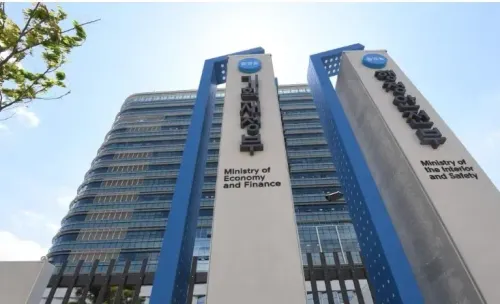
South Korea plans to designate 10 cities as national startup ecosystem hubs by 2027 , announced by the Ministry of Finance and Economy .
The first four cities — Daejeon , Daegu , Gwangju , and Ulsan — will be designated in 2025 , with six more to follow in 2026 .
South Korea currently ranks 20th globally in startup ecosystem competitiveness but has only 3 cities in the global top 500, per StartupBlink data.
The government targets placing 5 South Korean cities in the global top 100 startup ecosystems by 2030 .
Each hub city will develop a specialised industry focus: Daegu for robotics , Gwangju for AI and smart energy , and Ulsan for future mobility .
Finance Minister Koo Yun-cheol linked the initiative to South Korea's broader ambition to leverage the semiconductor boom for long-term economic leadership.
Seoul, April 24: South Korea has unveiled an ambitious plan to designate 10 cities as national startup ecosystem hubs by 2027, with the Ministry of Finance and Economy announcing the initiative aims to drive balanced regional development and generate employment opportunities for the country's youth. The plan was formally revealed at a high-level economic strategy meeting focused on strengthening the nation's entrepreneurial landscape.
Phase-Wise Rollout of Startup Hub Cities
In the first phase, four cities — Daejeon, Daegu, Gwangju, and Ulsan — will be designated as startup hubs in 2025, chosen for their proximity to the country's leading science and research institutes. These cities already possess foundational infrastructure that can be rapidly scaled into full-fledged innovation corridors.
A second batch of six additional cities outside the greater Seoul metropolitan area will be identified and designated in 2026, completing the target of 10 startup cities. The government's phased approach reflects a deliberate effort to ensure readiness and avoid token designations without real support structures.
Why This Matters: Addressing South Korea's Startup Imbalance
South Korea currently ranks 20th globally in startup ecosystem competitiveness, according to data from StartupBlink, a leading global startup ecosystem research platform. Despite heavy investment in R&D and an active patent filing culture, the country has only three cities featured in the top 500 global startup cities list.
By comparison, the United States has 137 cities on that list, while Britain has 34, Germany has 27, China has 26, and Japan has six. The gap underscores how South Korea's startup strength is heavily concentrated in Seoul, leaving vast regional talent pools underutilised.
The ministry acknowledged that regions outside Seoul are experiencing population outflow driven by a lack of industrial and entrepreneurial infrastructure — a structural challenge that this initiative directly targets.
Specialised Industry Focus for Each City
Each designated city will be encouraged to develop a specialised startup niche aligned with its existing industrial strengths. For instance, Daegu is earmarked as a hub for robotics startups, Gwangju for artificial intelligence (AI) and smart energy, and Ulsan for future mobility ventures.
This sector-specific approach is designed to prevent duplication and build genuine centres of excellence, rather than generic innovation parks that often fail to attract sustained investment or talent.
The government also plans to position these cities as education hubs for young entrepreneurs, integrating startup culture into local academic and vocational ecosystems to create a self-sustaining pipeline of founders and innovators.
Support Package and Policy Reforms
A comprehensive support package will accompany each hub designation, covering R&D funding, investment facilitation, networking support, and regulatory streamlining. The ministry also plans to extend preferential treatment to companies based outside the Seoul metropolitan area when bidding for public procurement contracts — a significant financial incentive to relocate or establish operations in regional cities.
Additionally, rural regions will receive targeted support to build businesses around their cultural and tourism assets, helping stimulate local economies beyond the tech sector.
Finance Minister's Vision and the 2030 Target
Finance Minister Koo Yun-cheol framed the initiative within South Korea's broader economic ambitions, stating: Building on the golden window of opportunity created by the semiconductor boom, the government will work to strengthen the foundations for our economy to reemerge as a global leader by advancing proactive industrial innovation and promoting startups.
The government's headline goal is to have five South Korean cities ranked within the global top 100 startup ecosystems by 2030 — a target that would represent a dramatic leap from the current standing of just three cities in the top 500.
This initiative comes amid growing global competition for startup talent and capital, with nations like India, Singapore, and Israel aggressively expanding their regional innovation ecosystems. For South Korea, the risk of over-centralisation in Seoul is not merely economic — it is demographic, as younger populations increasingly migrate to the capital, hollowing out regional cities. The success of this plan will depend on whether the government can move beyond designations to deliver real, sustained investment that makes regional startup life genuinely viable. Watch for the first four city designations to be formalised later in 2025, which will serve as the true test of political commitment to this vision.
Point of View
And a mere list of designated hubs won't reverse that without genuine, sustained investment. The comparison with the US's 137 startup cities is a damning self-indictment for a nation that prides itself on innovation leadership. What's telling is the timing: this push rides the semiconductor boom's coattails, suggesting the government understands that industrial windfalls must be converted into structural diversification before the cycle turns. The real test will come when budget allocations, not press releases, prove the commitment is real.
NationPress
16 Sept 2026
Frequently Asked Questions
Which cities will South Korea designate as startup hubs in 2025?
South Korea will designate Daejeon, Daegu, Gwangju, and Ulsan as startup hubs in 2025. These four cities were selected due to their proximity to major national science and research institutes.
What is South Korea's startup ecosystem global ranking?
South Korea ranks 20th globally in startup ecosystem competitiveness, according to StartupBlink data. Despite strong R&D investment and patent activity, only three South Korean cities appear in the global top 500 startup cities list.
What is the goal of South Korea's 10 startup hub city plan?
The plan aims to promote balanced regional growth, reduce population outflow from non-Seoul regions, and create jobs for young people. The government's headline target is to have five South Korean cities ranked in the global top 100 startup ecosystems by 2030.
What industries will South Korea's new startup cities focus on?
Each city will develop a specialised industry niche — Daegu will focus on robotics, Gwangju on artificial intelligence and smart energy, and Ulsan on future mobility. This sector-specific approach is designed to build genuine centres of excellence.
How does South Korea's startup city count compare to other countries?
South Korea currently has only three cities in the global top 500 startup cities, compared to 137 for the United States, 34 for Britain, 27 for Germany, 26 for China, and six for Japan. This gap is a key driver behind the government's new regional startup hub initiative.