South Korea short selling surges 14% to ₩19 trillion despite KOSPI rebound
Synopsis
South Korea's stock markets are surging — KOSPI up 6%, KOSDAQ up 20% this month — yet short selling has jumped 14% to ₩19 trillion. The split reveals a market at war with itself: momentum buyers chasing the AI chip rebound on one side, sceptics betting it won't hold on the other.
Key Takeaways
Outstanding short selling in South Korea hit 19 trillion won (US$13.4 billion) as of Tuesday , up 14 percent from end-July, according to Korea Exchange (KRX) data.
The KOSPI has gained 6 percent and the KOSDAQ has surged 20 percent so far in August .
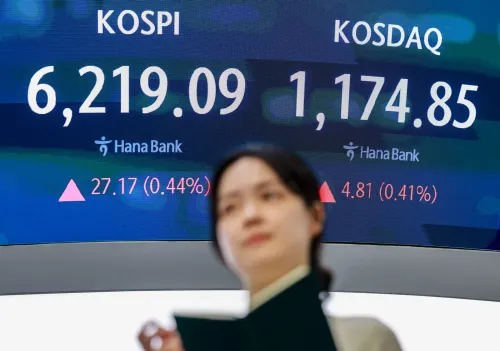
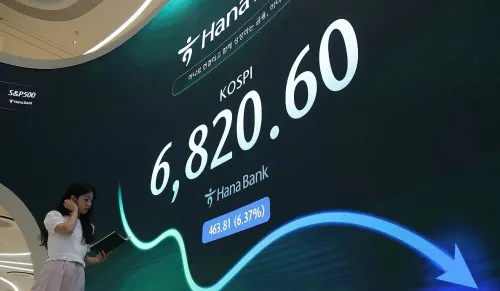
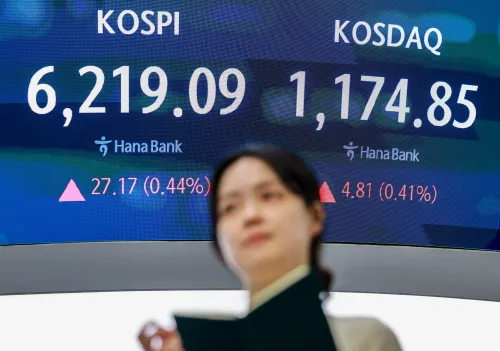
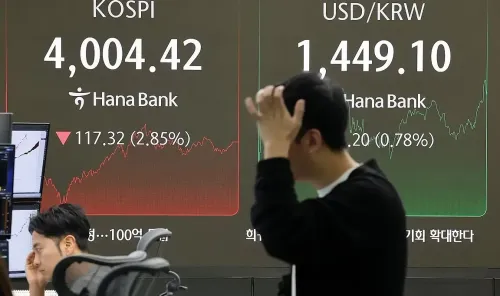
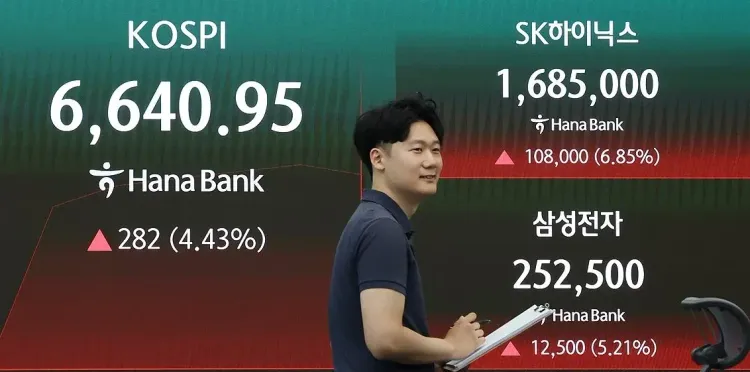
On Friday , the KOSPI closed up 164.60 points (2.42%) at 6,977.94 — a fifth straight session of gains.
Foreigners net-bought 3.04 trillion won in shares on Friday, while institutions and individuals were net sellers of 3 trillion won combined.
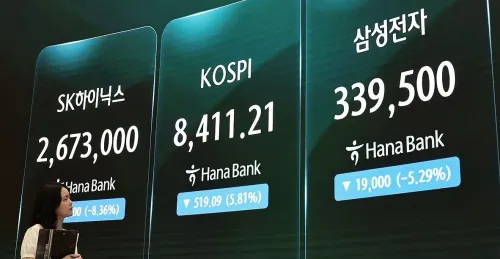
The original market rout last month was triggered by concerns over AI investment profitability and weakening chip demand.
Short selling had previously peaked at 23 trillion won in early June before retreating.
South Korea's stock short selling has climbed sharply even as the country's equity markets staged a strong recovery from last month's rout, according to data released on Sunday, 16 August. The divergence signals that a significant cohort of investors remains sceptical about whether the recent rally — driven by chipmakers and artificial intelligence (AI)-related stocks — is sustainable.
Short Selling by the Numbers
Outstanding short selling reached approximately 19 trillion won (US$13.4 billion) as of Tuesday, according to data from the Korea Exchange (KRX). That represents a 14 percent jump, or 2.27 trillion won, from the 16.73 trillion won recorded at the end of last month.
The figure has been volatile in recent months. Short selling stood at 15 trillion won at the end of February, dipped to 12 trillion won in early March, then surged to 23 trillion won in early June before the latest reading.
Market Rebound Runs Parallel
The rise in short positions comes even as South Korean benchmarks have posted strong gains. The Korea Composite Stock Price Index (KOSPI) has advanced 6 percent so far this month, while the tech-heavy KOSDAQ index has surged 20 percent — one of the sharpest short-term recoveries among major Asian markets.
On Friday, the KOSPI closed up 164.60 points, or 2.42 percent, at 6,977.94 — its fifth consecutive session of gains — after opening 2.7 percent higher. Trade volume was moderate at 416 million shares worth 26.73 trillion won (US$18.8 billion), with gainers outnumbering losers 675 to 204. The Korean won also rose against the US dollar.
What Triggered the Original Crash
South Korea's stock market had tumbled last month amid mounting concerns over the profitability of AI-related investments and fears that reduced AI spending could dent demand for semiconductors — a sector that anchors both the KOSPI and KOSDAQ. Major chipmakers bore the brunt of the sell-off.
Investor sentiment received a lift when US stocks advanced overnight on better-than-expected inflation data for July. The Dow Jones Industrial Average rose 0.13 percent and the Nasdaq Composite climbed 0.81 percent, providing a tailwind for Asian markets.
Why the Scepticism Persists
Despite the rebound, investors remain uncertain about whether the chipmaking sector has peaked. The sharp pace of recovery — 20 percent on KOSDAQ in under a month — has itself become a source of concern, with some market participants questioning whether the rally has outrun fundamentals. Foreigners bought a net 3.04 trillion won worth of shares on Friday, offsetting 3 trillion won in combined net selling by institutions and individual investors — a split that underscores the divided sentiment.
With short interest climbing even as indices rise, the market appears to be in a tug-of-war between momentum buyers and those betting the AI-driven chip cycle has further to correct.
Point of View
It means the market is pricing two incompatible futures at once. The chip sector's AI-demand thesis remains unresolved: if hyperscaler capex moderates, the KOSDAQ's recovery looks like a bull trap. Notably, the foreign-versus-domestic split on Friday — foreigners buying, locals selling — echoes a pattern seen before previous Korean market reversals. The real test will come when the next round of US tech earnings lands and either validates or punctures the AI spending narrative that underpins the entire rally.
NationPress
1 Oct 2026
Frequently Asked Questions
Why is short selling rising in South Korea despite the stock market rebound?
Investors are betting against the durability of the rally, uncertain whether the chipmaking sector has peaked after its AI-driven crash last month. Outstanding short selling rose 14% to 19 trillion won even as the KOSPI gained 6% and KOSDAQ surged 20% in August.
What is the current level of short selling in South Korea?
As of Tuesday, outstanding short selling stood at approximately 19 trillion won (US$13.4 billion), according to Korea Exchange (KRX) data — up 2.27 trillion won, or 14 percent, from 16.73 trillion won at the end of last month.
What caused South Korea's stock market to crash last month?
The market fell sharply amid concerns over the profitability of AI-related investments, which raised fears of reduced demand for semiconductors. Chipmakers and AI-linked stocks bore the brunt of the sell-off.
How much has the KOSPI and KOSDAQ recovered in August?
The KOSPI has advanced 6 percent so far in August, while the tech-heavy KOSDAQ has surged 20 percent. On Friday, the KOSPI closed up 164.60 points, or 2.42 percent, at 6,977.94 — its fifth straight session of gains.
How did overseas investors behave during Friday's session?
Foreign investors were net buyers of 3.04 trillion won worth of shares on Friday, more than offsetting the 3 trillion won in combined net selling by domestic institutions and individual investors.