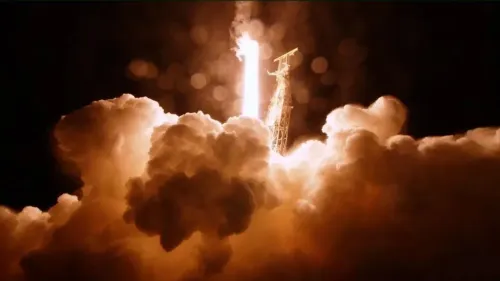
South Korea launches 4th Earth observation satellite on SpaceX Falcon 9
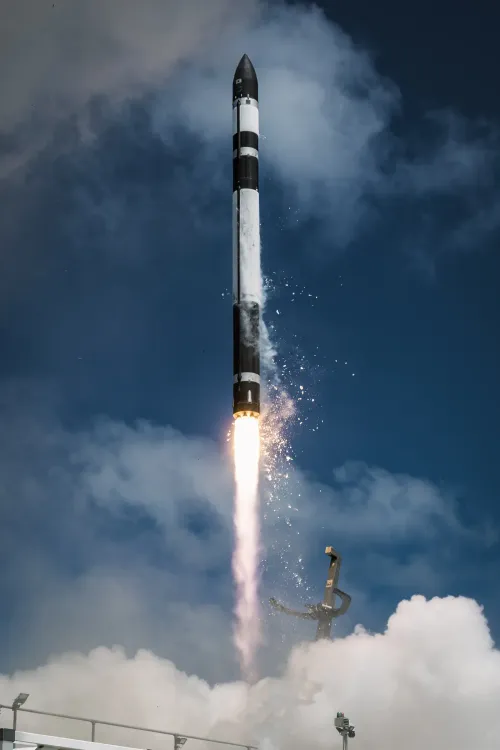
Synopsis
South Korea's fourth next-generation Earth observation satellite lifts off on a SpaceX Falcon 9 from California — carrying a homegrown camera that can image the entire Korean Peninsula every three days. The launch is part of a broader national push that now includes a Starlink-rival LEO network by 2035 and an accelerated lunar landing by 2030, approved by President Lee Jae Myung on the same day.
Key Takeaways
South Korea is launching its fourth medium-sized Earth observation satellite on 5 July aboard a SpaceX Falcon 9 from Vandenberg Space Force Base, California .
The 500-kilogram satellite will lift off at 4:10 pm Korea Standard Time and target an orbit of approximately 888 kilometres .
It carries a homegrown observation camera capable of imaging the entire Korean Peninsula every three days .
Full-scale missions are set to begin in the first half of 2026 after four months of in-orbit checks.
South Korea plans a LEO satellite communications network of hundreds of satellites by 2035 and has advanced its lunar landing target to 2030 .
The strategy was approved by the National Space Council under President Lee Jae Myung .
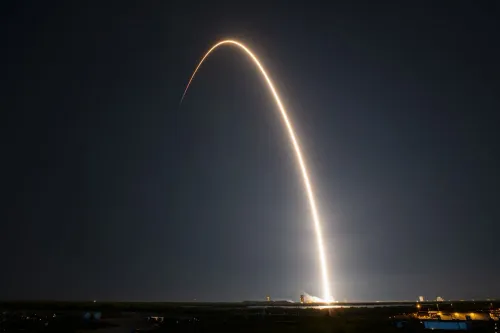
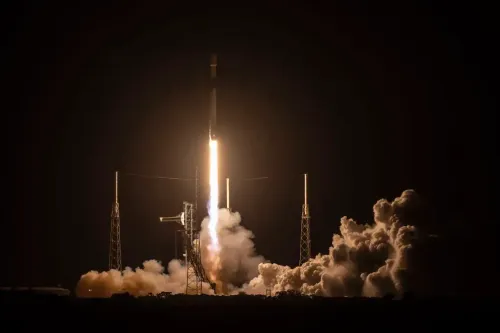
South Korea is set to launch its fourth next-generation medium-sized Earth observation satellite aboard a SpaceX Falcon 9 rocket from Vandenberg Space Force Base in California on Tuesday, 5 July, the Korea AeroSpace Administration (KASA) confirmed. The 500-kilogram satellite is scheduled to lift off at 4:10 pm Korea Standard Time, marking a significant step in the country's expanding space programme.
Launch Timeline and Separation Sequence
According to KASA, the satellite is expected to separate from the Falcon 9 launch vehicle approximately 2 hours and 22 minutes after liftoff. Its first ground contact is scheduled roughly 31 minutes after separation, routed through the Svalbard ground station in Norway. The satellite completed function inspections and fuel injection over the preceding month ahead of the launch.
Homegrown Payloads and Capabilities
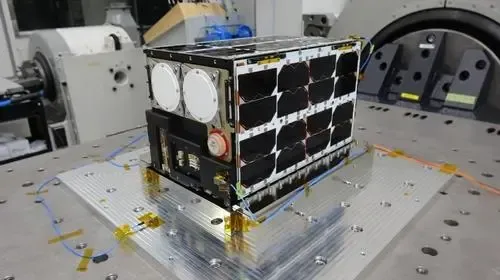
The satellite carries domestically developed payloads, most notably an observation camera capable of imaging the entire Korean Peninsula every three days. The South Korean government expects the satellite to serve a broad range of applications, including agriculture and forest management, forest change monitoring, disaster response, climate change analysis, and public safety enhancement.
Orbital Operations and Mission Schedule
Once the satellite reaches its target orbit at an altitude of approximately 888 kilometres, it will undergo four months of initial in-orbit operations before commencing full-scale missions in the first half of 2026. This phased approach is standard for Earth observation platforms of this class, allowing ground teams to calibrate instruments and validate systems under operational conditions.
South Korea's Broader Space Ambitions
The launch comes alongside a wider strategic announcement from KASA, unveiled at a public briefing on advanced industry development in the southeastern city of Jinju. South Korea aims to establish a low-Earth orbit satellite communications network composed of hundreds of satellites by 2035 — effectively its own version of SpaceX's Starlink network. The country has also brought forward its first lunar landing target to 2030.
The strategy was formally approved by the National Space Council, chaired by President Lee Jae Myung, on the same day as the briefing. KASA stated that building the satellite communications network will help strengthen South Korea's domestic satellite and launch vehicle development and manufacturing ecosystem. This is the fourth in a series of medium-sized observation satellites, underlining the country's steady cadence of space launches as it reduces reliance on foreign platforms for national monitoring needs.
Point of View
Disaster response, and environmental monitoring. The parallel announcement of a Starlink-rival LEO network by 2035 and an accelerated lunar landing by 2030 signals that Seoul is repositioning itself as a mid-tier space power with genuine industrial ambitions, not just a customer of Western launch services. The approval by President Lee Jae Myung's National Space Council on the same day as the launch adds political weight to what could otherwise read as routine agency activity. The real test will be whether domestic launch vehicle development — historically South Korea's weakest link — can keep pace with these orbital ambitions.
NationPress
5 Oct 2026
Frequently Asked Questions
What is South Korea's fourth medium-sized Earth observation satellite?
It is a 500-kilogram next-generation Earth observation satellite developed by South Korea, launched aboard a SpaceX Falcon 9 rocket from Vandenberg Space Force Base on 5 July. It carries a domestically built observation camera capable of imaging the entire Korean Peninsula every three days.
When will the satellite begin full operations?
After reaching its target orbit at approximately 888 kilometres, the satellite will undergo four months of initial in-orbit operations before beginning full-scale missions in the first half of 2026.
What are the planned uses of the satellite?
The South Korean government expects the satellite to support agriculture and forest management, forest change monitoring, disaster response, climate change analysis, and public safety enhancement.
What is South Korea's plan for a satellite communications network?
South Korea aims to build a low-Earth orbit satellite communications network composed of hundreds of satellites by 2035, modelled on SpaceX's Starlink. The plan was approved by the National Space Council chaired by President Lee Jae Myung.
Has South Korea changed its lunar landing timeline?
Yes. South Korea has accelerated its first lunar landing target to 2030, according to KASA's announcement made at a public briefing in Jinju on the same day as the satellite launch.