ByteDance Seedance 2.0 fuels China's $5.9bn AI comic drama boom
Synopsis
ByteDance's Seedance 2.0 is slashing AI comic drama production costs to as low as 25,000 yuan — over six times cheaper than traditional animation — as China's short-drama market targets 40 billion yuan in 2026 with 600 million viewers already tuning in.
Key Takeaways
ByteDance 's Seedance 2.0 has become the preferred AI video generation tool for comic drama studios in Shenzhen , valued for its low cost and ease of training.
AI production can reduce the cost of an 80-minute comic drama to as low as 25,000 yuan (US$3,694.2) , versus at least 160,000 yuan for traditional animation, per a February Guosen Securities report.
China 's AI short-drama market is projected by DataEye to reach 40 billion yuan (US$5.9 billion) in 2026 , after generating over 22 billion yuan in profit in five months.
Short-drama video viewership in China surpassed 600 million in the first half of 2026 .
Zhou Xiangxiang , founder of the Moli OPC AI Comic Drama Base in Shenzhen , said content has reached audiences from Southeast Asia to Latin America .
Seedance faces intellectual property disputes with the US film industry, creating potential barriers to international expansion.
ByteDance's Seedance 2.0 video generation model is emerging as a cornerstone tool for China's fast-growing AI comic drama industry, enabling studios to compress months of animation production into weeks at a fraction of traditional costs. The trend is centred in Shenzhen, where dedicated production hubs are scaling output for global audiences — even as the underlying technology faces intellectual property pushback from the US film industry.
Inside Shenzhen's AI content factory
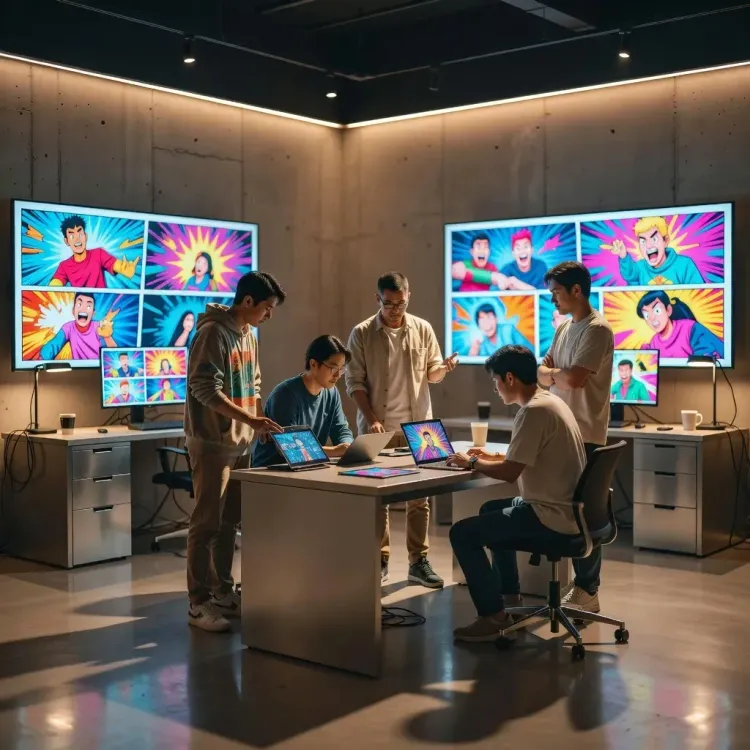
The Moli OPC AI Comic Drama Base, located in the northeastern part of Shenzhen, consolidates directors, producers, and distributors under one roof to exploit an emerging content format: converting short comic books or videos into microdramas using artificial intelligence. Zhou Xiangxiang, founder of the community and head of an affiliated production studio, said the base's content has already reached audiences spanning Southeast Asia to Latin America.
According to Zhou, her team uses Seedance more frequently than competing AI tools because it is easier to learn, allowing production teams to standardise training for a growing pool of AI content creators — a critical advantage as studios race to scale output.
Why it matters: cost compression at scale
The economics are stark. Zhou said the computing cost of producing an 80-minute comic drama using AI can be reduced to as little as 25,000 yuan (US$3,694.2). By comparison, a February report by Guosen Securities estimated that traditional animation production for a similarly-lengthed project costs at least 160,000 yuan — more than six times as much.
The savings are reshaping who can participate in content creation, lowering barriers for smaller studios and independent producers who previously could not afford full animation pipelines.
Market scale: 40 billion yuan and 600 million viewers
Market intelligence firm DataEye projected China's AI short-drama market to reach 40 billion yuan (US$5.9 billion) in 2026, after the segment generated more than 22 billion yuan in profit in just five months. The viewer base has also surged, with short-drama video audiences exceeding 600 million in the first half of the year — a figure that underscores the format's mainstream penetration.
The competitive backdrop: Hollywood friction
Despite its domestic momentum, Seedance 2.0 is not without controversy. Producers acknowledged that the technology faces backlash from the US film industry amid ongoing intellectual property disputes — a tension that mirrors broader friction between Chinese AI video tools and Western content rights holders. How ByteDance navigates those disputes could determine whether its tools gain traction in international markets beyond the developing-world audiences currently being served.
What's next
With viewer numbers already exceeding 600 million and production costs continuing to fall, the AI comic drama format looks set to move from niche to mainstream within China's broader short-video ecosystem. Studios at hubs like Moli OPC will be the ones to watch as they test cross-border distribution strategies — and as ByteDance's legal standing in Hollywood comes into sharper focus.
Point of View
000 yuan to 25,000 yuan per 80-minute title — mirrors the deflationary dynamic seen in AI coding and AI copywriting, where incumbent creative industries face structural margin pressure rather than outright replacement. What mainstream coverage underplays is the geopolitical dimension: the same IP disputes that are slowing Seedance's acceptance in Hollywood could become a de facto trade barrier, segmenting the global AI video market along US-China lines much as chip export controls have done for semiconductors. Investors in Western AI video startups should watch whether US studios push for legislative action, which would hand domestic rivals a protected home market.
NationPress
13 Sept 2026
Frequently Asked Questions
What is ByteDance's Seedance 2.0 and why are Chinese studios using it?
Seedance 2.0 is ByteDance's AI video generation model, adopted by Chinese comic drama studios for its high efficiency, low cost, and ease of learning. Producers at Shenzhen's Moli OPC AI Comic Drama Base said it allows teams to standardise training for AI content creators at scale, making it their preferred tool over competing platforms.
How much does AI comic drama production cost compared to traditional animation?
According to Zhou Xiangxiang, founder of the Moli OPC community, producing an 80-minute AI comic drama can cost as little as 25,000 yuan (US$3,694.2) in computing costs. A February report by Guosen Securities put traditional animation production for a similar-length project at a minimum of 160,000 yuan — more than six times higher.
How big is China's AI short-drama market in 2026?
Market intelligence firm DataEye projected China's AI short-drama market to reach 40 billion yuan (US$5.9 billion) in 2026. The segment already generated more than 22 billion yuan in profit in just five months, with short-drama video viewers surpassing 600 million in the first half of the year.
Is Seedance facing any legal or regulatory challenges?
Yes. Producers acknowledged that Seedance faces backlash from the US film industry over intellectual property disputes. The extent and outcome of those disputes could affect ByteDance's ability to expand its AI video tools into Western markets.
Where is China's AI comic drama production hub located?
The primary hub highlighted is the Moli OPC AI Comic Drama Base in the northeastern part of Shenzhen, China. The facility brings together directors, producers, and distributors to produce AI-generated microdramas for audiences in Southeast Asia, Latin America, and beyond.