ByteDance targets early 2027 for next-gen in-house CPU to power AI

Synopsis
ByteDance is quietly building a proprietary CPU — with an early version already running internally since late 2025 — targeting mass production by second-half 2027 to power AI products like Doubao and Seedance without disclosing any of it publicly.
Key Takeaways
ByteDance aims to finalise the design of its next-generation in-house CPU by early 2027 , according to three people familiar with the matter.
Mass production and wider deployment are targeted for the second half of 2027 .
An early version of the proprietary CPU has reportedly been used internally since late 2025 .
The tape-out — the final pre-fabrication design stage — could be accelerated given urgent internal demand, a source said.
The chip effort is driven by surging compute needs from Doubao , ByteDance 's AI chatbot, and Seedance , its video-generation model.
ByteDance has never publicly disclosed progress on its in-house chip design programmes.
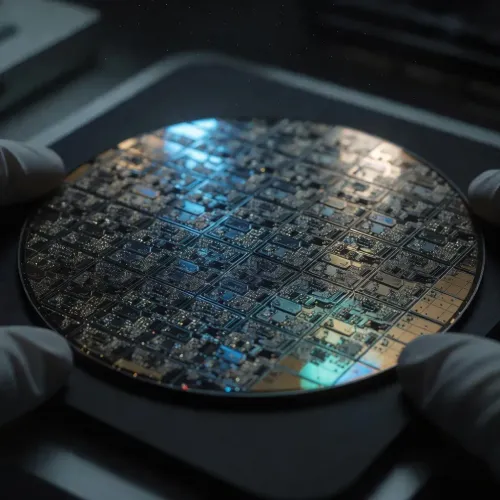
ByteDance, the parent company of TikTok, is targeting early 2027 to finalise the design of its next-generation proprietary central processing unit (CPU), with mass production and broader deployment planned for the second half of 2027, according to three people familiar with the matter. The move underscores the company's accelerating push to build a self-sufficient silicon stack capable of supporting its rapidly expanding AI infrastructure.
Early prototype already in use
An early iteration of the in-house CPU has reportedly been deployed internally since late 2025, one of the sources said. Given the urgency of internal computing demand, the tape-out — the final stage of chip design before physical fabrication begins — could be pulled forward ahead of the current timeline, a second source added.
Why it matters
The initiative arrives at a pivotal moment for the chip industry. High-performance CPUs are being reassessed in the era of agentic AI, where workloads are shifting away from pure matrix computation toward more complex task orchestration that demands versatile processing architectures. ByteDance's bet on proprietary silicon reflects a broader industry recognition that general-purpose commercial chips may no longer be cost-efficient or strategically safe for hyperscale AI operators.
Doubao and Seedance driving internal chip demand
The CPU project is part of a wider effort by ByteDance to integrate self-developed hardware across its AI infrastructure. Internal compute requirements have surged alongside the growth of Doubao, the company's widely used AI chatbot, and Seedance, its video-generation model. The company has expanded its in-house chip design capabilities significantly in recent years but has never publicly disclosed the progress of these programmes.
The competitive backdrop
ByteDance's silicon ambitions place it alongside a growing cohort of tech giants — including Google, Meta Platforms, Microsoft, Amazon.com, and OpenAI — all of whom are developing custom silicon to reduce dependence on third-party suppliers such as Nvidia and Broadcom. For a China-headquartered firm navigating export restrictions on advanced semiconductors, building proprietary compute infrastructure carries an added layer of strategic urgency.
What's next
The critical milestone to watch is whether ByteDance accelerates the tape-out schedule in response to demand pressure. A successful second-half 2027 mass production ramp would mark a significant step toward the company's goal of hardware self-reliance — and could reshape how it procures and deploys compute at scale going forward.
Point of View
Making proprietary CPU design newly urgent rather than optional. The fact that an early prototype has been running internally since late 2025 suggests this programme is further along than the company's public silence implies. If the second-half 2027 production ramp succeeds, it will intensify pressure on commercial CPU suppliers and signal that China's largest consumer internet firm has quietly joined the ranks of full-stack silicon companies.
NationPress
28 Sept 2026
Frequently Asked Questions
What CPU is ByteDance developing and when will it be ready?
ByteDance is developing a proprietary next-generation CPU designed for its own AI infrastructure. The company is targeting finalisation of the chip design by early 2027 , with mass production and deployment planned for the second half of 2027 , according to three people familiar with the matter.
Why is ByteDance building its own CPU?
ByteDance is building its own CPU to support surging internal compute demand from AI products including the Doubao chatbot and Seedance video-generation model. The move also reduces strategic dependence on external chip suppliers at a time when US export controls limit Chinese companies' access to advanced semiconductors.
Has ByteDance used its in-house CPU already?
Yes. An early version of ByteDance 's proprietary CPU has reportedly been deployed internally since late 2025 , one source said. However, the company has never publicly confirmed or disclosed progress on its in-house chip design efforts.
How does ByteDance's CPU effort compare to other tech giants?
ByteDance joins Google , Meta Platforms , Microsoft , Amazon.com , and OpenAI in developing custom silicon to reduce reliance on third-party suppliers like Nvidia and Broadcom . For a China -based firm, the strategic rationale is amplified by semiconductor export restrictions that constrain access to leading commercial chips.
What is tape-out and why does it matter for ByteDance's chip timeline?
Tape-out is the final stage of chip design before physical fabrication begins — it is the point at which the design is sent to a semiconductor foundry for manufacturing. A source indicated that ByteDance 's tape-out could be brought forward from the current schedule due to urgent internal demand, which would accelerate the path to the second-half 2027 production target.